
Seeking honest leadership, and new narratives.
When ‘Illegal’ Becomes Irrelevant: Why Crippling Iran Stabilizes the World
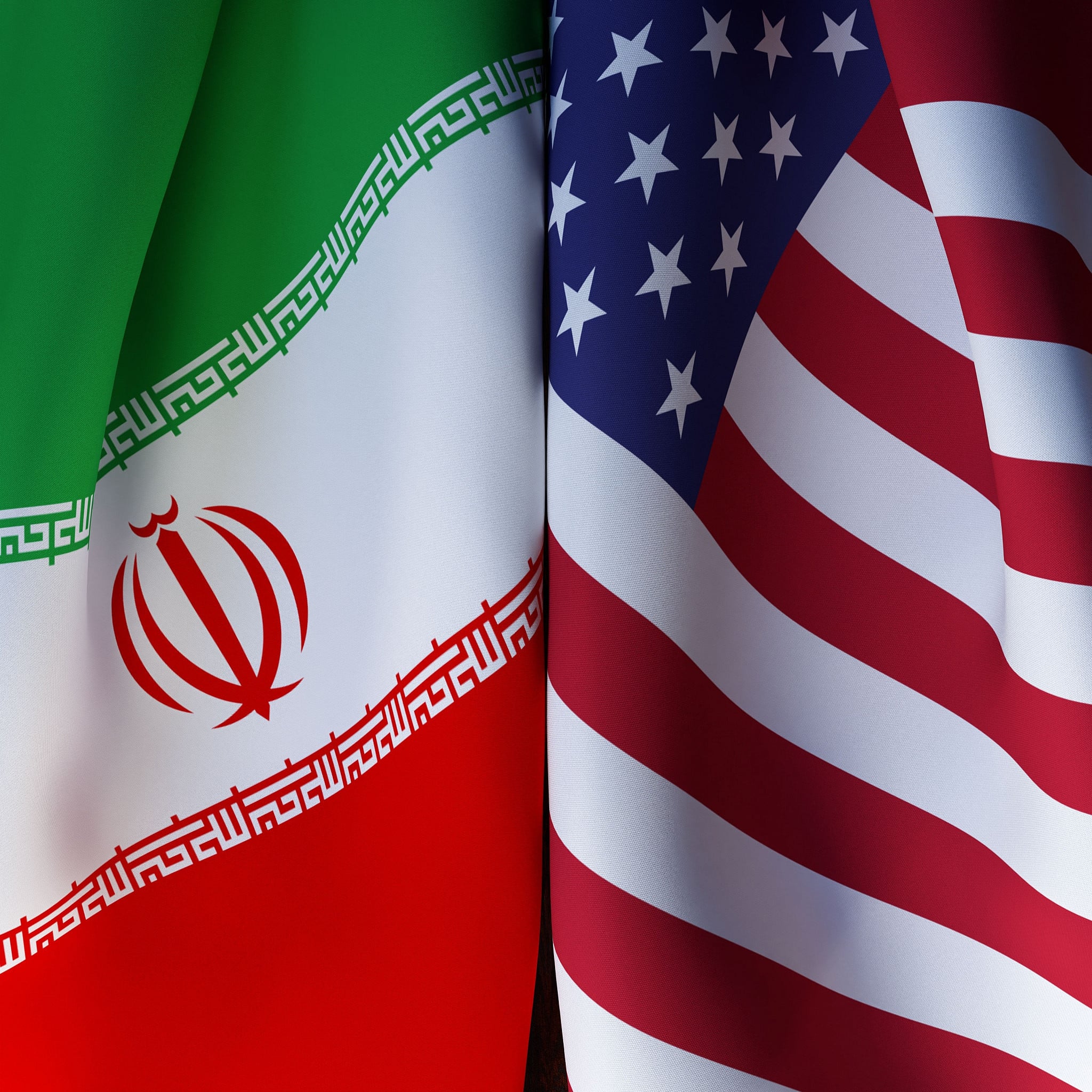
Credit: Shutterstock
In capital cities around the world we are hearing a familiar chorus: The war against Iran is illegal.
International law experts cite the United Nations Charter, arguing that the use of force without explicit authorization violates Article 2(4), which prohibits aggression between states. Others warn of the absence of clear “imminent threats.” And most in the United States use Operation Epic Fury as a political battering ram towards a (already) maligned US President.
Fine. Let’s assume—for the sake of argument—that they’re right.
Now let’s ask a more important question:
What if the “illegal” action is the only one preventing a far greater collapse of global order?
The Myth of Legal Clarity
The critics’ argument rests on a “comforting” premise: that international law is clear, enforceable, and consistently applied.
However, the stone cold truth is that it isn’t.
International law is not a functioning judicial system—it is a negotiated framework shaped by power, interpretation, and precedent. Another way of looking at it is that legality in international affairs can often be determined after the fact—by outcomes, not intentions.
Iran Is Not a Neutral Actor
The debate in Western capitals treats Iran like a conventional state wrongfully attacked. However, the truth is that it isn’t.
The Islamic Republic of Iran has spent decades building a shadow empire focused on financing militias across Iraq and Syria; Arming and directing proxies in Yemen; Supporting Hamas, and embedding itself politically and militarily in Lebanon.
This is not influence. This is systemic global destabilization by design.
Sanctions have already demonstrated Iran’s impact both positively and negatively. When constrained, Iran’s economy contracts, its reach narrows, and its ability to project power weakens. Now consider what happens when that system is not just sanctioned—but structurally degraded.
Lebanon: The Case Study Everyone Ignores
If you want to understand what Iran actually does to a country, you don’t need theory.
P.S. Don’t look at Israel.
Look to Lebanon.
Once a financial and cultural hub of the Middle East, Lebanon has been hollowed out politically, economically, and institutionally by the dominance of Hezbollah, Iran’s most successful proxy.
This isn’t a side story. It is the Iranian business model.
Iran didn’t just support Hezbollah. It transformed it into a parallel military entity, stronger than the Lebanese army; A political force capable of vetoing national decisions; A regional launchpad for Iranian strategy.
The result? A total collapse of the Lebanese banking system; A paralyzed government; and most importantly, a population trapped between economic ruin and political coercion. And perhaps most importantly, a shared tragedy to both Lebanese and Israelis.
Lebanon today is not a failed state. It is a hijacked state. And here is the critical point Western critics tend to avoid:
What Iran did to Lebanon, it seeks to replicate elsewhere.
Crippling Iran Is the First Step to Freeing Lebanon
For years, the international community has treated Lebanon as a humanitarian crisis rather than a geopolitical one. However, Lebanon’s collapse is not accidental. It is the direct consequence of Iranian entrenchment.
Which leads to an uncomfortable but necessary conclusion. You cannot stabilize Lebanon without weakening Iran. Let’s examine just a few points: Diplomacy has failed to disarm Hezbollah; Sanctions have failed to dismantle its power; Internal Lebanese politics could not overcome an externally backed vicious militia.
Only one variable could change the equation. Creating an environment where Iran’s ability to fund, arm, and sustain its proxy network is destroyed.
A weakened Iran means that Hezbollah becomes financially constrained, its military dominance begins to erode, Lebanese state institutions can regain breathing room and regional actors will have space to re-engage with Lebanon constructively. And most importantly, Israel stops being an adversary.
This is not speculative. It is structural.
The Strait of Hormuz: The Global Stakes
The war with Iran is not confined to borders. It is tied to one of the most critical chokepoints on earth: the Strait of Hormuz. Roughly 20% of the world’s oil passes through it and, Iran’s strategy has always been clear:
If we cannot dominate the region, we will destabilize world economy.
When Iran threatens or disrupts this passage these are the consequences to global economies: Oil prices surge, inflation spreads globally and emerging markets suffer disproportionately.
This is not just regional aggression. It is economic coercion on a global scale.
Short-Term Shock vs. Long-Term Stability
Critics point to rising oil prices and economic disruption as proof the war is misguided.
They are right about the disruption—and wrong about its meaning.
What we are seeing is not the cost of intervention. It is the exposure of a system already held hostage by Iran’s leverage.
There is a fundamental distinction:
Temporary instability caused by dismantling a destabilizer
vs.
Permanent instability caused by allowing it to persist
A weakened Iran reduces proxy warfare across multiple fronts, it prevents the weaponization of energy markets and prevents the likelihood of a broader regional war.
Most importantly it opens pathways for recovery for countries like Lebanon.
The Nuclear Question: The Point of No Return
The legal debate avoids the central issue:
What happens if Iran becomes a nuclear state? Because when Iran reaches that point (and some say this is going to happen sooner rather than later) deterrence becomes exponentially more dangerous, proxy conflicts gain nuclear backing and regional arms races accelerate.
Therefore, waiting for “imminence” in this context is not prudence. It is paralysis.
Europe’s Strategic Contradiction
European governments have been among the loudest critics of the war’s legality. The motivation driving European governments is “understandable”. They are deeply dependent on stable energy flows, they are vulnerable to Middle Eastern instability (especially due to immigration trends into Europe), and, perhaps most importantly, Europe is economically exposed to supply shocks.
Europe condemns the method while quietly relying on the outcome.
Legality vs. Legitimacy
Here is the uncomfortable truth:
A war can be legally contested and strategically necessary at the same time. The real test is not legal perfection. It is strategic outcome. So the questions that need to be asked are:
- Does war reduce long-term instability?
- Does this military engagement prevent future larger wars?
- Does war restore or create a new positive balance to critical regions?
On those metrics, weakening Iran is not reckless.
It is corrective.
The Alternative No One Defends
Critics rarely articulate what happens if nothing is done. But the trajectory is clear, and none of these options are options the world should accept:
- A nuclear-capable Iran
- Entrenched proxy groups like Hizballah and its stranglehold on Lebanon
- Chronic disruption of global trade routes
- Expanding regional conflict
In other words:
The world cannot accept the normalization of managed chaos.
Conclusion: From Beirut to the World
Lebanon is not a footnote in this conflict. It is the warning.
It shows what happens when Iran is left unchecked— not just to one country, but to an entire region.
Calling the war “illegal” may satisfy legal frameworks. However it does not address the reality on the ground.
International law was designed to preserve order. When it becomes a shield for disorder, it loses its meaning.
The real question is not whether this war fits neatly into doctrine. The real question is whether the world is safer if the status-quo remains.
Should the world tolerate an Iran capable of creating more another “Lebanon?” Or should we chose a world where Iran no longer can.
From Beirut to the Strait of Hormuz, the answer is the same.
Related Topics
Related Posts