
Sanctioning the Actual Victims of Ethnic Cleansing
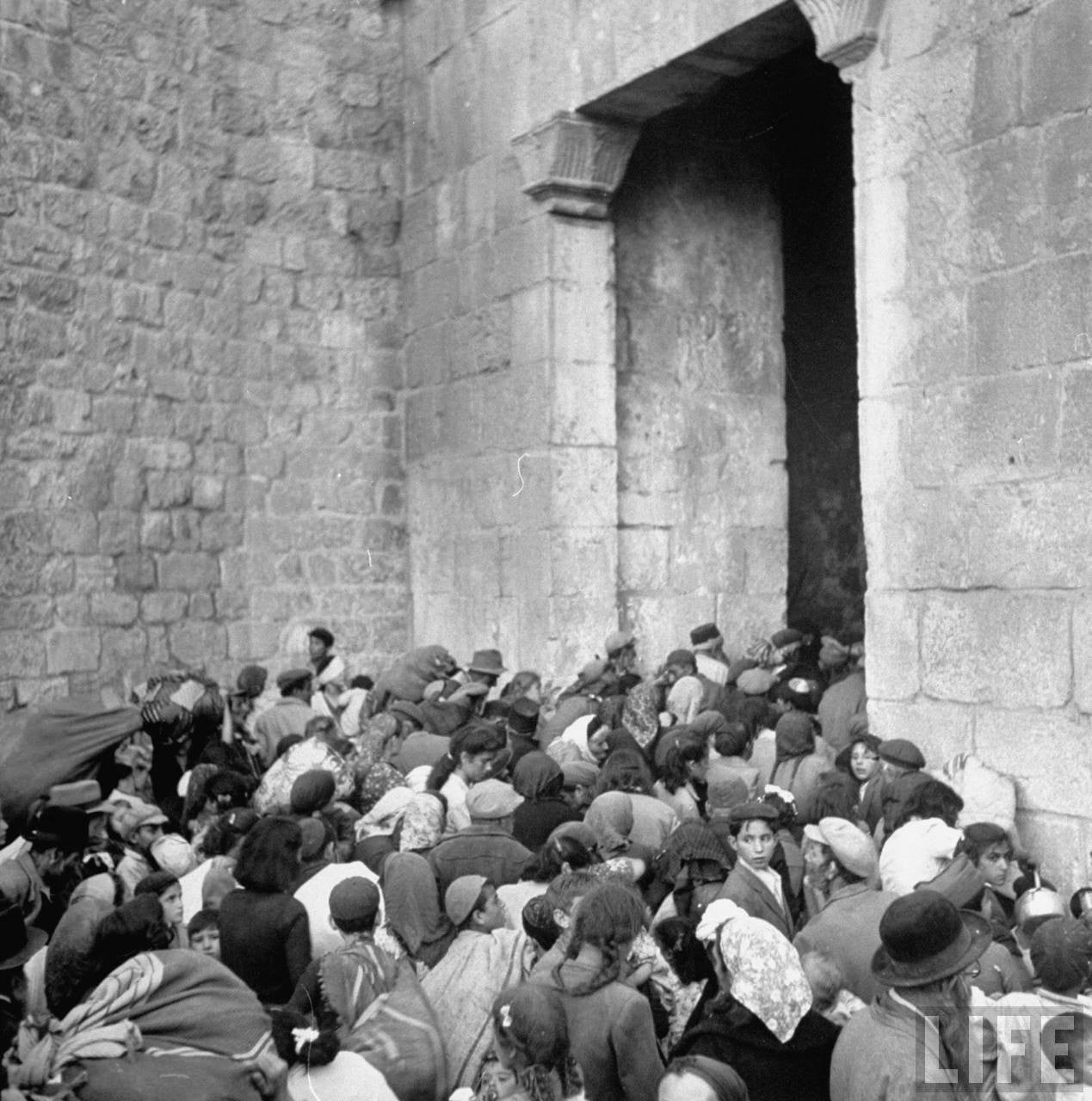
How the international debate over Judea and Samaria often ignores the expulsion of Jewish communities between 1948 and 1967
Imagine telling the descendants of Jews expelled from Jerusalem’s Old City that they are foreign colonizers. Imagine telling the grandchildren of families driven from Gush Etzion that they have no right to rebuild the communities their grandparents lost. Imagine telling Jews that living in Hebron—the city of Abraham, Isaac, Jacob, Sarah, Rebecca, and Leah—makes them settlers in their own history.
Most people would instinctively recognize the contradiction. Yet that is precisely where much of the international conversation surrounding Judea and Samaria now finds itself.
Western governments increasingly threaten sanctions against Jews living in these areas. The justification is typically framed as preserving land for a future Palestinian state.
Perhaps, but before discussing what may one day exist, it is worth remembering what once did.
Because before there were settlements, there were expulsions.
The modern conversation about Judea and Samaria often begins in 1967. That is convenient. It allows people to discuss Jewish communities without discussing why many of those communities had to be rebuilt in the first place.
In 1948, Jordan’s Arab Legion captured eastern Jerusalem and much of Judea and Samaria. The Jewish Quarter of Jerusalem fell. Its residents were expelled. Ancient synagogues were destroyed, looted, or left in ruins. The communities of Gush Etzion were overrun. Their defenders were killed, captured, or driven out. Jewish residence in Hebron, one of Judaism’s holiest cities, ceased.
For nineteen years, Jews were prohibited from returning. The ancient Mount of Olives cemetery was desecrated. Tombstones were removed, damaged, and reportedly used in construction projects.
This was not simply a military victory. It was the removal of an entire population from some of Judaism’s most historic communities.
It Was Not Merely Expulsion. It Was Erasure.
Expulsion removes people. Erasure removes memory. The destruction of synagogues served no military purpose. The desecration of cemeteries served no military purpose. These were acts directed not only at Jews but at Jewish history itself. And, that struggle did not end in 1967.
Joseph’s Tomb has repeatedly been vandalized and attacked. Ancient archaeological sites connected to the Jewish past continue to be subjects of political battles, neglect, and controversy.
The conflict is not merely over territory. It is also over legitimacy. Because if a people can be disconnected from its history, it becomes easier to portray that people as “foreign” or “other”.
If ancient ties can be denied, then modern claims become easier to dismiss. The issue was never only where Jews live. It was whether Jewish history in these places would be acknowledged at all.
The Communities That Were Rebuilt
When Israel regained control of Judea and Samaria in the defensive war of 1967, descendants of expelled Jewish families, along with others drawn to the historic heartland, finally began returning.
They returned to Gush Etzion. They returned to the Jewish Quarter. They returned to places from which their families had been driven less than two decades earlier.
Nor is the legal case as straightforward as many activists suggest. Jordan’s annexation of the territory received only limited international recognition, no sovereign Palestinian state previously existed there, and legal scholars such as Eugene Kontorovich have argued that principles such as uti possidetis juris—widely applied throughout the post-colonial world—raise important questions about why Jews should uniquely be prohibited from living in areas to which they possess historic, legal, and ancestral ties.
One may agree or disagree with specific Israeli policies. One may support or oppose particular communities. Reasonable people can debate borders and security arrangements, especially after repeated Palestinian rejection of partition and statehood offers and the security lessons of the Gaza withdrawal and October 7, 2023.
But it is impossible to honestly discuss the return of Jews to these areas without acknowledging the prior removal of Jews from them. The question is not whether these communities were rebuilt after 1967. The question is why they needed to be rebuilt at all.
Why Sanctions Matter
This is what makes the current discussion so troubling. The world is free to debate the future of Judea and Samaria. It is free to debate sovereignty, borders, security arrangements, and diplomacy.
However, sanctions carry a moral message. And, the message increasingly being sent is that Jews who returned to communities lost in 1948 are the problem.
Not the expulsions. Not the destruction. Not the desecration. The return.
That inversion should trouble anyone who believes in historical consistency.
Whatever one’s views on the Israeli-Palestinian conflict, the expulsion of Jews from these communities did not cease to matter simply because it became politically inconvenient to remember.
History is capable of containing more than one tragedy. The problem arises when only one of them is remembered.
One cannot continue to point out Palestinian “traumas” without recognizing that Jewish communities existed in these areas long before 1967. The problem arises when only one of them is remembered.
What Exactly Are We Sanctioning?
History did not begin in 1967. Before there were settlements, there were expulsions. Before there were diplomatic condemnations, there were destroyed synagogues. Before there were sanctions, there were Jewish communities that ceased to exist because Jews were no longer permitted to live there.
The world is free to debate the future of Judea and Samaria but it should not do so by erasing Jewish history. Because, when the descendants of the expelled are condemned for returning home, something has gone profoundly wrong with the story being told.
And perhaps that is the question the international community should ask itself:
Are we sanctioning “settlers” or are we sanctioning the victims of ethnic cleansing ?