
When Jewish Peoplehood Comes to Life at Summer Camp
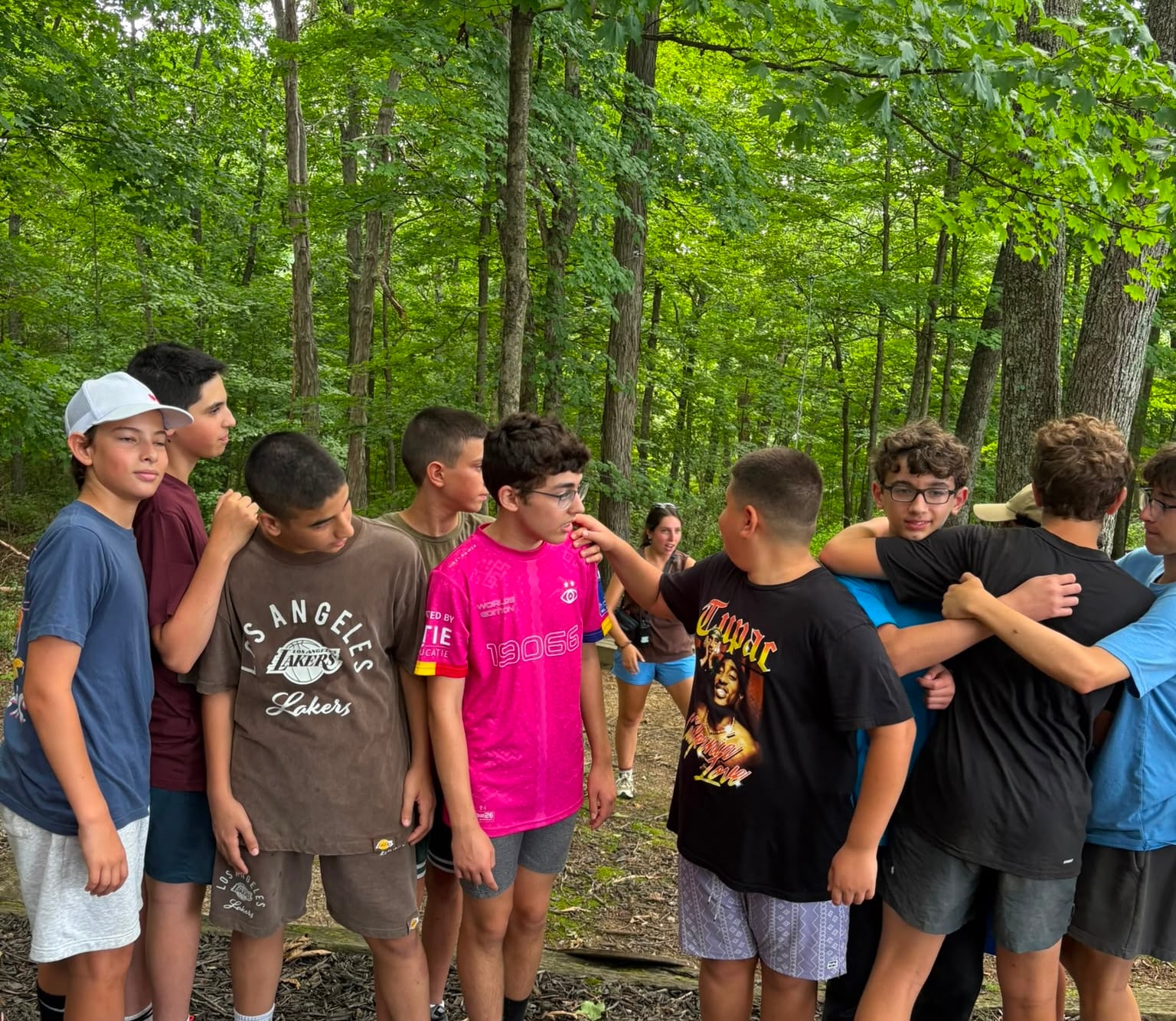
For an Israeli teenager living with the strain of war, spending time at a North American Jewish summer camp offers the chance to be a kid again. It is also a powerful reminder that Jews around the world are there for one another.
In July, when I visited Camp Livingston in Indiana, the presence of Israeli teenagers carried a significance far beyond an ordinary summer at camp.
They came from Kibbutz Karmia, Cincinnati’s partner community near the Gaza border through The Jewish Agency for Israel’s Communities2Gether program. They attended Camp Livingston as part of Campers2Gether, in which The Jewish Agency brings Israeli teenagers from communities affected by war to Jewish overnight camps across North America, giving them time away from the stress and uncertainty that have shaped their lives since the October 7th attacks.
While visiting, we asked the campers a simple question: What was the best thing about camp, and what was the worst?
They had plenty of answers for the best: the new friends they were making, the food they were enjoying, the activities, and the experience of spending a summer in a rural American setting and a different culture.
The worst? Every one of them told us there was nothing.
Watching their happiness, I was reminded of something easily lost amid headlines about Israel: Behind every discussion of war, security, and geopolitics are people. There are families navigating extraordinary uncertainty and young people who deserve the opportunity simply to be young.
For these campers, this is a chance to get the war out of their heads and replace some of its weight with swimming, sports, meals, friendships, and laughter.
The need for that respite is difficult to overstate. These teenagers have spent formative years living in the shadow of October 7 and the war that followed. Their lives have been shaped by rocket fire and alarms, disrupted schooling, displacement and uncertainty, and by the strain of watching family members, friends and neighbors serve in the military or cope with loss and trauma. Even when daily routines resume, those experiences do not simply disappear. A few weeks at summer camp cannot erase what they have lived through, but it can give them something they have had far too little of: the freedom to step away from that constant pressure, feel safe, and enjoy the ordinary experiences of being a teenager.
That opportunity to step away is itself an important part of building resilience. Resilience is often described as though it is something people simply possess, but it also must be nurtured. For these teenagers, that means having the opportunity to feel supported by a Jewish community thousands of miles from home, to step away from what they have endured, and simply enjoy being teenagers at summer camp.
Creating those opportunities is an essential part of the work of The Jewish Agency: finding tangible ways for Jews around the world to be present for one another. Programs such as Campers2Gether turn the idea of Jewish solidarity into something personal and real — an experience a young person can actually feel.
The impact travels in both directions. Camp Livingston’s staff told us that welcoming Israeli teenagers makes a meaningful difference for the American campers, too. The Israelis are fully integrated into camp life, sharing activities, meals, and ordinary day-to-day experiences with their North American peers. Through those interactions, North American Jewish teenagers develop an understanding of Israel that cannot come from a news report or a lesson alone. They meet Israelis not as symbols of a distant conflict but as friends.
That distinction is increasingly important. When young Jews from different parts of the world know one another personally, the relationship becomes personal. A community thousands of miles away is no longer an abstraction. Its joys, fears, and future belong to people you know.
For those of us fortunate enough to live with relative peace and tranquility, these encounters also offer perspective. They remind us not to take that stability for granted, and that we have a responsibility to use it to help shoulder the burdens carried by others.
The Jewish Agency has always been rooted in the conviction that world Jewry is one people. At Camp Livingston, I saw that conviction made real. I saw it among Israeli teenagers getting a precious break from the realities with which they have been living. And I saw it in a Jewish community that refuses to allow distance to become disconnection.
At a moment when so much attention understandably focuses on the existential challenges facing Israel, we cannot lose sight of the people living through them. We must continue asking what we can do to ease their burdens, strengthen their resilience, and remind them that they are not facing this moment alone.
Sometimes that support comes through enormous acts of communal mobilization. Sometimes it looks like a summer at camp in Indiana. Both matter. Jewish peoplehood is not simply the idea that we share a history. It is the commitment to share responsibility for one another’s future.