
Cardiologist, professor, and Jewish community lay leader
Featured Post
The empty Jewiness of Marty Supreme
When cruelty is normalized and Jewish identity and Holocaust memory are used as movie props, the loss is more than cinematic
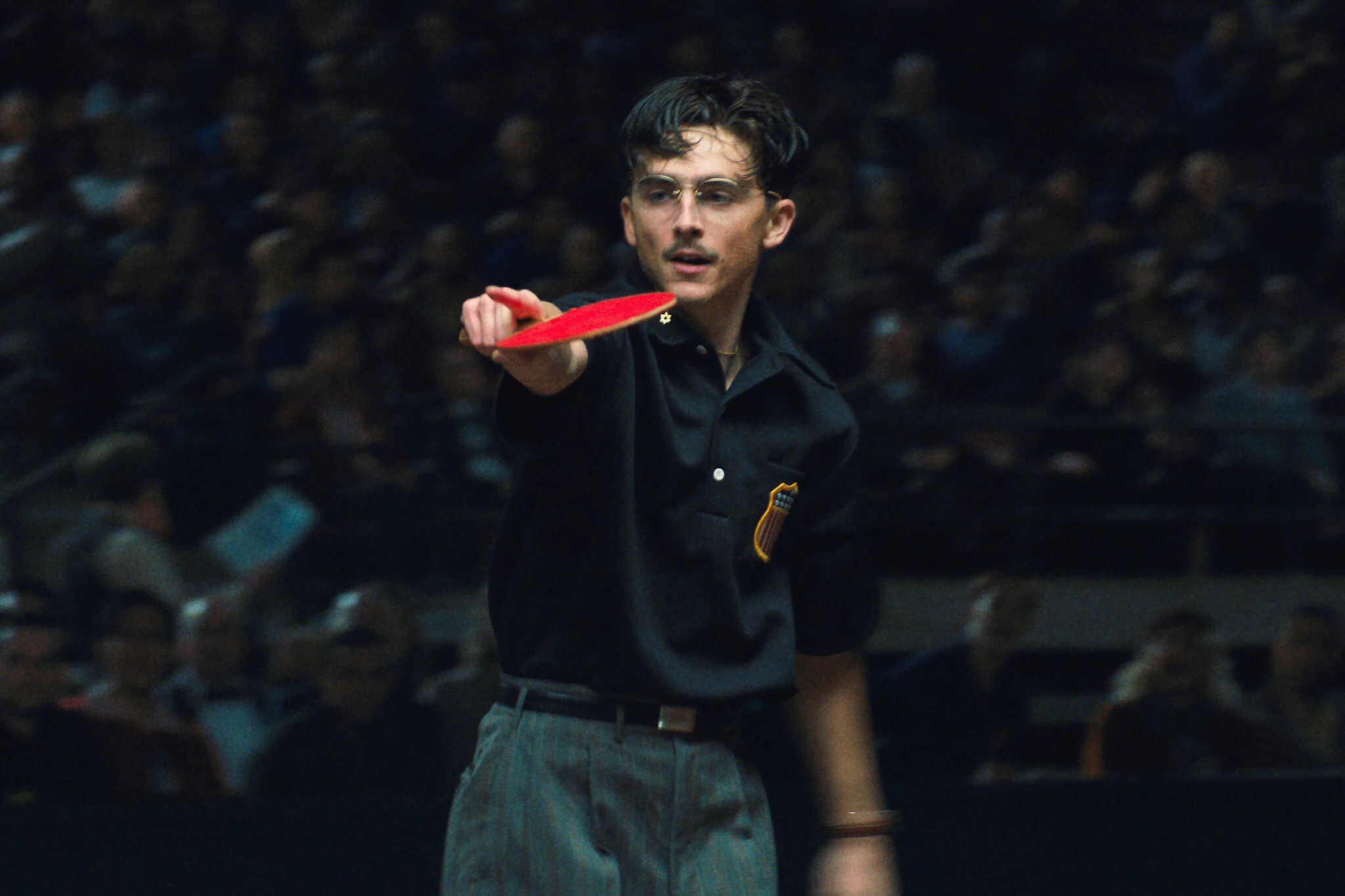
This image released by A24 shows Timothée Chalamet in a scene from 'Marty Supreme.' (A24 via AP)
This post really isn’t about “Marty Supreme.” The movie just happens to be a useful example.
I saw it last night, and it’s still bothering me because it exposed a widening generational divide in how cruelty is perceived, narcissism is tolerated, and Jewish identity and Holocaust memory are handled on screen. Too often, these aren’t examined or wrestled with, but are treated as props – devices to deploy rather than personal traits and experiences to understand.
I read several reviews afterward, and what stood out wasn’t the expected disagreement about the film’s quality. It was how consistently the reactions tracked with age. Standing outside the theater, I overheard a group of college students who loved it. Friends older than me called it “awful.” That split was striking, and it wasn’t just about taste. It reflected a shift in what people are willing to accept on screen, and how closely that mirrors their lived experience.
One shift is the normalization of treating one another poorly. Many of the characters are openly cruel and manipulative, yet their behavior is presented as interesting or edgy rather than as something that requires reckoning. There is little sense that we are meant to notice the damage being done. When humiliation and provocation are rewarded in public life, abusive behavior starts to feel normal, and characters who are awful at their core are read as authentic rather than cautionary.
A closely related shift is the normalization of narcissism. The film is fascinated by self-absorption and emotional emptiness, but it does not question them. The characters have little interior life and face no meaningful consequences. What earlier storytelling might have treated as pathology is simply presented as self-evident. Those shifts matter on their own, but they matter even more when they intersect with how Jewish identity and Holocaust memory are used on screen.

For many of us, Holocaust memory was experienced first-hand. We knew survivors, and we heard their stories repeatedly – not once, not as performance, but as part of our personal and communal lives. They were close enough that their stories became part of our own. The same stories would be told again and again, sometimes with small differences, sometimes with long silences, and you learned what mattered by what stayed the same. That experience was reinforced throughout Jewish life – in Sunday school, at summer camp, in youth groups, in communal rituals, and at family tables. Holocaust education was not a unit or a genre. It was part of our shared life experience.
That kind of proximity no longer exists for most people. Today, Holocaust memory is almost always second-hand, and increasingly third-hand. Few people now know, or have ever met, Shoah survivors. What remains are stories filtered through institutions, films, and fragments. Because these memories are mediated rather than lived, they are easier to instrumentalize and repurpose. In this film, they are treated as aesthetic material.
Regarding the widely discussed honey scene, the filmmaker Josh Safdie said in The Guardian, “I learned more about the Holocaust in that little story than from some movies that are only about the Holocaust.” (Without spoilers, I can say the scene is based on a true story of the extreme things people did to survive the concentration camps.) That comment is revealing and worrisome. It elevates an anecdote, stripped of historical structure and moral context, over engagement with Holocaust history and its consequences. In doing so, it emphasizes affect over understanding.
I found this deeply troubling, not simply because the scene was shocking, but because it treated inherited history as raw material for entertainment. An essay in The Forward and comments from several friends suggested that the discomfort this scene provoked – evidenced by nervous laughter in the theater – was the point, that the scene had “done its job.” But that raises the obvious question: what job, exactly?
The repeated emphasis on Jewish markers also was not necessary for the plot. The Jewish stars, the Yiddish phrases, the pastrami-versus-roast-beef joke, the honey scene – all function as signals. The camera keeps returning to Marty’s Star-of-David necklace, as if to remind us, again and again, that he is a Jew. His Jewishness is incidental to the story, yet persistently foregrounded, as if to borrow gravity from post-Holocaust identity without assuming any responsibility for it. Holocaust imagery and post-Holocaust identity are not explored or examined; they are used to evoke emotion and signal depth. We do not need the Holocaust to manufacture drama or meaning, even in stories about Jews.
This is where another confusion enters: the collapse of “Jewish” into “Jewy.” The film has been described by many, including The Times of Israel, as a “Jewish film,” but what that means in this context is cultural stylization, not Judaism. Judaism is a religion, a moral framework, and a lived tradition, upon which multiple cultures have developed.
Mistaking surface cultural markers for Judaism itself, and then treating those markers as explanations of cruelty, narcissism, or moral failure, is very dangerous – especially in today’s political culture. I have been told to lighten up, but some of the traits we code as “self-deprecating Jewish humor” are read very differently by others. They can easily slide into the oldest antisemitic stereotypes. I don’t understand why we would want to emphasize our worst caricatures for non-Jewish audiences.
When Jewish culture is mistaken for Jewish religion and cut loose from its sources, it becomes something that can be pointed at and blamed rather than understood. In this film, Jewish references are used to signal depth without doing the work of creating it. The honey scene draws on Holocaust associations to provoke a reaction, but it does not engage with history, memory, or consequence. The repeated visual emphasis on Jewishness serves the same function.
People are entitled to their tastes and interpretations, but when cruelty is normalized, narcissism is aestheticized, and Holocaust memory is reduced to visual texture, the loss is more than cinematic.
Related Topics
Related Posts