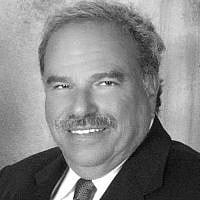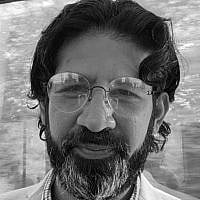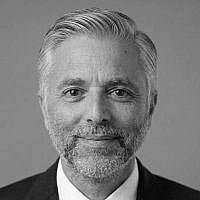
Three Witnesses, One Refusal
Three witnesses with nothing in common reached the same conclusion about Lithuania’s Holocaust record. So did the historians the Lithuanian state itself commissioned, the academy, the state’s own oversight council, and Yad Vashem. The state refuses all of them and protects the one institution everyone has repudiated. A NATO and EU member that will not trust its own archive is asking its allies to trust what it will not.
In 2005 the International Commission, a body created by the Lithuanian state, approved the conclusions of a study it had commissioned from the historians Christoph Dieckmann and Saulius Sužiedėlis on the persecution and mass murder of Lithuania’s Jews in 1941. The study still sits on the state’s website. In 2024 the same state indicted a Jewish citizen, Artur Fridman, in Criminal Case No. 02-2-00512-24, and built the case on the historical conclusions of a different state body that its own courts decline to review and that almost every qualified institution has repudiated. Three private people reached the Commission’s conclusion on their own, from positions that share nothing. The state answers them the way it answers its own historians, its own oversight council, and its own archive. It refuses.
A conclusion that survives a Jewish litigant, a Riga-born filmmaker, the granddaughter of the perpetrator, the academy, and the state’s own commission is not a grievance. It is the record. What Lithuania protects against that record is a single institution, and the protection now reaches the citizen who reads the documents correctly.
Three readings of one record
I filed forty-nine formal submissions to Lithuanian state bodies since 2015 and met refusal at each one; the architecture is in Verdict First, Reasoning Later. Eugene J. Levin, born in Riga, made his documentary on the Baltic Holocaust and published a four-part Times of Israel series, The Witness That Cannot Survive Cross-Examination, impeaching the Genocide and Resistance Research Centre on its own record. The state has never answered him. Silvia Foti read fund R-1099 of the Lithuanian Central State Archive and found her grandfather Jonas Noreika’s signature on a 1941 order routing property confiscated from Jewish families to the Reichskreditkasse, set out in What Lithuania Did With the Signature. Three vantages, one finding. None of the documents they read belongs to them. All of them belong to the state.
The consensus the state paid for
The witnesses did not invent a thesis. Christoph Dieckmann and Saulius Sužiedėlis set the events of 1941 out in The Persecution and Mass Murder of Lithuanian Jews during Summer and Fall of 1941, a bilingual study published in Vilnius in 2006 whose conclusions the state’s own International Commission approved in 2005. Dieckmann’s two-volume Deutsche Besatzungspolitik in Litauen 1941–1944 is the standard scholarly account. Rūta Vanagaitė, a Lithuanian writer born in Šiauliai, and Efraim Zuroff of the Simon Wiesenthal Center wrote Mūsiškiai, published in English as Our People: Discovering Lithuania’s Hidden Holocaust. When that book told Lithuanian readers the truth about complicity, the response was destruction: in 2017 Vanagaitė’s publisher withdrew and pulped her entire catalog, and PEN America condemned it. Sužiedėlis is a Lithuanian-American historian. Zuroff is a descendant of victims. Vanagaitė descends from the people who did the killing. They reached the place the three witnesses reached, and the place the state’s commission reached. The finding is not contested in the scholarship. It is contested only by the institution the state funds to contest it.
The institution the refusal runs through
That institution is the Genocide and Resistance Research Centre, the LGGRTC. Its director is appointed and dismissed by the Seimas. It recommends figures for state honors and initiates legal evaluations. It is not a neutral research body. Lithuania’s own expert council has called it de facto a bureaucratic institution, even as it is presented abroad as scholarship. On Noreika the Centre moved in one direction only. It declared him innocent in 2015. The state then funded a legal defense arguing that a district chief who signed ghetto and property-seizure orders could not have understood where they led, which is the Eichmann defense. In December 2019 the Centre enlarged the exoneration into a claim that Noreika rescued Jews, in a memorandum whose author, Dalius Egidijus Stancikas, is a geologist by training now working in the Centre’s secretariat, resting on a single fragment of late testimony from a United States court proceeding.
Then comes the inversion. When historians objected that a geologist had written the rescuer finding, Burauskaitė answered in belief-language, not method. In A Director Lied on the National Broadcaster, I preserved the admission: “I’m not a historian myself. My requirement for all of our specialists is that they believe in the results of their research.” The same broadcast also supplied the false judicial shield: Burauskaitė claimed that an administrative court had ruled the Centre’s conclusions were made using scientific methodology, though the court had not adjudicated the historical merits. The Centre held its critics to the opposite rule. In its July 18, 2018 reply to the 42-page research submission prepared by Andrius Kulikauskas and Evaldas Balčiūnas, the Centre, over Burauskaitė’s signature, did not answer the substance first. It placed the word historians in quotation marks and wrote that the two “are not known in academic circles as professional historians” and are better known for “controversial positions” that may produce “a preconceived lack of objectivity” (LGGRTC Ref. 14R-52). In my contemporaneous account, Lithuania: Never Responsible, I rendered the Centre’s posture more bluntly: the government, I wrote, called the researchers “dilettantes who lacked history methodology because they weren’t trained and qualified historians.” In court the posture was the same: the Centre questioned whether the researchers held history degrees, before its own representative admitted he holds none. The institution demands history credentials of its critics, declares credentials irrelevant when defending its own staff, falsely invokes a court as having certified its methodology, and rests its signature finding on the work of a geologist.
Everyone repudiated it. The state kept it.
The refusal does not survive on the Centre’s authority, because the Centre has none left. Its own historians revolted: in January 2020 seventeen of them petitioned Parliament over the politicization of the Centre’s work and the devaluation of professional competence by its management. Its own leadership collapsed: in 2021 an employee was fired for criticizing the director, staff wrote to Parliament, and the Speaker moved to dismiss Director General Adas Jakubauskas amid internal conflict. Its own oversight council cannot run it: in its March 22, 2026 communication to the Seimas Speaker and committees, the Seimas council chaired by the Vilnius University historian Arūnas Streikus reported that it could not effectively oversee the body, and this week refused to approve the Centre’s annual activity report.
Outside the Centre the verdict is the same. The state’s own Presidential International Commission rejected the Noreika treatment as utterly unacceptable in April 2019. The academy graded the rescuer finding as failing work: the Director of the Lithuanian Institute of History and Vilnius University historians said that if it were a student’s paper it would be marked very poorly. The Parliamentary Ombudsman found the Centre had violated administrative-procedure standards. International Holocaust authorities followed: IHRA chair-holders, including Ambassador Georges Santer and Professor Yehuda Bauer, invoked the Working Definition of Holocaust Denial and Distortion against the Centre, the World Jewish Congress called its Noreika document Holocaust revisionism, and the American Jewish Committee, European Jewish Congress, and Lithuanian Jewish Community objected in parallel. The 2019 statement was a finding, not a remedy, and Lithuania never cured it. On May 28, 2026 I filed a formal petition with IHRA asking it to act on its own conclusion and review Lithuania’s member-country status for suspension, downgrade, or revocation, requiring a Lithuanian response, corrective benchmarks aimed at the Centre and the Noreika file, and a reasoned public assessment on a defined clock. This is the cure-default case. Then the highest authority of all spoke inside the parliament itself. On September 21, 2023 the Chairman of Yad Vashem, Dani Dayan, told the Seimas that an antisemite and a murderer cannot be a hero, and named Noreika, Škirpa, and Krikštaponis, with the Prime Minister and the Speaker in the chamber.
Every check repudiated the institution. The state preserved it. And the self-immolation is now in progress: the Centre’s Council has forwarded a municipal cultural-heritage administrator, Donata Kabelkė, to the Seimas to lead it, passing over the incumbent historian, Arūnas Bubnys. The body that disqualified credentialed researchers for lacking history degrees is to be handed to a nominee who has none. That does not make the credentialed incumbent the cure; the trained historian now running the Centre did not correct the fraud either. The rot is institutional, not merely biographical. The appointment rests with the Seimas and is not yet final.
The threat was already in writing
The Fridman prosecution did not invent the instinct. It was on the page in 2018. In the same 14R-52 reply, the Centre told a descendant of murdered Lithuanian Jews that documenting Lithuanian perpetration might itself be unlawful. Conclusions such as that Lithuanians bore responsibility for crimes against humanity, it wrote, belonged not to scholarship but to occupation-era propaganda and “possibly contradict the Constitution” (Ref. 14R-52; „galimai prieštarauja LR Konstitucijai“). It invoked the presumption of innocence and warned that statements about Noreika and certain clergy “possibly violate” Article 31 of the Constitution and Article 154 of the Criminal Code on defamation. The statute that reached Fridman in 2024 was Article 170². The reflex behind it, that speech contradicting state historical doctrine is an offense, was already the Centre’s written position six years earlier, over the director’s signature. The same letter cited the state-commissioned Dieckmann–Sužiedėlis study to describe Lithuanian participation in the killing in the abstract, then refused to apply a word of it to the man who signed the orders.
The closed circle
The Centre everyone repudiated is the one the prosecutor uses and the courts protect. When a Jewish complainant asked the courts to review its findings, the state held that courts do not adjudicate history; the prosecutor refused, twice; and the Seimas referred him back to the courts that had already declined. The chain is in Lithuania Closes the Loop and The State’s Witness Is the State’s Lie. Two official records exist, the Commission’s documented history and the Centre’s exoneration, and the state built the Fridman indictment on the false one. The weight is concrete. Noreika’s district produced the Žagarė massacre of October 2, 1941, with 2,236 documented murders. The state made a descendant of the murdered pay €950 in court costs, refused Holocaust-denial review of the Centre, and has not punished a single Lithuanian for the murder of Jews. Valdas Rakutis accused Jews of perpetration in 2021 and was not charged. Fridman drew a 220-page indictment. The application to the European Court of Human Rights, App. No. 10930/21, was filed on February 11, 2021 and declared inadmissible.
Where the state performs
Lithuania is not silent. It speaks to a chosen audience. It will not answer Levin’s series, Foti’s archive, the historians it commissioned, or my filings. It appears instead before Jewish organizations that decorate it. American Jewish Committee officials hold Lithuanian state honors: Rabbi Andrew Baker received the Officer’s Cross of Merit in 2006, the Diplomacy Star in 2012, and the Cross of Commander in 2024; David Harris received the Cross of the Knight in 2021; Ted Deutch received the Cross of the Knight in 2025. The mechanism is documented in The Soviet Court That Never Left. The proximity produced ceremonies. It did not stop the Fridman prosecution, retract the 2015 vocabulary, or equalize Article 170². Reconciliation is performed where there is no cross-examination and refused where there would be.
What a NATO and EU member just told its allies
Set the contradiction plainly. Lithuania maintains a true record and a false one at the same time, and litigates on the false one. A state that does this will misrepresent its own verified record when the politics require it, and will use the machinery of law to punish the correction. Membership in the European Union and NATO is invoked as proof that it can be trusted. It is the standing the conduct discredits. The premise is no longer arguable, because the institution at the center has been disowned by its own staff, its own oversight council, its own commission, its own academy, and Yad Vashem, and the state keeps it anyway. As I have written, if a NATO member maintains an agency dedicated to fabricating facts, no intelligence product from that state can be presumed reliable, and the resulting information-security vulnerability belongs in front of NATO StratCom. Antisemitism is a national security concern of free states. A government that cannot be trusted with the truth about its own dead cannot be assumed trustworthy with anything harder to check.
The accusation runs against the state machinery, the Genocide Centre, and the political class, not against Lithuanians. The seventeen historians who petitioned Parliament, the oversight council that cannot certify the Centre’s work, and the Institute of History director who graded its finding as failing are Lithuanians who repudiated the distortion. On May 14, 2026 the Pasaulio Lietuvių Bendruomenė, the Lithuanian World Community, addressed the Seimas in the name of historical truth. Lithuanians can move. The state refuses to.
One archive, one institution, one refusal
The state’s commissioned historians, its own commission, its own oversight council, its own academy, three witnesses with nothing in common, and Yad Vashem all say the same thing. Lithuania wrote the truth, approved it, filed it, and protects the institution built to deny it. A state that will not believe its own archive, and keeps a research centre its own historians disowned, has answered the only question that matters about its word: how much of it can be trusted, anywhere, by anyone. None of it, until the institution and the lie it guards are gone.