


I write what I see
When “Jews Run Hollywood” Becomes a Loyalty Test
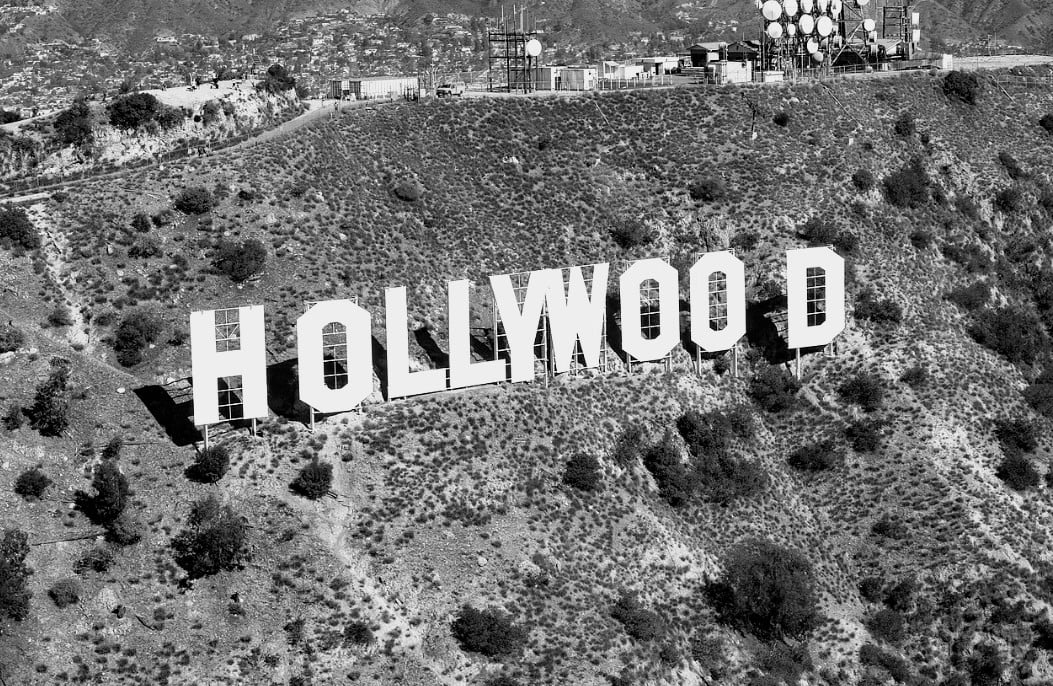
Hollywood again with the same old script, and cast list of suspects. Photo: Wikimedia Commons (public domain).
A video has been circulating online in which a woman stands outside a Hollywood billboard and calmly explains that Jews run the film industry, that films documenting October 7 are propaganda, and that America does not need Jews at all.
I know, I know. You’ve heard it all before. Most Jews can finish that sentence as soon as the first two words are spoken. Trust me, I would much rather be writing about something else. But here we are. Still.
The identity of the speaker is not the point. Nor is the exact date of the clip. What matters is how easily this kind of language now lands in public space—not even as an outburst. There’s no scandal that follows either, because statements like this are increasingly treated as ordinary commentary.
The worst feeling of all is how familiarity with the accusation doesn’t make it benign. It only means we recognize it when it returns. This type of repetition has never made it trivial. Each time it surfaces, the setting simply changes—from pamphlets to microphones to phones—and with every reappearance it reveals how comfortable the surrounding culture has become with hearing it.
We don’t need to go back centuries to understand the pattern. The last hundred years are enough.
From Henry Ford to the Smartphone Age
In early twentieth-century America, accusations of Jewish cultural control were printed and mailed across the country. Henry Ford financed and published The International Jew through his newspaper, the Dearborn Independent, arguing that Jews dominated media, finance, and culture and that the country would be better off without them.
The language did not disappear after the war. It resurfaced in different forms through the 1940s and 1950s, often reframed as suspicion of influence or dual loyalty rather than outright exclusion.
It is worth asking what Jews reading those pages felt at the time. Something surreal, certainly. Something disorienting. Perhaps the same uneasy recognition that surfaces now—the sense that one more shock is required before anyone fully registers what is being said. It is a question that echoes across every era of violence preceded by antisemitic accusations.
Most alarming is how those claims were presented as analysis as opposed to mutterings at the margins. They gained credibility through repetition, prestige, and the authority of print. For Jews reading them, the message was unmistakable: participation in American life would always be conditional.
What has really changed since then? Not much. Certainly not the content of the accusation but the register in which it appears. The language today often arrives calmly, conversationally, sometimes framed as cultural critique. But the conclusion remains familiar. Jews are tolerated until their presence is reframed as influence, and influence is reframed as illegitimacy.
The Hollywood Myth, Revisited
Yes, many early Hollywood founders were Jewish. That historical fact is routinely invoked and just as routinely distorted.
Jewish immigrants entered the film industry for the same reason they entered vaudeville, retail, and the garment trade: established professions and institutions were often closed to them. Film was unstable, unregulated, and considered low status. They built an industry others had dismissed.
When Irish Americans clustered in police departments, when Italian Americans dominated certain trades, when Korean immigrants built dense retail networks, these patterns were treated as sociology. When Jews succeeded in film, the same phenomenon was reframed as control.
The accusation has always been about belonging and nothing to do with Hollywood.
If Jews Controlled Hollywood, the Culture Would Look Different
There is a simple way to test the claim that Jews “run Hollywood”: look at outcomes.
The contemporary entertainment industry is corporate, global, and driven by markets, platforms, and international capital. Jews make up a small percentage of the American population and do not constitute a controlling majority within it.
More tellingly, public cultural narratives in recent years have leaned sharply against Israel. Support for Palestinian causes is widespread in entertainment spaces. Open letters condemning Israel circulate easily. Public figures who adopt those positions do so with little professional risk. Those who speak publicly in defense of Israel often do so more cautiously.
Does that look like dominance to you?
Influence that must constantly apologize for itself doesn’t exactly feel like power. It is visibility without protection.
Why October 7 Became a Trigger
The reflexive dismissal of films documenting October 7 as propaganda reveals something deeper than disagreement over media.
Cinema has long chronicled mass atrocity. Rwanda, Bosnia, Cambodia, apartheid, slavery—these stories are treated as testimony. Jewish suffering, by contrast, is often met first with suspicion. What is the agenda? What is being justified? What is being concealed?
The burden of explanation arrives quickly and this definitely is not new. It simply feels more casual now.
This Is the Cultural Moment
The danger is not one person with a phone. It is the ease with which statements about Jews not belonging in America can be delivered in public and absorbed as commentary rather than exclusion.
You can tell a great deal about a society by what its minorities must calculate in order to feel ordinary. When visibility requires strategy, belonging has already become conditional.
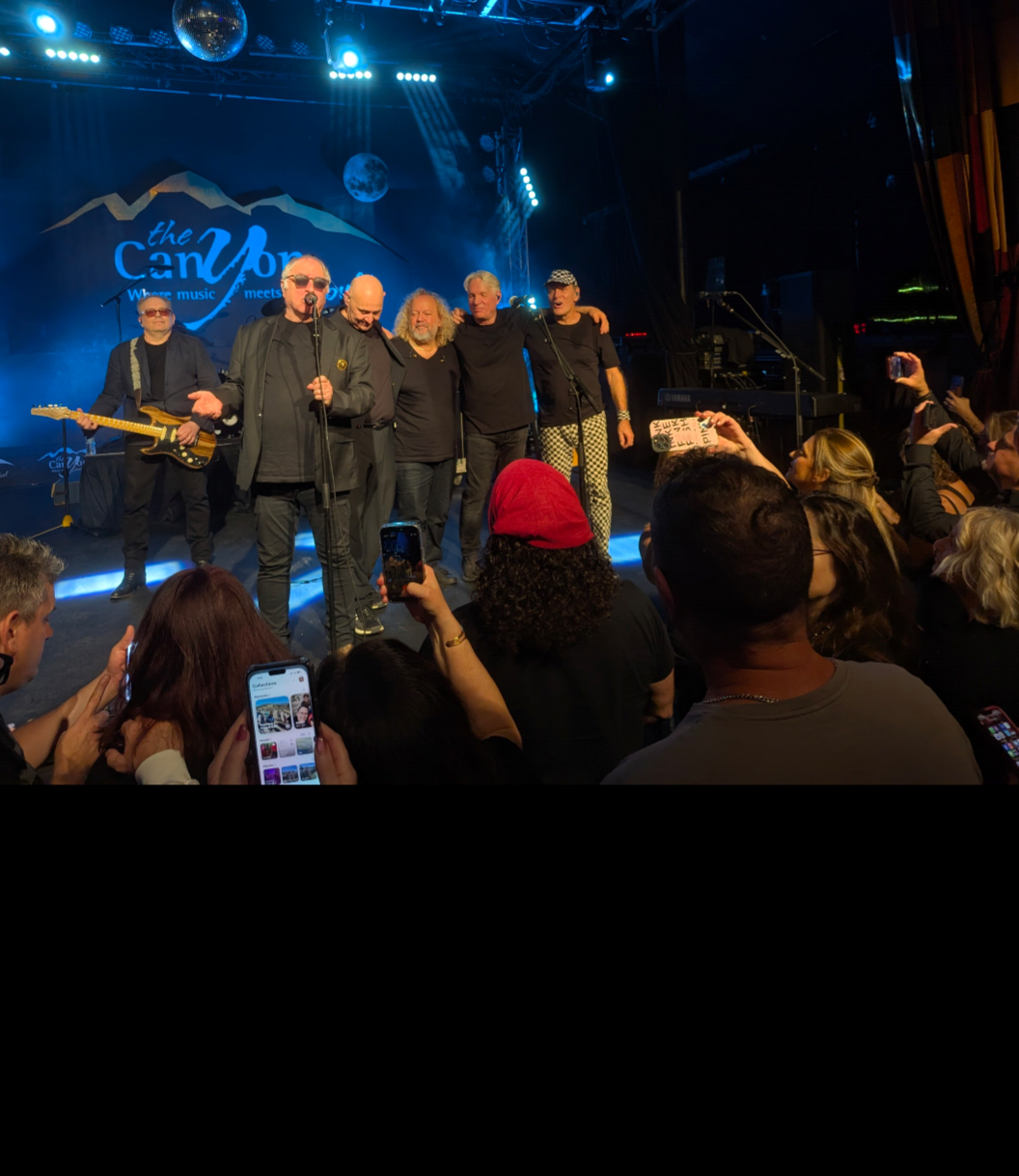
Even cultural events that once felt uncomplicated now unfold with visible security and quiet calculations about where the exits are—at a recent Tislam concert in Southern California, the most striking feature was not the music but the security presence. It’s a strange way to attend a concert—with the music in front of you and contingency quietly mapped in the back of your mind.
There is a passage in Philip Roth’s The Plot Against America that captures this atmosphere precisely: not mobs in the streets, but a society gradually acclimating to language it would once have recognized immediately for what it was. Repetition lowers the threshold of notice. What once shocked begins to register as familiar.
At the same time, a growing number of academic voices—including some Jewish ones—have taken to framing antisemitism in the United States as exaggerated, misunderstood, or strategically invoked. The language is often presented as nuance. In practice, it raises the threshold for recognition. By the time rhetoric questioning Jewish belonging registers as a problem, it has already settled into ordinary conversation. Minimization simply delays the moment when others feel obliged to notice it.
Disagreement is ordinary in a democracy. But arguments about whether a people belongs are not.
America and the Old Contradiction
The claim that Jews do not belong in America collapses under minimal scrutiny. Jews did not merely participate in American life. They helped shape it—in law, labor movements, science, culture, and civil rights, as well as in entertainment.
The same community once accused of being insufficiently American is now accused of defining America too completely. Ha! That contradiction is by no means accidental. It is one of the oldest features of antisemitic thinking: Jews are simultaneously too marginal to matter and too influential to tolerate. The accusation adapts and the structure remains.
The Test
Antisemitism rarely announces itself as rupture. More often it appears as repetition—familiar language delivered with increasing comfort. Each recurrence tests the surrounding culture: how much will be noticed, how much will be dismissed, how much will be absorbed as ordinary speech.
“We don’t need Jews in America” is not a comment on Hollywood. It is a statement about belonging.
And when statements about belonging begin to pass as ordinary commentary, they function less as opinions than as tests.
The question is not only what was said in a video. The question is how normal it now sounds.
About the Author
Ilana K. Levinsky is a writer and baker with a passion for crafting captivating stories and intricate sugar cookies. Originally from London, England, Ilana earned her LL.B from the University of Manchester, though spent the past two decades working as a freelance writer and in recent years, developing her cottage food bakery business. Notably, Ilana spent a significant part of her childhood and teenage years living in Israel, adding unique experiences to her creative palette. Ilana wields a pen and an icing bag with equal finesse, blending imagination into her books and edible canvases. With a penchant for diverse storytelling, she weaves family history into a gripping historical novel spanning England and South Africa. In her intimate diary-style narrative, Ilana transports readers to the vibrant world of Venice Beach, where a woman's quest for love and literary recognition unfolds. As a children's author, she ignites young minds with a colorful array of topics—from the woes of having no friends to the joys of daydreaming and even the enchanting world of sweets. With each tale and every sugar stroke, Ilana creates worlds of wonder, inviting readers and sweet enthusiasts alike to savor the magic of creativity and taste. Discover all of Ilana's books on Amazon, and don't miss the opportunity to view her artistic sugar cookies on Instagram @ilanasacups. For her musings on aging and beauty, visit her blog at www.diaryofawrinkle.com.
Related Topics
Related Posts


Ilana K. Levinsky