
Introducing you to the World of Israeli Fashion
When One Door Closes, Cheri Tannenbaum Finds Another

Cheri Tennenbaum
Israeli artist and designer Cheri Tannenbaum has spent decades turning beads, neckties, discarded fabrics and other unexpected materials into colorful, one-of-a-kind creations.
A skirt made from men’s neckties might seem like an unlikely starting point for a fashion designer. For Cheri Tannenbaum, it was.
But getting to that skirt took a winding path.
Tannenbaum was diagnosed with dystonia musculorum deformans, a rare neurological movement disorder, when she was 20. The condition severely affected her speech and movement; for decades, she was unable to speak, and she continues to live with an abnormal gait and poor balance. But, while dystonia has shaped many of the practical challenges she’s faced, it has never been the whole story of who she is.
Again and again, Tannenbaum found something she wanted to pursue, only to discover that one physical requirement stood between her and her goal. She studied psychology with plans to become a special education teacher, but three-quarters of the way through her class, she learned she would have to teach in a regular classroom.
Then came fashion design.
“I love clothes, I have style, why not go to fashion design school and learn how to dress windows?”
Three-quarters of the way through that course, she was told that climbing ladders and carrying mannequins would be too dangerous given her condition.
“So… that was the end of that.”
Except it wasn’t.
Finding Jewelry
After fashion design, Tannenbaum found another possibility: jewelry.
She came across a jewelry design course and decided to give it a try. The course instructor sent the students to a wholesale bead store to choose materials. Tannenbaum went in, looked around and promptly ignored the implied instructions to buy her beads and leave.
Instead, she stayed.
For the next year, the store’s owners let her sit and make necklaces. Cheri gravitated toward large, colorful, unconventional pieces, creating what she describes as “big, bombastic” necklaces. Looking back, she wonders whether the jewelry was a way of expressing the larger-than-life personality that was difficult for her to communicate physically. A “big bombastic me” beneath her illness.
There is something almost poetic about that. At a time when dystonia had so severely limited her ability to speak and move, Tannenbaum was creating pieces that demanded to be seen.
She began seeing potential materials everywhere. She would walk around looking at ordinary objects, imagining how she might thread wire or beads through them and turn them into something wearable.
The pieces were difficult to sell in traditional stores because each one was unique. Retailers wanted designs that could be easily reproduced and reordered. Tannenbaum wasn’t making that kind of jewelry.
She was making whatever her imagination compelled her to make.
From Beads to Neckties
After making aliyah in 1994, Tannenbaum’s creative path took another unexpected turn. She enrolled in a course on shatnez – the Jewish prohibition against wearing wool and linen together – hoping to learn how to check garments herself.
Then, one day, a skirt made entirely from men’s neckties came into the lab.
Cheri’s imagination immediately took over. She began making tie skirts of her own, adding ruffles and other unexpected embellishments. Eventually, she expanded the idea into other garments, including patchwork skirts and dresses incorporating scarves and ties.
She never finished the shatnez course. Her rabbi let her go, gently explaining that checking shatnez required a scientific mind, while Tannenbaum had a creative one.
It was another ending that turned into a beginning.
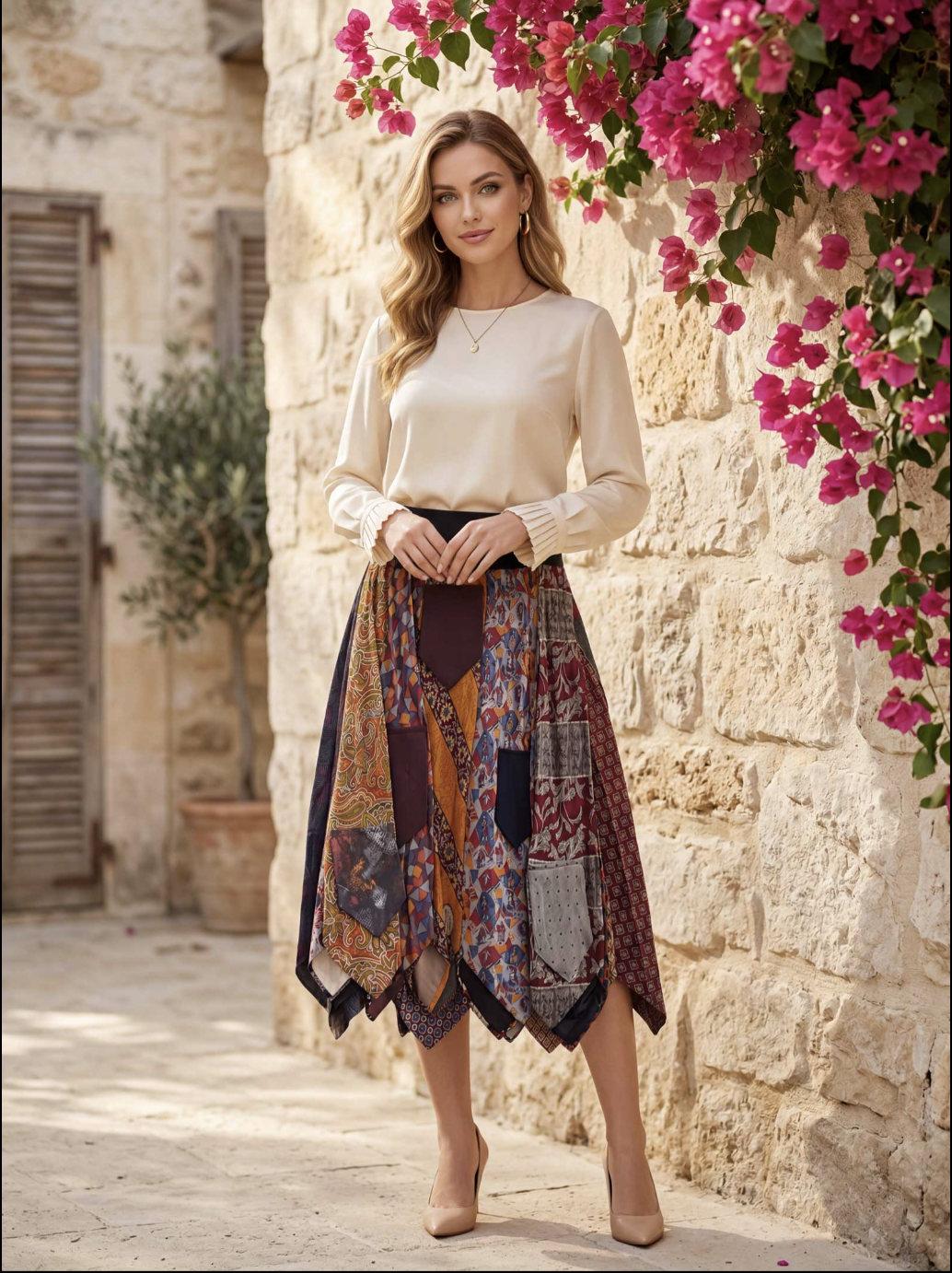
Tannenbaum went on to experiment with patchwork, scarves, hats and other unexpected materials, developing a body of work that is difficult to categorize neatly as either fashion or art.
“I get inspiration from wherever I go,” she told me during our interview.
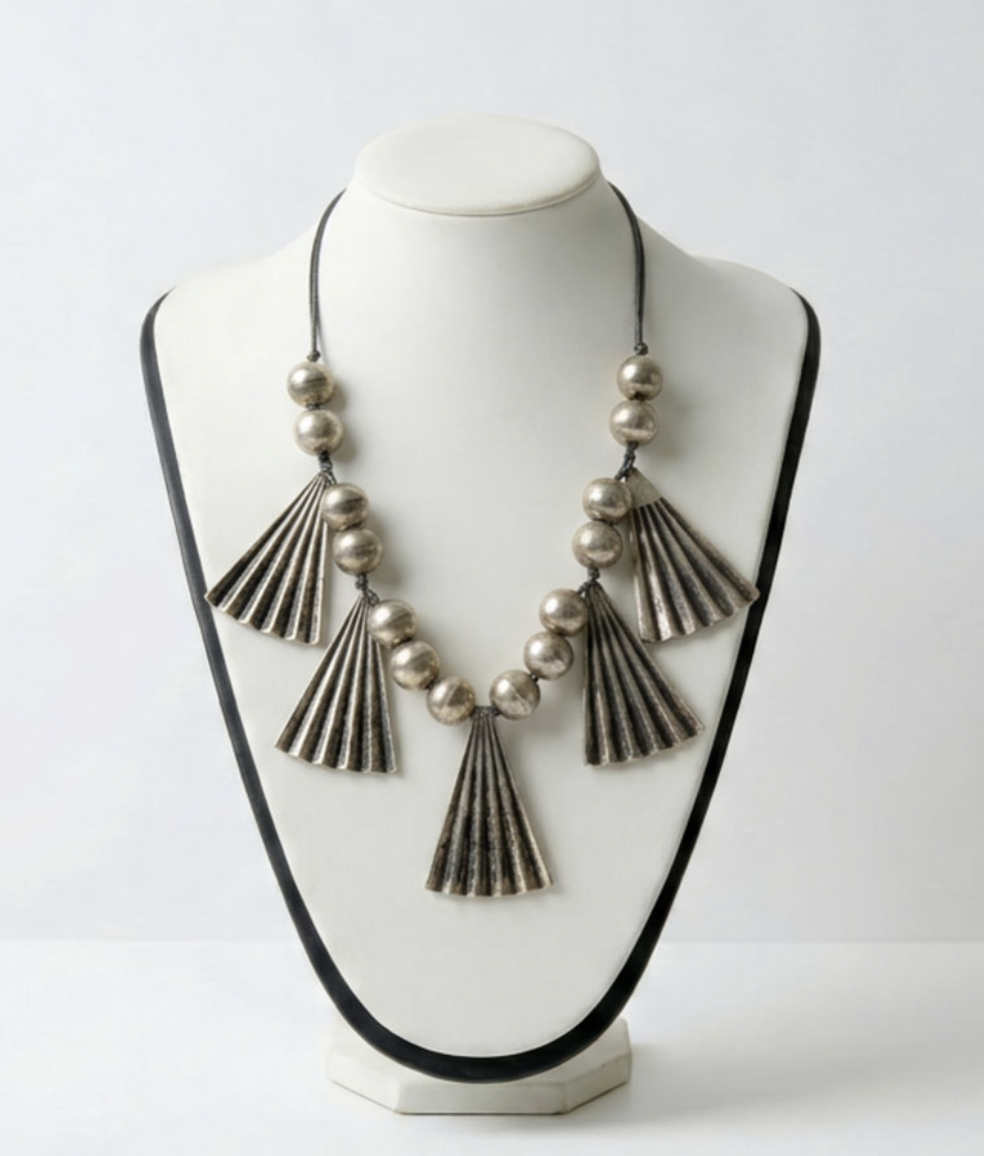
Her creative mind, she says, is always working. She might see a piece of fabric, an unusual object or an interesting combination of colors and immediately begin imagining what she could do with it.
That instinct is evident throughout her work. Her pieces aren’t designed around trends or seasons. They are one-of-a-kind creations, often assembled from materials that might otherwise be overlooked.
There is something about the way Cheri Tannenbaum sees these materials that stayed with me after our conversation. She doesn’t look at a necktie, a scrap of fabric or an unusual object and decide what it can’t be. She looks at what it could become.
I couldn’t help thinking that this is how people should have looked at Cheri, too. Not defined by what her body made difficult or impossible, but by the imagination, creativity and possibility that were there all along.
Cheri Tennenbaum’s pieces can be purchased on her website and she ships internationally.
Related Topics
Related Posts