
When Religion Is Misunderstood
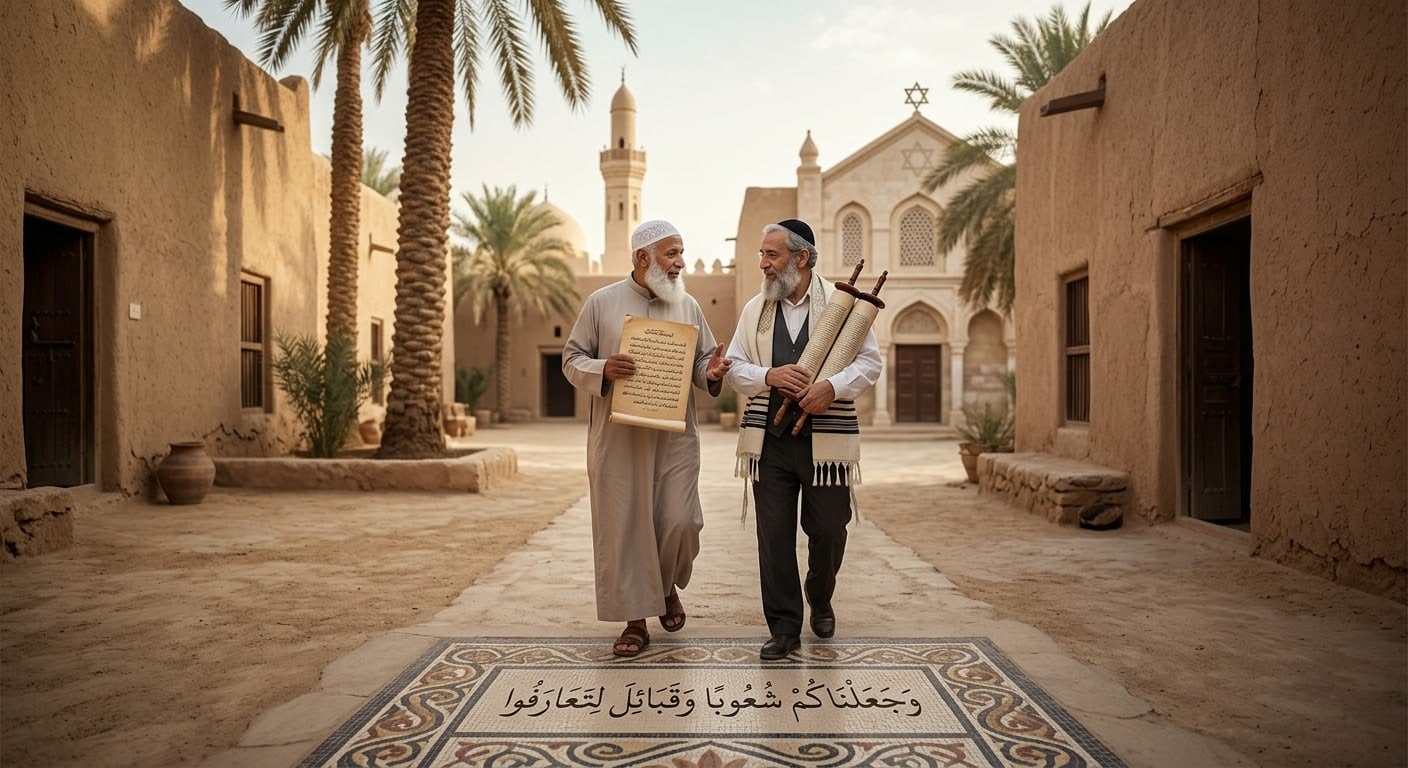
Between the Prophet’s ﷺ Example and Hatred of Jews: When Religion Is Misunderstood
One of the most painful contradictions of our time is seeing the name of Islam invoked to justify hatred of Jews or the killing of civilians, while the life of the Prophet Muhammad ﷺ shows that relations with Jews were not based on hostility simply because of religious difference.
After the Prophet ﷺ migrated to Medina, the Constitution of Medina was established to regulate relations among the different communities of the city, including Jewish tribes. It recognized that Jews had their religion and Muslims had theirs, while also establishing mutual obligations, including cooperation and the defense of Medina.
This does not mean that the history of Muslims and Jews during the Prophet’s time was free of conflict. There were disputes and armed confrontations with some Jewish groups, involving political, security, and military circumstances. But turning those historical events into a justification for hatred toward every Jew today is a leap that neither history nor morality can justify.
The Qur’an itself establishes a principle of justice: “God does not forbid you from being kind and just to those who have not fought you because of your religion or driven you from your homes.” It also states that God loves those who act justly. (Qur’an 60:8)
Therefore, a Muslim who kills a Jew simply because he is Jewish is not applying the principle of justice; he is turning religion into an identity of revenge. Likewise, a Jew should not be held responsible for the actions of a government, a state, or a particular group simply because of his religious identity.
The real criticism of extremism begins here: we cannot take moments of war from history while ignoring the principles of justice. We cannot turn political conflict into religious hatred, nor can we portray the killing of innocent people as an act of worship.
If the Prophet ﷺ lived in a religiously diverse society and entered into agreements recognizing the Jews’ right to their religion, how can killing Jews simply because they are Jews possibly be presented as the essence of Islam?
A religion understood as a license for blind hatred requires us to reconsider that interpretation—not shed more blood. A person does not become an enemy simply because of their religion, and justice should never depend on the identity of the victim.