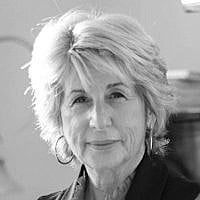
Jewish Community Leader Düsseldorf, Germany
When September 11 Vividly Meets October 7
When September 11 Vividly Meets October 7th
The sacred weight of Memory.
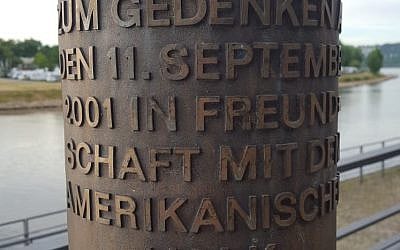
This year, something feels different about the impending High Holidays. Although l am preparing to sing the High Holiday Arias (which is always a daunting task). Erev Rosh Hashanah falls on September 11 which is the 25th anniversary of the attacks on the World Trade Center and the Pentagon.
My husband was working on the 103rd floor of the World Trade Tower 2 on September 11, 2001. He saw the first airplane strike the other tower. He found the one stairwell that traveled down to the sky lobby- was just below the second impact in the stairwell – continued walking down and somehow made it out of the building alive before it collapsed as just outside he watched the bodies jumping and his building implode.
Twenty-five years later, he still becomes jittery as the anniversary approaches. For me it’s like an ominous cloud of smoke approaching spewing out white debris that starts to occupy my subconscious surroundings.
We try not to make too much of it. We keep the days quiet. We reflect. We talk. We remember. But the body remembers things that the mind would sometimes prefer to put away.
And then came October 7, 2023.
I woke that morning in my Portugal apartment to a voice message from my friend Tanya. I had been helping her with something, and at the end of her message she casually mentioned that she was sheltering in her Tel Aviv apartment. She did not sound panicked.
She sounded like an Israeli who had lived through rocket attacks before, trusting that the Iron Dome would protect Tel Aviv.
I, however, was immediately transported somewhere else. Twenty-two years earlier, I had listened helplessly as my husband described what was happening around him in New York when he finally called from a phone booth in downtown NYC hours after l learned of the Twin Towers attack fearing for his life. On October 7, I was once again far away, listening to someone I loved describe a reality I could not control.
But something had changed.
After September 11, I was frightened. I was also busy. My husband went back into the disaster zone a few weeks after his survival ordeal to help collect DNA samples so that families could identify their loved ones. I was at home with our child, buying supplies and thinking about how to protect our family from whatever might come next. I remember the endless telephone calls from AON, where my husband worked, searching for colleagues. Two hundred AON employees died that morning.
There was fear, but there was also something to do. The world was instantly on our side. On October 7, I felt something different. I felt helpless.
And I felt angry. The world I thought I understood after September 11 seemed suddenly to have been turned upside down.
For Americans, September 11 was a moment when the world seemed to understand that innocent civilians could be targeted simply because of who they were and where they lived by a vicious tyrannical ideology. There was horror, condemnation and solidarity. After October 7, I expected something similar.
Instead, I watched the story become increasingly complicated almost immediately.
The murder, kidnapping and sexual violence inflicted on Israeli civilians seemed to disappear behind arguments and political slogans. The question of how to respond to Hamas’s massacre was quickly replaced in much of the public conversation by accusations against Israel.
How did we get here? How did the victims of a massacre become so quickly placed on trial? How did the Jewish state become, in the eyes of so many people, the primary villain in the story of the people who had just experienced one of the most devastating attacks in their history? And how did antisemitism become so easily disguised as political analysis? I do though remember some of my teaching colleagues in New Jersey denying that 9/11 was an Islamist attack- they were saying that Israel and George Bush were behind it. Thank goodness those conspiracies never reached mainstream acceptance.
So why should Jews accept that our lives are somehow less valuable than anyone else’s now? That is what frightens me most as this year’s High Holidays approach.
The world feels unfamiliar.
I remember the Vietnam War playing on our television during dinner when I was a child because my father was an obsessive news follower. I remember the assassinations of John F. Kennedy, Robert Kennedy and Martin Luther King Jr. I remember September 11.
But October 7 feels different because I am Jewish and a fervent Zionist. It reaches into a place inside me that is connected to generations of Jewish memory and to the knowledge that we have survived persecution, expulsions, pogroms and genocide, and that the promise of “never again” was never merely a slogan.
And now I worry about our children and grandchildren. What kind of Jewish world are we leaving them?
I worry when Jewish students feel unsafe on university campuses. I worry when Jewish institutions require extraordinary security simply to gather for prayer. I worry when young Jews are told that identifying with Israel makes them morally suspect. I worry when demonstrations that claim to be political criticism cross the line into hatred of Jews. And I worry about what happens when the distinction between legitimate criticism of Israel and antisemitism becomes so blurred that people stop recognizing antisemitism altogether.
Yet there is another memory I want to carry into the High Holidays.
On October 7, Tanya’s voice was calm.
She and her daughter were spending their days collecting supplies, packing boxes and helping people in southern Israel. They were frightened, but they were doing what they could.
That is what human beings do in moments of crisis. We help.
We gather. We protect. We pray.
And we continue. That is also why I reject the fighting between Jews themselves. Liberal Jews. Orthodox Jews. Reform Jews. Secular Jews. Israelis. Diaspora Jews. Men against women. One denomination against another. One political camp against another. After October 7, I find this particularly heartbreaking. We are not identical. We do not have to agree. Judaism has always been a religion of argument, questioning and debate but we are one people.
The fact that Jews are living openly and building communities in Germany today is itself a testament to the possibility of transformation. In Düsseldorf, where I live, our Jewish community is loving, dynamic, curious, critical and wonderfully diverse. Under one roof holds my Egalitarian Minjan, Traditional Orthodox, Buchari Sephardic and Chabbad.,We are here. We are praying. We are raising children. We are celebrating. We are arguing.
We are living. We are supported by our Mayor, local Parliament and National Government. That is a victory over history.
This year, when I sit down for Rosh Hashanah, I know I will think about September 11. I will think about my husband’s 103rd floor.
I will think about the people who never made it out. The 9/11 Memorial in Montclair, New Jersey where we flew kites with my husband’s colleague Axel one week before he died. My singing this year will be more heartfelt and different as l proclaim to Shaddai Hineni!
I AM HERE.
And I will think about October 7.
I will think about the families whose lives were shattered, the hostages who were taken, the Israelis who ran for their lives, and the people who have spent almost three years carrying wounds that cannot be seen.
I can’t honestly say l have great hope but l do know that we need to have purpose and strength- Gevurah- like the Lion! Jewish history has taught us that we cannot predict the future.
We have survived things that seemed impossible to survive. We have rebuilt after destruction. We have carried our traditions across continents. We have created families and communities in places where we were once told we would never belong.
And we are still here.
So perhaps this convergence of September 11 and Rosh Hashanah is not only a reminder of death and destruction.
Perhaps it is also a reminder of memory. Judaism asks us to remember but not to live forever inside our memories. Rosh Hashanah asks us to look forward. To imagine that the coming year can be different from the year before. I don’t know what the next year will bring.
I am frightened for my children and their children. I am frightened by the hatred that seems to be growing in places where I once assumed reason and decency would prevail.
I am frightened by how easily facts can become distorted and how quickly people can lose sight of the humanity of others. But I refuse to surrender.
My husband and I will mark September 11 quietly.
We will remember.
We will talk.
We will probably become a little jumpy, as we do every year.
And then, as the sun sets, we will welcome Rosh Hashanah.
A new year.
A chance to begin again.
And I will pray for a world in which Jews do not have to explain why they deserve to live safely in their ancestral homeland, or anywhere else.
I will pray for Israel.
I will pray for our children and grandchildren.
I will pray that Jews can stop fighting one another long enough to remember that our differences are not greater than our shared history.
And I will pray that somewhere beneath all the noise, all the politics and all the hatred, there is still a place for human beings to recognize one another as human beings.
Twenty-five years after September 11, almost three years after October 7, I know only one thing for certain:
We will survive.
Am Yisrael Chai!
Related Topics
Related Posts