
When Service Does Not End and Listening Comes Too Late
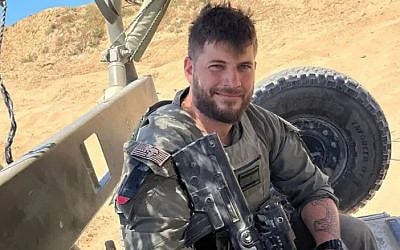
Today, under the open sky at the funeral of Josh Boone z”l, I stood among those who came to honor a man who gave so much of himself to Israel. Josh was not born here. He came from the quiet, wide-open landscapes of Boise, Idaho, choosing this land as his own and dedicating 748 days of reserve duty to its defense.
That number matters. All 748 of those days have been served since October 7. Out of a possible 831 days since the war began, Josh was in uniform for nearly all of them. This was not intermittent service. It was a sustained and relentless commitment during one of the most traumatic periods this country has faced.
Josh grew up experiencing antisemitism and carried a fire within him to protect the Jewish people. That fire brought him across an ocean and into uniform. It led him into a service that most people will never fully understand.
At the funeral, stories were shared by friends, by those who served alongside him, and by his partner, Keren Ouliel, whom I have known and worked with for many years. Together, they revealed not only a soldier but a human being who gave everything he had and carried far more than anyone should have had to carry alone.
There is more than one battlefield.
There is a battlefield where soldiers are stationed, where they sleep lightly, eat poorly, and remain alert for danger that does not announce itself. But there is also the battlefield that forms quietly inside the mind. The one that does not power down when a deployment ends or a uniform is folded away.
Josh was a sheepdog sniper. The metaphor matters. A sheepdog is not a predator. A sheepdog is a protector. There are sheep. There are wolves. And then there are sheepdogs, the ones who step forward willingly and stand between others and harm.
Josh was not a dog. He was a protector.
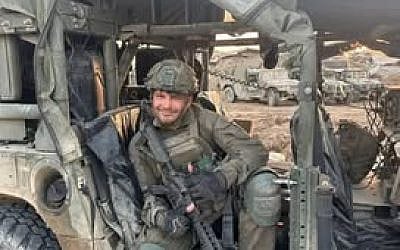
Like many protectors, he carried what he saw inside him. This was not trauma that appeared suddenly after his service ended. It was present throughout his service. It accumulated and intensified. For soldiers who serve repeatedly, trauma does not come and go. It becomes constant. A sixth sense. Something inhaled rather than remembered.
This is where public understanding often fails. PTSD is imagined as something that arrives after danger has passed. But for those who served almost continuously since October 7, the danger never fully passed. The nervous system never resets. The body remained on watch.
What Josh needed was not a short break or a brief respite. A two-week or three-week pause is not treatment. Mental illness does not resolve on vacation. Trauma requires time, continuity, and sustained care. The slow road is the faster road, but only if it is offered.
Josh did not receive the kind of long-term mental health care that would have been automatic had his wounds been physical. That gap is not unique to him. It reflects a broader failure to treat mental injury with the seriousness it deserves. We praise resilience while neglecting treatment. Resilience does not replace care.
And then there was the failure that followed his death.
Because Josh did not die while officially on active duty, he was denied military recognition at his burial. Not because his death was unrelated to his service, but because policy draws a rigid line that trauma does not respect.
Standing at the funeral, many of us felt something close to disgust. Not at the ceremony itself, which was dignified and loving, but at the absence of official recognition. We were deeply grateful to the soldiers who, in uniform, came on their own initiative to honor Josh as one of their own. They stood where institutions should have stood.
This is not a minor procedural issue. It sets a dangerous precedent, especially for lone soldiers who come from abroad and then serve almost continuously during wartime. It sends a message that sacrifice is conditional and that honor depends on timing rather than truth.
Under current policy, even when a death appears connected to military service, recognition can be denied if it occurs off duty. This may satisfy bureaucracy, but it fails moral clarity. Service does not end when paperwork does. Wounds inflicted in service do not follow administrative calendars.
Josh Boone has been laid to rest. But what we do next will determine whether his death is remembered as a tragedy we mourned or a failure we corrected.
If we are serious about honoring service, then mental health can no longer be treated as secondary or optional. Listening must come earlier. Care must last longer. And dignity must not depend on technicalities.
The slow road to healing is the only road that works. We owe it to those who serve to walk it with them, fully and without delay. No soldier and certainly no lone soldier should ever be left behind, in life or in death. And no family should have to wonder whether sacrifice will be met with silence instead of respect.
If Josh Boone’s loss means anything, let it be this. We do not have time to waste!