Seeking honest leadership, and new narratives.
When settler violence becomes the face of Israel
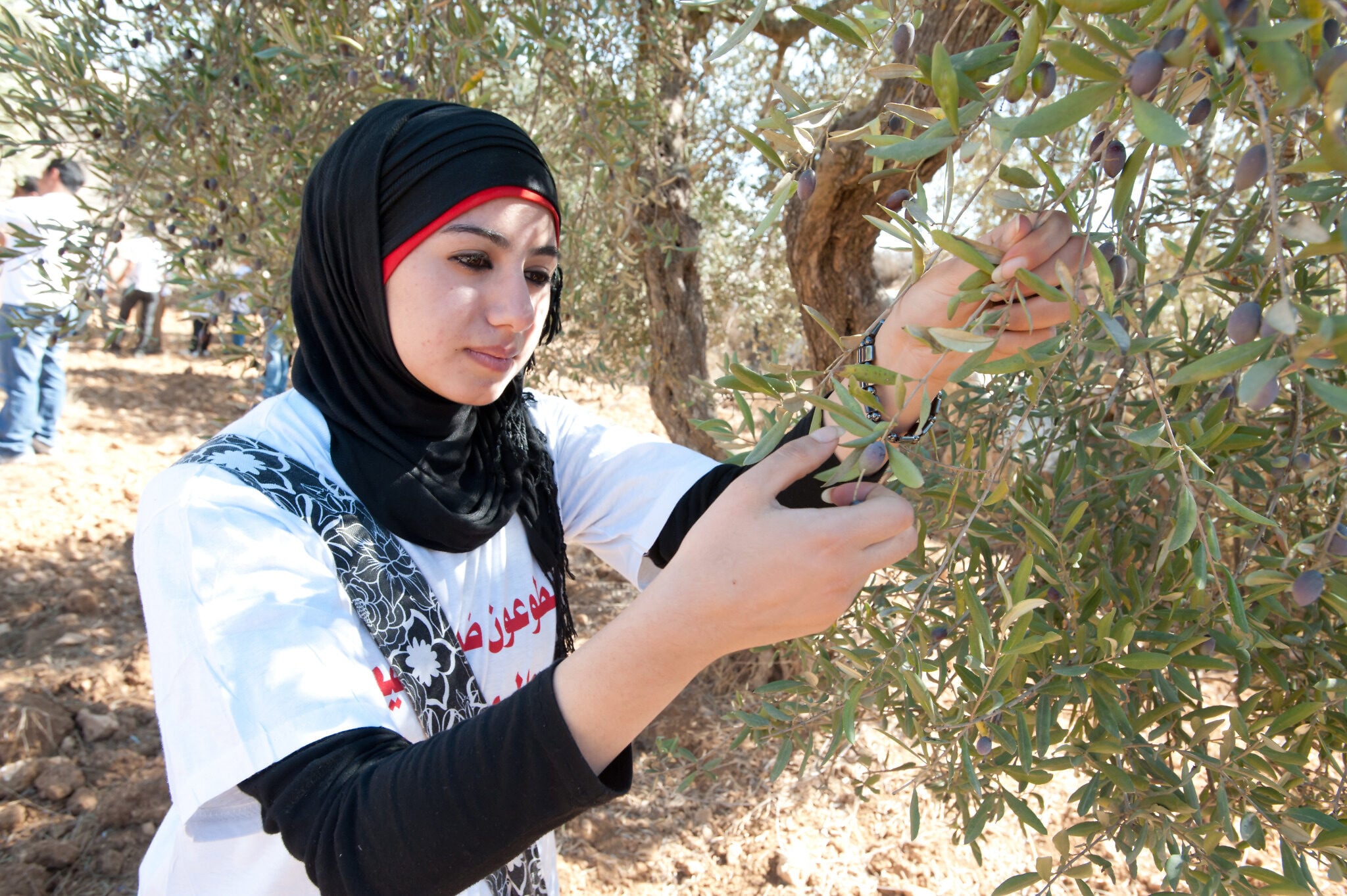
The person pictured has no connection to the events described in this article. Credit: Shutterstock
Protecting civilians and enforcing the law are essential to rebuilding trust around the world.
Heidi Levine went to the West Bank to do her job. On October 16, the Washington Post photojournalist was beaten while covering the Palestinian olive harvest near Abu Falah. She suffered broken vertebrae and a broken rib and subsequently underwent surgery on her hand. She was wearing a vest marked PRESS.
The following day, European diplomats and a French mayor were among those attacked near the village of Taybeh.
The first concern must be for the people assaulted and for Palestinian families trying to harvest their olives. Their safety matters whether a foreign journalist or diplomat is present. They deserve protection because they are human beings.
These attacks also confront those of us who love Israel with a painful question: how can we ask the world to recognize the humanity of Israeli society while our government fails to provide a convincing, consistent answer to brutality committed by Israelis?
President Isaac Herzog offered the moral clarity the moment required. He called Levine, apologized for what she had endured, condemned the violence, and urged that those responsible be brought to justice. He said the perpetrators’ behavior did not represent Israel’s citizens or values. His intervention mattered.
Israel’s ambassador to Washington, Yechiel Leiter, also deserves credit. Asked by CNN about the assault on Levine, he called such violence “completely unacceptable” and insisted that “those perpetrating the violence have to be brought to justice.” He also acknowledged the need for Israel to do a better job confronting Jewish vigilantism. To those who have forgotten, Ambassador’s Leiter’s son was gravely injured just weeks ago and is still in hospital after a Palestinian terrorist attack.
The IDF and Foreign Minister Gideon Sa’ar also condemned the attack on the diplomats, and police announced investigations. Those responses deserve acknowledgment.
These statements now need to be made credible through the conduct of the state.
Yet the Prime Minister’s Office emphasized doubts about the evidence, the delegation’s failure to coordinate its visit, and concerns about a campaign to smear Israel.
However, this is what must happen immediately. Israel needs to launch an immediate investigation to find the individuals responsible for the actual attacks and there senders. Israel must act with the same swiftness used when the terrorists are Palestinians. Coordination arrangements can properly be examined. But they should not serve as an “excuse” for why Israel will drag its feet to find those responsible.
When the public response gives such prominence to the conduct or politics of the people attacked, it risks sounding like an invitation to find reasons to excuse their attackers. That is a failure of leadership, with consequences well beyond the scene of the assault.
Much of my work these days is devoted to making room for a fuller understanding of Israeli society. I want people to encounter the country through its citizens, their work, their relationships, their complexities and their contribution to the lives of others. A society as diverse as ours deserves to be understood in its full complexity.
The damage these terrorists (I prefer to call them terrorists because that is exactly what they are) inflict therefore reaches far beyond the people they attack. They exist to make the work of building trust impossible. They supply images through which an entire country can be judged, and they place an additional burden on Israelis seeking cooperation abroad. The fact that they are Jewish, makes it much worse to me as Jew and as an Israeli. Just imagine what the Israeli government reaction would have been had these events taken place somewhere in Europe or elsewhere around the world, or against Israelis.
I want to think that most people will resist passing judgment that every Israeli is responsible for every act committed by another Israeli. By the same manner, I live with the hope that not every Palestinian wakes up thinking of ways to kill Israelis. But I do live in this world, and I certainly know that in a post-October 7 world, Israel is guilty regardless of what it does or does not do. I also “understand” how a week before pivotal elections will take place in Israel, the Prime Minister’s response leaves a lot to be desired.
But the state’s response matters so much. People watching from abroad will look for evidence that authorities are willing and able to restrain the perpetrators. That is why the quick response by Israel’s President, Foreign Minister, and Ambassador to Washington matter so much.
Similarly, we know that there are people determined to deny Israel any legitimacy. Their hostility is real. These events just add fuel to their already lit fire. I know that we will not be able to reach them, with any argument, valid as those arguments may be.
However, a sincere effort to rebuild Israel’s reputation must reach people who are prepared to listen, who can recognize the country’s security challenges but still expect it to uphold basic standards. Dismissing their concern risks losing precisely the relationships we need to rebuild.
Those relationships depend on credibility. When we speak about human dignity, our willingness to defend the dignity of Palestinians is part of the evidence we need to produce. When we speak about democratic values, the safety of journalists and the independence of law enforcement matter. Even if their presence was “uncoordinated” as the Prime Minister stated. Our claims will be judged against what people can see.
The practical requirements are clear. Protect Palestinian farmers during the harvest and respond promptly to threats. The fact that this needs to happen is a travesty. When they happen, investigate assaults thoroughly, arrest suspects where the evidence warrants it, and pursue prosecutions through the courts. Where there are credible allegations that security personnel failed to intervene, examine those failures too and hold the responsible officials accountable.
Political leaders with a backbone should insist that police and soldiers be given an unambiguous mandate to stop this violence. The public should be able to see whether the people at risk are safer and whether those responsible face consequences. That is our moral and practical responsibility as long as we assume to control security in the West Bank. Security is a two way street.
Pivoting back to my work, civil society in Israel has an essential role in rebuilding relationships with the world. That work needs sustained investment and the freedom to tell honest stories, including uncomfortable ones. Its credibility grows when it can show a society capable of recognizing a failure and demanding that it be corrected.
I want the world to look again at Israel. I want the world to see the people who serve others, create opportunities and work across divisions. Unbelievably, these people exist. I also want the world to see a state that protects the vulnerable and confronts violence committed in its name.
Herzog gave voice to the Israel I believe in. The government now must give those values practical force. Even if its days are numbered. The people attacked deserve justice, and the Israelis working to earn the world’s trust deserve leadership that supports their efforts through its actions, not only their’s.
Ethan Kushner is co-founder and executive director of the Kerem Alliance, a non-aligned civil society initiative working to broaden understanding of Israel through authentic stories and human connections.
Related Topics
Related Posts