
When Someone You Love Becomes a “They”
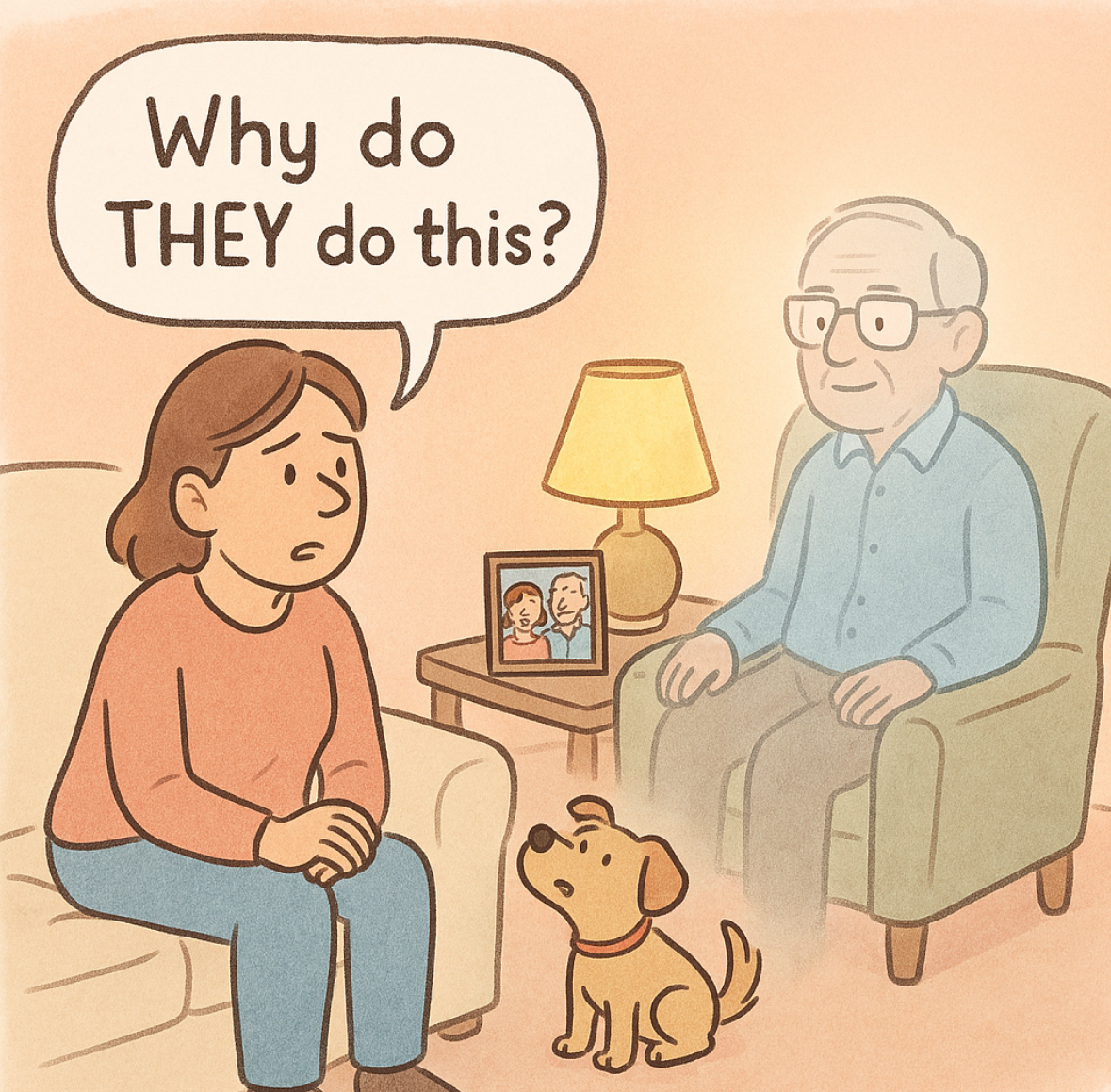
What happens when the person you love slowly becomes someone you barely recognize – and sometimes even a “They”? That question haunts me more than anything else about my condition. I think awareness of the issue may offer some help or at least preparation to some, myself included.
Originally written for my PSP (Progressive Supranuclear Palsy) blog, but I believe its message resonates far beyond that – to anyone living with a terminal illness, or caring for someone who has become uncommunicative due to disease or condition.
I’m 50 years old, blessed with a beautiful, loving family – my wife, my children, and a circle of friends who have stood by me through life’s ups and downs. Until recently, I was a management consultant and accountant, living a full and active life. Then came a diagnosis that changed everything: Progressive Supranuclear Palsy (PSP), a rare and aggressive neurological disease that affects movement, balance, speech, and emotional control.
It’s a condition that relatively quickly erodes both body and mind, often (but not always) in its later stages leaving people unable to speak or connect in the ways they once could. The average life expectancy is approximately six to twelve years from the onset of initial symptoms, which, for me, began five years ago.
In Jewish tradition, we are taught to see the divine spark in every person, to honor the dignity of life even when it is fragile, fading, or hard to recognize. But what happens when the person you love slowly becomes someone you barely recognize, and sometimes even a “They”?
This isn’t just about one disease. It is about the quiet erosion of identity, the strain on relationships, and the emotional toll on caregivers and loved ones. It is about holding on to the humanity of someone who may no longer be able to express it, and about the fear of losing your own.
Being part of the PSP community has taught me something important: frustration is not a weakness or a failure. It is a natural response to the overwhelming scale of the challenge. And surely, that applies to many other conditions like it. Every relationship has its tensions, but when life is magnified through the lens of a disease that changes both mind and body so quickly, those tensions can feel unbearable.
Under normal circumstances, some of these emotions might break relationships. But with PSP, and I imagine with many similar diseases, there is a need to double down and hold things together. That necessity can make everything harder, causing bitter feelings of resentment, anger, and probably regret.
Caregivers often witness apathy, sudden rage, and the heartbreaking loss of communication and cognitive ability. It is lonely. It is painful. Reading caregiver stories, it often feels like the person they love is no longer the same, or even there. And while I am still navigating these early waves (albeit already pretty stormy), I have glimpsed how they impact those caring for us. I have had moments of apathy and rage that don’t feel like “me.” I am slower than I used to be. And to be brutally honest, I wasn’t always easy before PSP – I was, in many ways, a pain in the backside. So now? Well, let’s just say I am probably the premium version of that pain.
I keep coming back to one word I have seen in caregiver conversations: “They.”
“Why do THEY do this?” “Why won’t THEY respond?”
I don’t judge this – how could I? I understand it. But it breaks my heart. That word signals something devastating: the patient has become “They,” not Dad, not Mom, not a spouse, not a friend. Just… “They.” I understand that feeling. And it terrifies me. The last thing I want is for my wife or kids to stop seeing me as “Beej” or “Dad” because my behavior changes or I become unresponsive. Being a control freak makes that fear even worse.
I can’t speak for any other patient, only for myself. These changes are not intentional. They are not deliberate. Research shows that after an outburst – what is called emotional lability – patients often feel deep regret. I know I do. It is painful to realize what you have said or done, knowing it wasn’t what you meant. Right now, I can still apologize to my wife, my kids, my friends. But I can only imagine how much harder it is when you can’t share that regret.
I don’t have generic advice, and anyway I am far from qualified – I am a retired accountant and management consultant. Just a hope: that my loved ones and I can hold on to our relationship through this journey. And if that is not possible, then at least hold on to the understanding that the person inside is still there and doesn’t want to cause pain. I honestly don’t know what is worse – being so apathetic that you are no longer present, or feeling the pain of your actions. Apathy might numb the hurt, but the loss of empathy is its own tragedy.
I pray that my family, and all families facing PSP or similar conditions, can navigate this journey with connection intact and pain minimized. These diseases are brutal, and my heart goes out to everyone living it, without judgment, only compassion. For now, I will savor every moment and hope the later stages stay far away. More than anything, I hope I never become a “They”, although for me the odds are very low because I have the most beautiful family in the world (subjective of course but true)!