
When strategic realism prevails over ideology
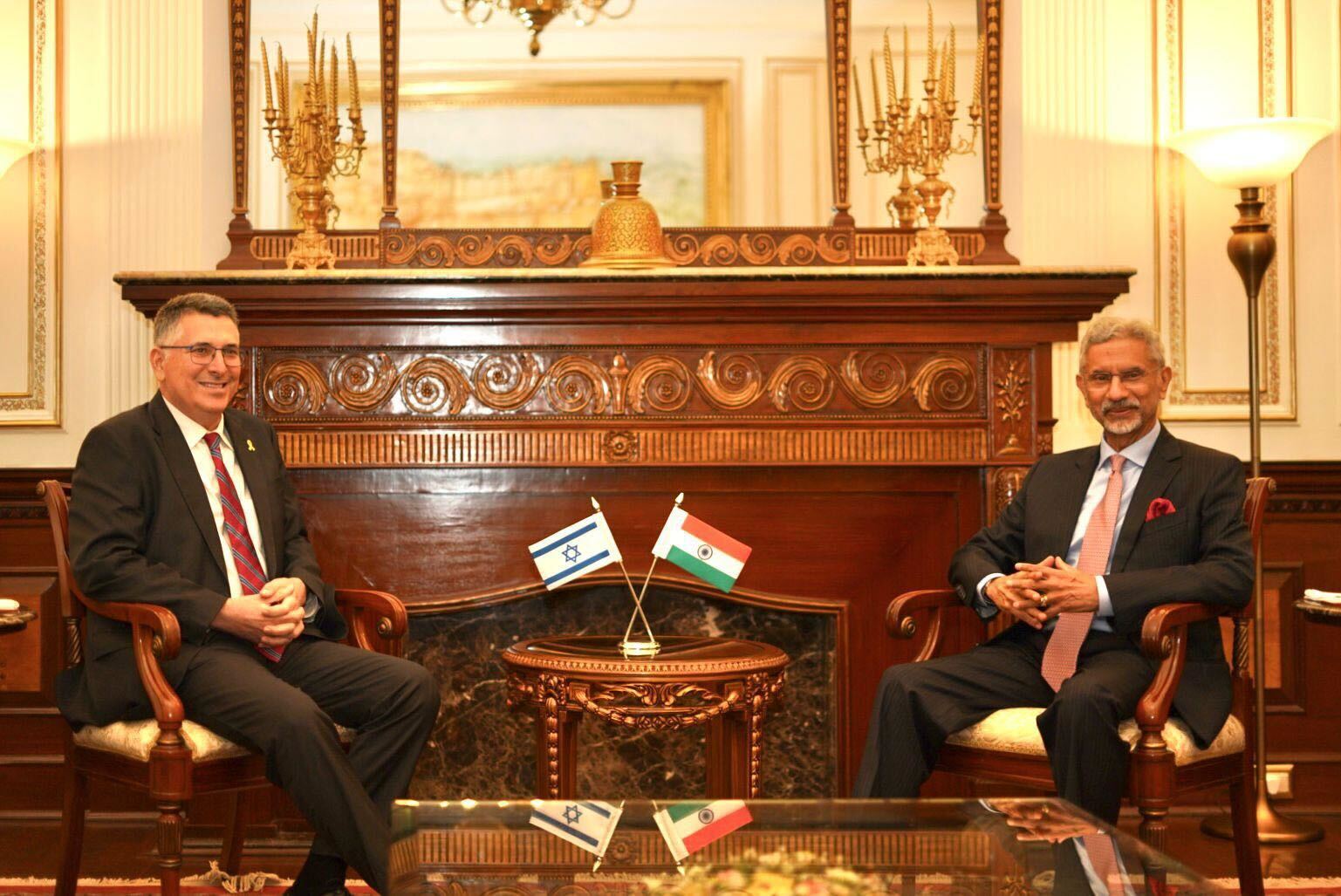
The visit of Israeli minister Gideon Sa’ar to New Delhi, at the beginning of November 2025, went unnoticed. Yet, behind this meeting hides a significant geopolitical truth : the strengthening of the strategic partnership between Narendra Modi’s India and Israel at a moment when the balances of the Middle East and Asia are being redrawn.
Since his election in 2014, Narendra Modi has profoundly transformed Indian foreign policy. For the first time, New Delhi assumes its relationship with Israel, once discreet for fear of irritating the Arab countries. In 2017, Modi’s historic visit to Jerusalem—the first of an Indian government leader—opened a new era: that of a partnership based on security and technology.
Israel is now a strategic partner under Narendra Modi, not just a weapons supplier. At the civil level, cooperation extends to cybersecurity, water management, and agriculture. India looks up to Israel as an example of technological innovation and perseverance.
However, the Indo-Israeli rapprochement extends beyond technology. It relies on a political and ideological affinity between two nationalist leaders, who place the defense of borders, the fight against terrorism, and national sovereignty at the heart of their politics . Modi and successive Israeli governments share the same apprehension with regard to Western moral pressures and international institutions.
In this context, the visit of Gideon Sa’ar has a “symbolic” meaning. It comes as the conflict in Gaza continues to isolate Israel, particularly in Europe, and as the new Trump administration seeks to redefine regional alliances. In India , Gideon Sa’ar is not looking for a “protocol photo” but for a strategic anchor: Israel knows that India, despite its official attachment to non-aligned diplomacy, is one of the few major countries not to have openly condemned its policy in Gaza.
For India, this proximity does not contradict its doctrine of “strategic autonomy.” New Delhi continues to engage in dialogue with Tehran and Moscow, maintains strong economic ties with the Gulf monarchies, but in fact, the rapprochement with Tel Aviv is assumed. India, which shares with Israel the fear of cross-border terrorism, sees in Jerusalem an ally, technologically advanced and politically stable (a rare asset in the Middle East).
The cooperation between the two countries is also part of a broader framework: that of the I2U2 initiative (India, Israel, United Arab Emirates, United States). Through this, India strengthens its place in the American system. The art of Indian diplomacy: participate in the recomposition of the pro-American camp while preserving a margin of autonomy vis-à-vis Washington as well as Beijing.
Thus, the tandem India–Israel becomes a pivot of the new regional order. While Europe divides on the Israeli question and China invests in the Gulf, India offers Israel an entry to Asia with a credible partner in the long term. For its part, Israel offers India strategic know-how, a resilient image of power, and a relay of influence with the United States.
India stands today alongside Israel because their interests converge. Gideon Sa’ar’s journey is the sign of a lasting alliance between two nations that, each in their own way, refuse to accept the injunctions of an international order in crisis.
In an increasingly fragmented world, the New Delhi-Jerusalem axis may well become one of the silent pillars of the new Eurasian equilibrium