
This Way Up: Spiritual Means to Psychological Ends
When Symbols Speak: A Dialogue Between Hebrew and Chinese
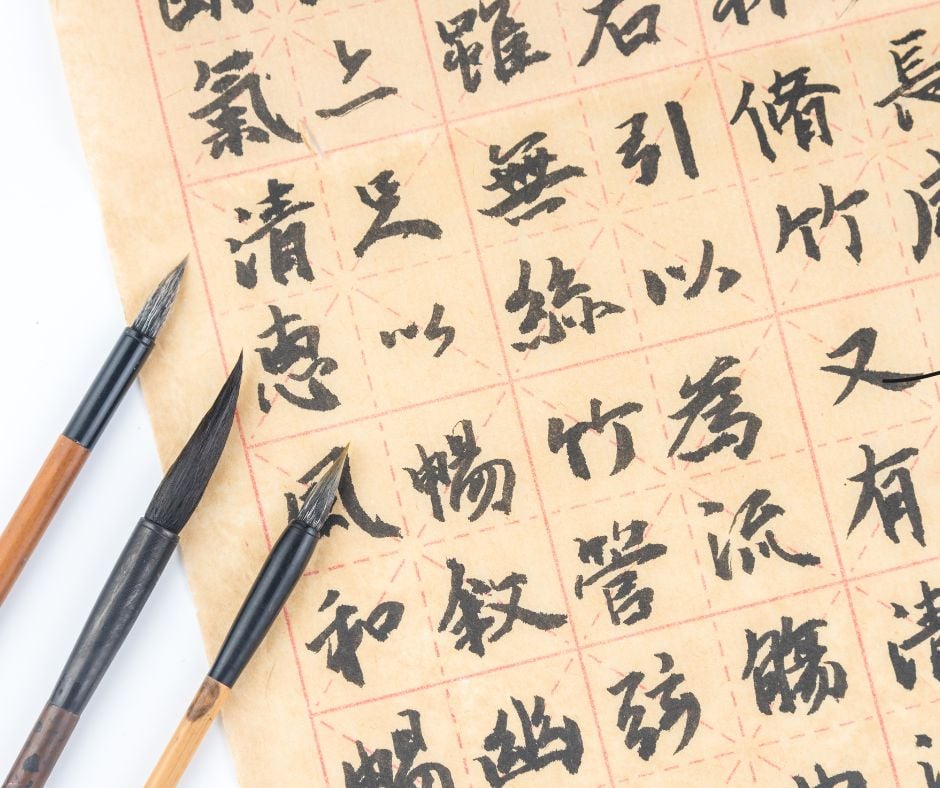
Image courtesy of Canva.com
In a world fractured by difference, language can be a bridge — not merely of communication, but of worldview. At first glance, Hebrew and Chinese might appear as distant cousins on the vast linguistic tree: one the ancient tongue of a small Semitic people in the Middle East; the other the millennia-old script of the world’s most populous nation. But when we look more closely at their roots — at their symbols, their structures, and the silent philosophies encoded within — a surprising kinship emerges.
Pictographs as Conceptual DNA
Both Hebrew and Chinese emerged from pictographic origins. Before alphabets and phonetics, their letters and characters were more than sounds — they were images, condensed into strokes that captured the shape of reality and the essence of meaning.
In ancient Hebrew, every letter is not just a sound but a symbol. Aleph (א), the first letter, symbolically represents the Creation characterized by Heaven, the world above, and Earth, the world below, both of which are represented graphically in the letter. The Aleph connotes leadership or represents the Creator. Bet (ב), translating into “house,” represents containment, beginnings, or inner space, which is represented in the shape and structure of the letter. Together, these letters form roots that branch into complex conceptual forests. The Hebrew word for “father” (av) combines leadership (aleph) and house (bet), signaling authority in the home.
In classical Chinese, each character was once a picture, a microcosm of the object or idea it represented. The character for “tree” (木) looks like a trunk with branches. “Forest” (林) is made from two trees. “Rest” (休) combines person (人) and tree — to rest is to lean against a tree. Like Hebrew, Chinese builds complex ideas from simpler elemental roots.
This pictographic logic points to something profound: both languages arise not from phonetics alone but from a conceptual framework. They prioritize symbol over sound, relationship over sequence, and meaning over mechanics. It suggests that both the Chinese and the Hebrew worldview are deeply relational and integrative, seeking connection between things rather than isolating them.
Reading Direction as Worldview
Another striking parallel is historical directionality. Classical Chinese was traditionally written top to bottom, right to left. Hebrew, to this day, is written right to left. Today, Chinese (now in horizontal form) reads left to right, but only because the language was modernized.
This distinction, wherein both languages initially shared a commonality of being written right to left, is more than typographic — it is philosophical.
Cultures that write right to left are, as a rule, oriented to the past, tradition, and ancestral wisdom. Graphologists, when analyzing handwriting to assess personality on the basis of handwriting or spatial organization of the page, suggest that the past is represented by the left side of the page and the future by the right side of the page. Languages that move to the left venerate what was, carrying the sacred weight of history. In Jewish culture, this is visible in the emphasis on memory (zachor), continuity, and the sacred cycle of return. In Chinese philosophy, Confucian reverence for the past and ancestor veneration echo this same pattern.
Conceptual Thinking and World Models
The reliance on pictographs and root-based meaning shows that both cultures are highly conceptual. Rather than isolating things into categories, both Chinese and Hebrew systems favor wholistic, interdependent models of thought.
In Hebrew mysticism, the Tree of Life (Etz Chaim) maps the cosmos through ten sephirot, or emanations. Each one represents a Divine quality or attribute, interlinked with the others in a dynamic system of balance and polarity.
In Chinese philosophy, the Five Elements (wood, fire, earth, metal, water) describe not physical matter but relationships and transformations. These elements cycle, support, and counterbalance each other — just like the sephirot. The yin-yang dynamic, too, mirrors the masculine-feminine polarities embedded in Hebrew words and names of G-d.
Both traditions resist binary thinking in favor of dialectics: fire generates earth, yet also overcomes metal; chesed (loving-kindness) must be balanced with gevurah (boundaries). Neither system views reality as static — everything flows, transforms, and returns.
Toward a New Alliance
As the Jewish and Chinese peoples continue to shape the global landscape — one with spiritual depth and cultural longevity, the other with civilizational weight and modern dynamism — recognizing these shared foundations offers a basis for dialogue.
It is time to explore a cultural alliance, not based merely on economics or geopolitics, but on conceptual resonance: a shared reverence for tradition, for ancestors, for language as soul, and for symbol as world.
By rediscovering the pictographic DNA that runs through both our languages, we may find new pathways to mutual understanding — as well as visions of alliance in a world where divisions, otherwise, abound.
Related Topics
Related Posts