
Activist, Educator, Writer, Jewish Diplomat and Soccer Player.
When Talent Meets Opportunity
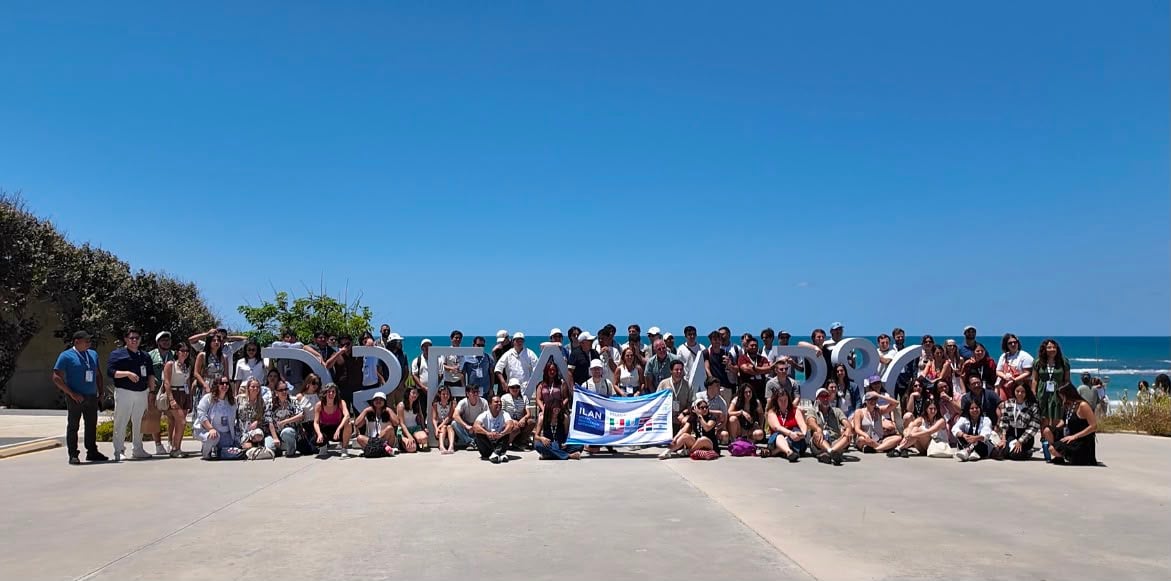
ILAN- Israel Innovation Network delegation in the Peres Center for Peace and Innovation
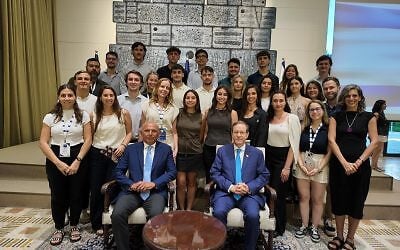
On one of the final days of our journey, seven young Latin Americans stood at the President’s Residence in Jerusalem and addressed President Isaac Herzog, one representative for each country in our delegation.
Eight days earlier, they had arrived in Israel representing 55 projects developed across 24 universities: environmental solutions, technologies, social-impact ventures and ideas created to solve real problems in their communities.
 They had not come to Israel to discover whether they were innovators. They already were. They came to discover how far their ideas — and perhaps they themselves — could go.
This summer, I traveled through Israel with 87 young innovators and academics from seven Latin American countries as part of a delegation organized by ILAN – Israel Innovation Network. We visited universities, research centers, companies and innovation hubs, meeting scientists, entrepreneurs and researchers along the way.
Watching them throughout those eight days reinforced something I have increasingly come to believe through my work. Across Latin America, universities and organizations identify extraordinary young people, reward their projects and celebrate their achievements. That recognition matters. But it is only a starting point.
An exceptional young person can still lack access to the mentors, institutions, networks and environments that might allow an idea to grow.
That is what I saw change in Israel.
Héctor Garduño, one of our Mexican delegates, arrived expecting to learn about technology and entrepreneurship. He left with a broader reflection:
Great ideas are born when we dare to serve, collaborate and turn challenges into opportunities.
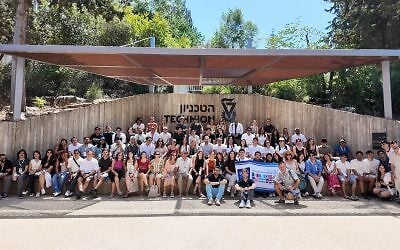
What stayed with me was not only what he learned, but the way his frame of reference had expanded.
For Adrian Caruso, whose project BIDAGUA focuses on rainwater harvesting, Israel’s approach to water management became more than a technical case study.
Seeing how a country this young managed to grow trees in the desert showed me that the same search for solutions applies to everything in life,” he said. “When something seems impossible, that is exactly when you have to try.
Young innovators do not grow only because someone teaches them more. Sometimes they grow because they are placed in an environment that changes the scale of what they believe is possible.
Israel offers a particularly interesting environment for that. Not because its model should simply be reproduced elsewhere, but because universities, research, entrepreneurship, industry and investment interact in unusually close proximity.
For a student already working on a problem, seeing those connections in practice can change the next question from “Can this project work?” to “How far can I take it?”
There was also another consequence of the journey.
Many participants arrived with an image of Israel built largely from a distance — through news, social media and public debate. Once there, that image became more clear.
They met students and researchers. They walked through laboratories and companies. They walk through the beaches and vibrant cultural life. They experienced ordinary daily life alongside the extraordinary challenges the country is facing. Several told us afterward that their perception of Israel had changed significantly.
Freddy Velásquez, one of our delegates from Guatemala, described it this way:
The true value of this opportunity is not only in the technology you will discover in each innovation center, but in the human network you will build between Latin America and Israel.
I agree with him.
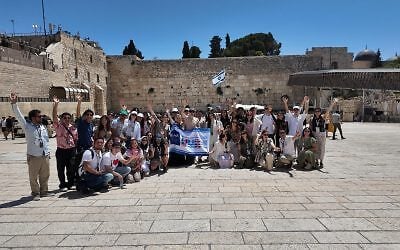 We often think about international cooperation as something that begins with governments. Governments can create frameworks and open doors, but relationships between countries become meaningful through people.
They begin when a student meets a researcher, an entrepreneur finds a mentor or two young innovators discover they are trying to solve versions of the same problem in different parts of the world.
Those connections usually begin very simply. A conversation. An introduction. An email after returning home.
Years later, they may become a company, a research partnership, an investment or an opportunity for someone else.
This is why I have become convinced that recognizing talent cannot be the end of the process.
At ILAN, we identify young innovators, but the award is only the beginning. Our work afterward is focused on strengthening them, positioning their projects, creating opportunities for them to scale and connecting them with networks that can help them think internationally.
The objective is not simply to take young people to Israel for eight days. It is to make sure the access does not disappear when the plane lands back home. We want to straight the our economies through innovation and connect the futures leaders with Israel.
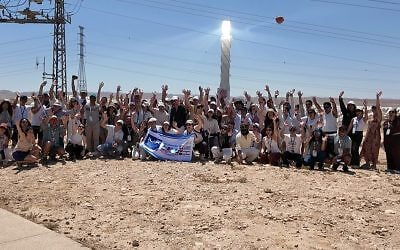 Thats why real question is not what 87 young people saw during eight days in Israel. It is what those eight days might make possible over the next years. Some will grow the projects they already started. Some will build companies or become researchers, educators, investors or public leaders. Some may eventually create opportunities for young people they have not yet met.
Isaac Assa, ILAN’s founder and president, often says that you can count the seeds in an apple, but you cannot count the apples that may come from a single seed. I thought about that as our delegation returned home. We cannot yet know which conversation will matter most, which relationship will endure or which idea will grow far beyond the project we first recognized.
But when we invest in talented young people, we are not investing only in what they are building today, but what may become capable of building tomorrow.
If you are interested in learn more about ILAN- Israel Innovation Network, contact us: adela@ilan.lat http://ilan.lat
Related Topics
Related Posts