Israel as a global geostrategic axis
Love III: Iranian regime congratulates Lula on his reelection
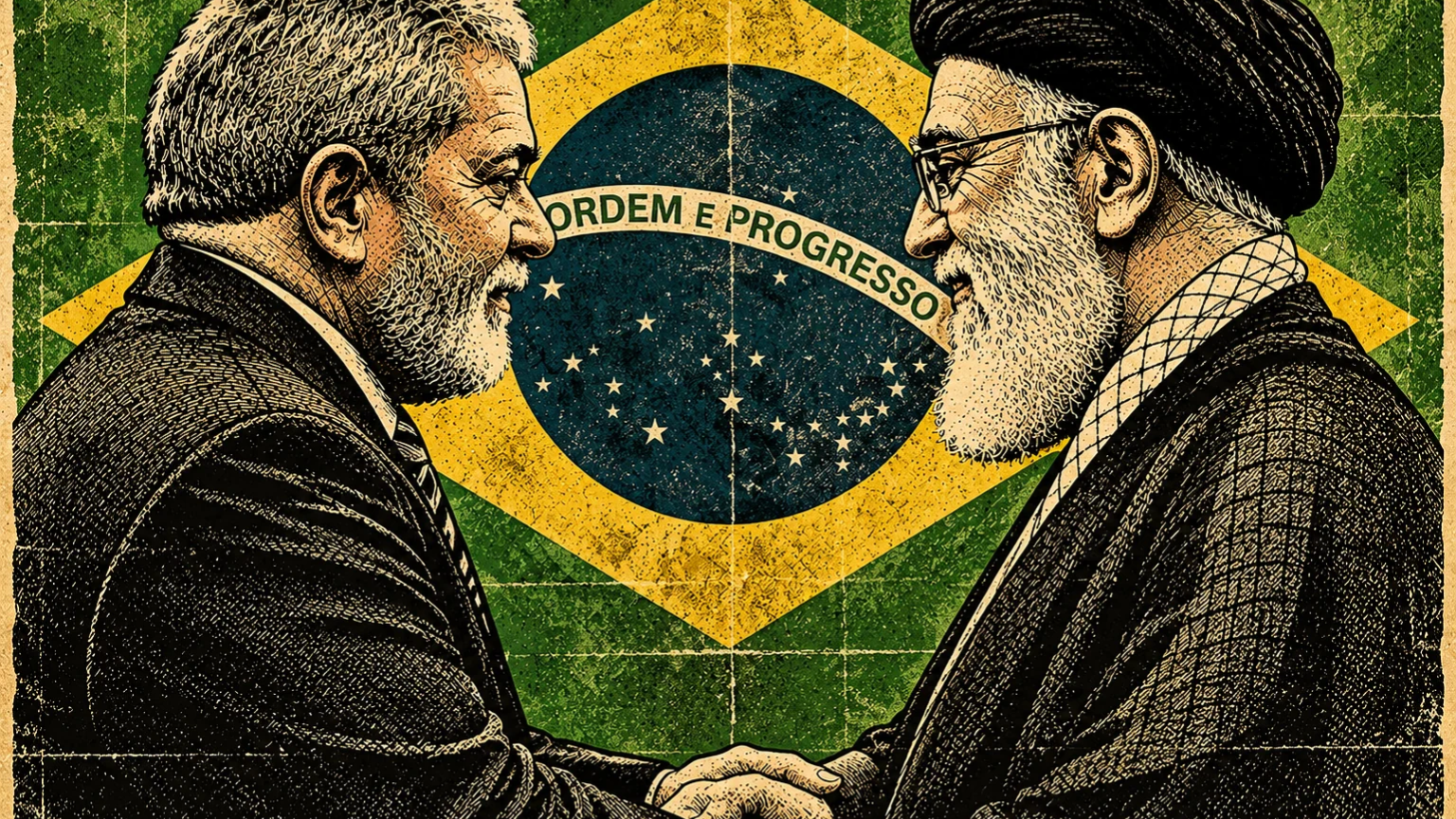
A historic alliance between Lula's administration and the ayatollah regime (AI-generated image)
Beyond the terrorist groups Hamas and Hezbollah congratulating Lula, the Iranian regime — the world’s largest state sponsor of terrorism — issued a message to the reelected president, completing the contemporary terrorism triad: the enemies and gravest threats to the State of Israel.
On October 26, 2026, Iranian President Masoud Pezeshkian issued a formal congratulatory message to the reelected president. The text was not limited to generic greetings; it explicitly articulated the expectation that ties between the Islamic Republic of Iran and the Federative Republic of Brazil would deepen during the new term.
Pezeshkian emphasized the need to expand cooperation in areas of mutual interest, aligning it with joint efforts to strengthen multilateralism, international development and global peace — can a regime that massacres its own people promote global peace? The UN certainly bears a significant share of the blame for enabling this Iranian charade.
The materialization of this alignment occurred at the operational level the following day. Iranian Foreign Minister Seyyed Abbas Araghchi held a telephone conversation with his Brazilian counterpart, Mauro Vieira, on the night of Tuesday, October 27, 2026. More than a mere act of courtesy, the direct channel between the two foreign ministries reveals the electoral greeting as a pretext for maintaining active dialogue channels on sensitive issues.
Western pressure on Iran and the struggle for hegemony in the international system filter through the perceptions of the Iranian ruling elite, which identifies Lula’s Brazil as an indispensable counterweight asset.
Lula’s victory in 2026, in a context of advancing right-wing leadership in Latin America aligned with Washington, was interpreted by Tehran as the preservation of an important regional ally. Tehran therefore seeks to ensure that economic cooperation and ideological alignment in forums such as the UN and BRICS remain immune to domestic fluctuations and external pressures.
The act of congratulating Lula’s reelection transcended diplomatic etiquette. It was configured, in essence, as a foreign policy maneuver designed to consolidate a South-South cooperation axis at a time of great fragmentation within the Iranian regime.
How can a democratic country maintain ties of friendship with terrorist groups such as Hamas and Hezbollah? How can one accept a Western government maintaining diplomatic relations with a blood-soaked regime that, in addition to being the world’s most prolific state sponsor of terrorism, has committed mass murder against its own people?
Lula’s “diplomacy of love” has always been on the wrong side of history, against the current of the world’s democratic countries…
Shema Yisrael שְׁמַע יִשְׂרָאֵל
Related Topics
Related Posts