Solicitor & foreign policy adviser
Featured Post
When the BBC becomes Al Jazeera’s understudy
The British broadcaster's leaders must face consequences over leaked revelations of shockingly blatant anti-Israel bias
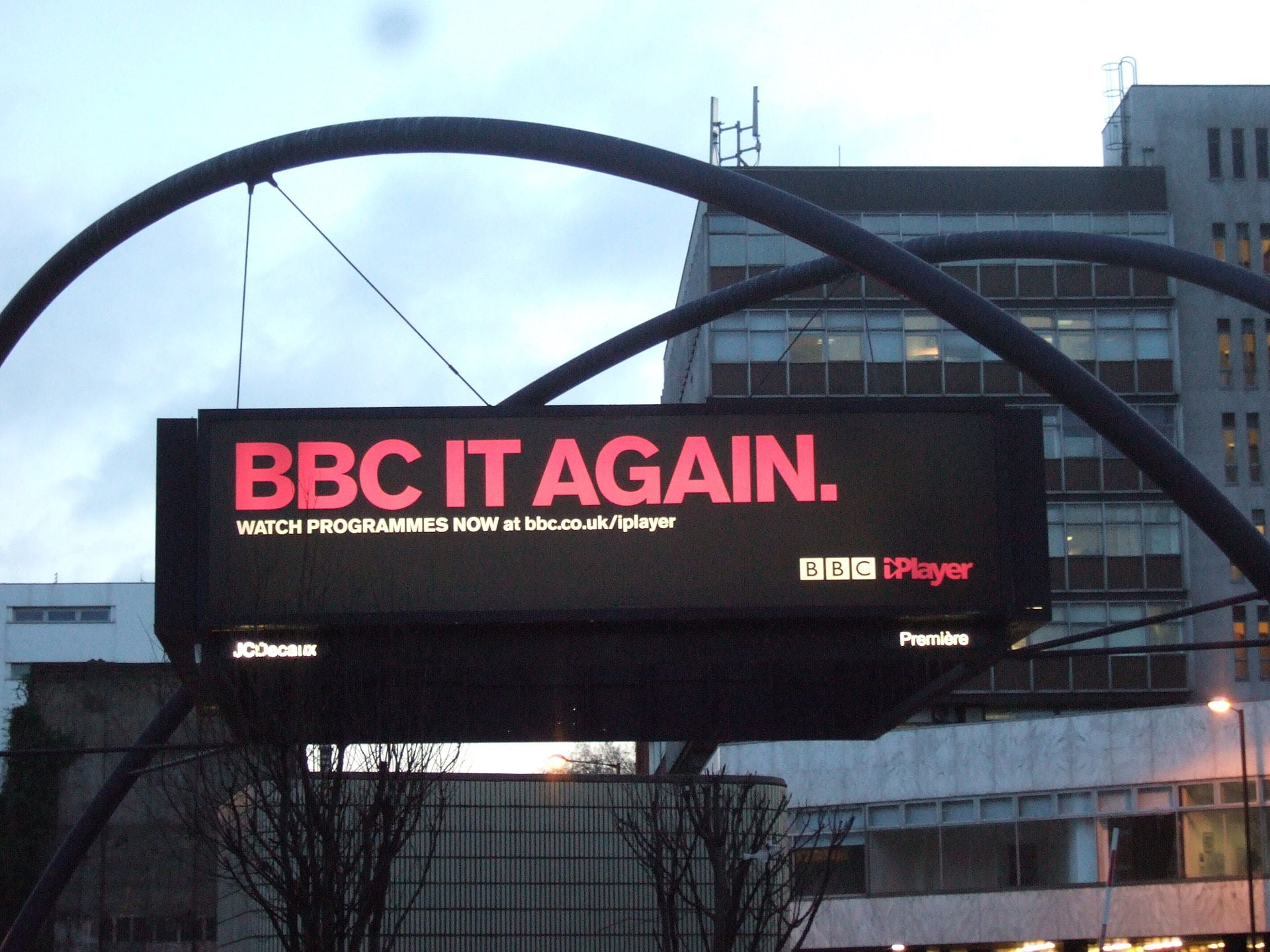
Advertisement for BBC iPlayer at Old Street, London (Photo By Edward Betts - Wikipedia Commons)
Jonathan Munro thought he was paying BBC Arabic a compliment when he called its journalism “almost as trusted as Al Jazeera.” The senior BBC executive apparently missed the part where comparing Britain’s public broadcaster to Qatar’s propaganda outlet might not land as the endorsement he imagined. That line alone tells you everything about how far the rot has spread.
A leaked 19-page dossier from Michael Prescott, former adviser to the BBC’s Editorial Guidelines and Standards Committee, has confirmed what British Jews have known for years: BBC Arabic doesn’t just tilt against Israel—it’s become a conveyor belt for Hamas talking points. The memo, now circulating through Whitehall, documents systemic anti-Israel bias so brazen that it makes the English-language service look restrained by comparison.
The facts are damning. David Grossman, another independent adviser, flagged serious problems in January after reviewing BBC Arabic’s Gaza coverage over five months. His report identified issues with editorial oversight, leadership, and that curious Press Review feature—which apparently exists to launder Middle Eastern conspiracy theories into respectable British journalism. When Grossman’s findings landed on Munro’s desk, the response was instructive: defend, deflect, and compare yourselves to Al Jazeera. Problem solved.
Prescott’s dossier goes further. BBC Arabic gave a platform to Samer Elzaenen—who once posted that Jews should be “burned as Hitler did”—244 times in 18 months. Ahmed Alagha, who called Jews “devils” and “not human beings,” appeared 522 times. These weren’t random stringers caught in a pinch. These were go-to voices, eyewitnesses the BBC Arabic team speed-dialed whenever Israel needed condemning. The network later claimed these men weren’t staff, as if that distinction matters when you’re mainlining antisemitism to 37 million weekly viewers.
The bias wasn’t subtle. When Hezbollah rockets killed nine children in Majdal Shams last July, BBC Arabic omitted the deaths entirely, spotlighted Hezbollah’s denials, and the next day suggested Israel might have staged the attack. When Hamas terrorists murdered 79-year-old Edna Bluestein in a car-ramming and stabbing attack, BBC Arabic asked viewers whether this constituted “terrorism or resistance.” When a Yazidi woman rescued from Gaza described her captivity, BBC Arabic devoted 582 words to Hamas calling her a liar.
The pattern is clear and repeated, allegations against Israel raced to air without adequate checks, while anything that made Hamas look bad got buried, minimized, or spun. BBC Arabic translated every BBC News article critical of Israel into Arabic but couldn’t find time to translate a single piece about Israeli hostages or Hamas atrocities. A terror attack at a Jaffa light rail station that killed nine Israelis became a “military operation.” The October 7 massacre at Kfar Aza was presented as a “disputed claim.”
Here’s what stings: BBC leadership knew. Tim Davie and Deborah Turness received multiple warnings. Prescott’s frustration drove him to resign in June, writing about his “despair at inaction by the BBC Executive when issues come to light.” The corporation’s response has been textbook institutional defensiveness—deny, defend, deflect. A spokesperson said they take feedback seriously and have made changes. The Israeli Embassy, less diplomatically, called the revelations “extremely alarming” and demanded funding be halted to a service that “has abandoned the standards of credible journalism.”
This isn’t about balance. The BBC’s obsession with appearing neutral has produced something worse than bias—it’s created two separate realities. English readers get curated coverage designed to pass muster with London sensibilities. Arabic speakers get the uncut version, where Jewish suffering doesn’t count and Hamas terrorists are martyrs. The former BBC Television director Danny Cohen called it what it is: “demonisation of Israel by the BBC is a consistent and very serious problem.”
The broader implication should trouble anyone who cares about institutional integrity. The BBC operates under a Royal Charter that requires impartiality. It’s funded by British taxpayers and the Foreign Office. Yet when confronted with evidence of systemic failure, senior management chose to protect reputations over truth. They hid errors from license-fee payers and gaslit the Jewish community about what it could plainly see.
Prescott’s dossier will go to Parliament. MPs will ask pointed questions. The BBC will issue careful statements about reviewing processes and taking concerns seriously. But until Davie and Turness face real consequences, nothing changes. The message to BBC Arabic remains: keep doing what you’re doing, just don’t get caught next time.
The British Jewish community deserves better than a state broadcaster that treats their concerns as public relations problems. Israel deserves coverage that doesn’t require mountains of documentation to prove the obvious. And Arabic speakers across the Middle East deserve to know that when BBC Arabic claims the mantle of British journalism, it’s borrowed clothes on a Qatari frame.
British taxpayers funded a news service. They got a propaganda channel that aspires to Al Jazeera’s standards.
Related Topics
Related Posts