
When the Jewish People Rubik’s Cube Converged on Australian Jewry
On the first night of Hanukkah, as the Jewish community gathered on Sydney’s Bondi Beach to celebrate the triumph of light over darkness, two gunmen opened fire, killing 15 people, and leaving dozens injured—in the deadliest attack against Jews since October 7, 2023.
Jesse Emsalem, a member of the Sydney Jewish community, told Israel’s Channel 12, “The overwhelming attitude of Jews I’ve heard from here is that, ‘I’m shocked, I’m not surprised.’
We all saw this coming.”
The attack was the predictable peak of intersecting forces openly acting in Australia—and across the Jewish world—ever since Hamas broke through the fence into Israel over two years ago, and launched a new era of global Jewish vulnerability.
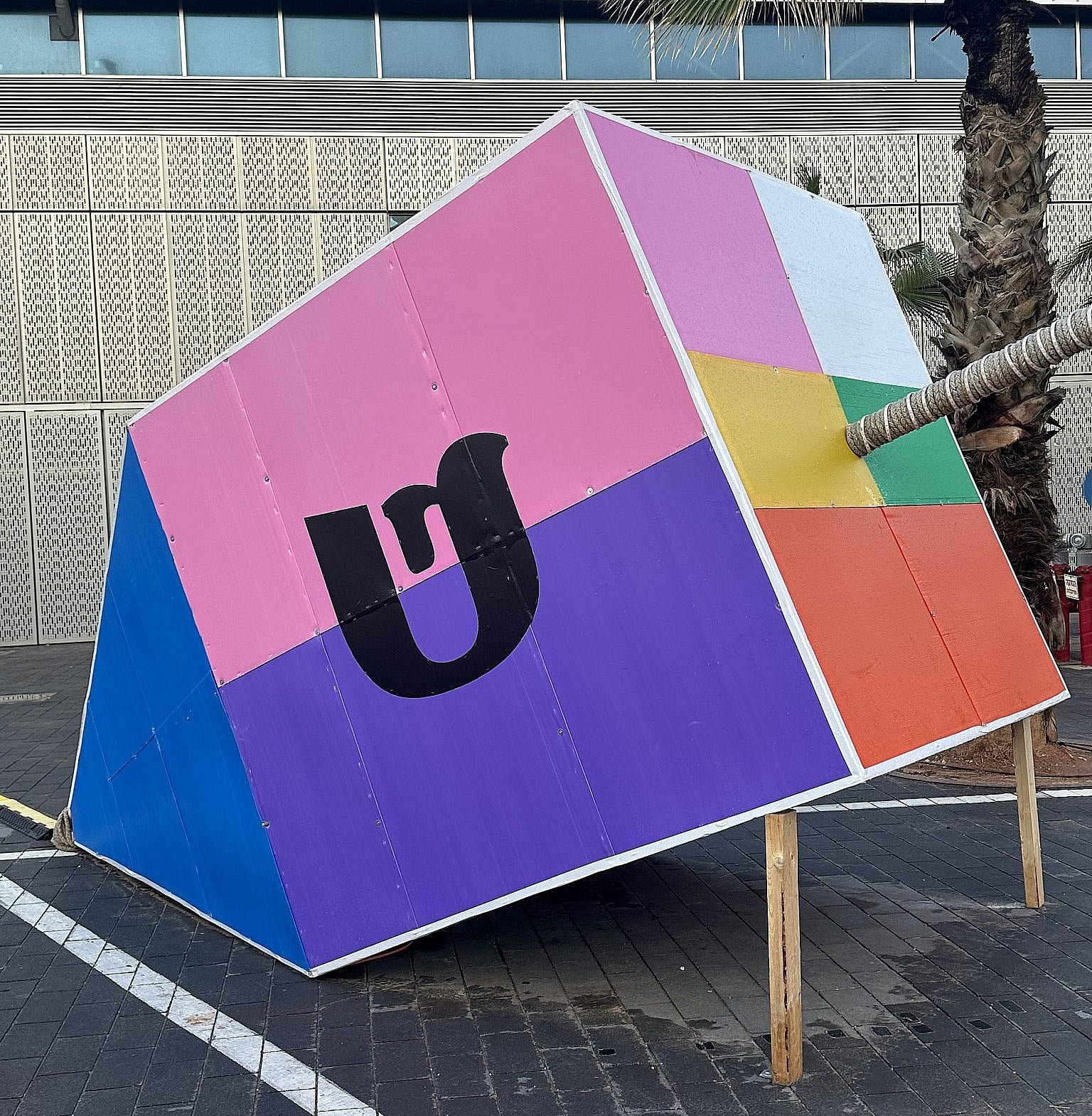
The post-October 7 Jewish reality is playing out like a Rubik’s Cube; six distinct sides, each colored by different primary forces, yet all interconnected and moving together. Solving one side disrupts another. Turning one side shifts the entire cube.
The six fronts include:
- The Changing Global Order—the collapse of the post-World War II liberal power alliance that nourished Global Jewry’s ‘Golden Era.’
- The Erosion of Jewish Status, where being Jewish now comes with an increasingly normalized social, political, and economic cost.
- The Convergence of Modern Antisemitism’s Domains: far-left, far-right, and Islamist movements, once as incompatible as oil and water, now fuel each other around a shared target.
- The Spoiled Zionist Story, in which Israel has transformed from a source of pride and security into one of shame and division.
- Rampant Polarization and Extremism, generating a world powered by social scarcity and competing identity interests.
- And underlying it all, a Trust and Leadership Crisis—no great leader, no great voice is coming to save us with their vision, protection, and direction.
These fronts make up the Global Jewish People’s Rubik’s Cube. In Australia, all six faces twisted together in uninterrupted harmony, leading to the Bondi Beach attack.
For decades, the working assumption among those tracking global Jewish trends was as follows: to see where the Jewish world is headed in 10 years, look to London or San Francisco. To see where it was 10 years ago, look to Australia. Protected by geography, robust community institutions, and solid Jewish cohesion, Australian Jewry remained insulated from emerging challenges—both internal pressures and external threats—that transformed other diaspora communities years earlier.
But with the old global order now on its head, the former late bloomer is now setting the trend for what is to come. Understanding how these intersecting forces prospered in Australia and how attempts to address them in isolation have failed is critical to preventing the next attack.
Paradise Lost
Australia’s contemporary Jewish community was founded by a generation of European Jews who fled and survived the Holocaust. They built for themselves and their descendants “a Jewish paradise”—one of the world’s most cohesive and thriving Jewish communities, 120,000 strong, with the highest Jewish day school enrollment rate outside Israel.
But paradise was shattered over the last two years. According to the Executive Council of Australian Jewry (ECAJ) antisemitic incidents in Australia are “almost five times the average annual number before October 7, 2023,” with a wave of attacks on Australian Jewish institutions.
In one of the worst events, in December 2024, masked men broke into and firebombed Adass Israel Synagogue in Melbourne. Australia identified Iran as the puppet master behind both the arson attack of the synagogue and another on a Sydney restaurant, subsequently expelling its Iranian diplomats. Iran’s activities on Australian soil revealed a coordinated strategy—targeting Diaspora Jewish communities as one front in its multi-theater war against Israel and Global Jewry.
Meanwhile, massive anti-Israel protests erupted across Australian cities immediately after October 7. Just two days after the massacre, well before Israel entered Gaza, protestors gathered outside the Sydney Opera House, chanting “gas the Jews.” Months later, even after the Gaza ceasefire took effect, over 30,000 rallied against Israel in Sydney.
These mass protests—drawing hundreds of thousands, including well-known politicians and journalists—transformed anti-Zionism into a collective condemnation of Australian Jewry.
Simultaneously, neo-Nazi sentiment surged. Swastikas were spray-painted on multiple Jewish institutions. Far-right extremists, emboldened by social chaos, repeatedly took to the streets with their own anti-immigration demonstrations, infused with anti-Jewish rhetoric.
This convergence of modern antisemitism’s domains—far-left, far-right, and Islamist—fed off each other; the far-left legitimized anti-Jewish rhetoric as “anti-Zionism.” The far-right exploited the chaos to advance ethnic nationalism. Islamist extremists saw an opening for violence.
A chilling report from the ECAJ published on December 3 laid it out this convergence of domains and its subsequent normalization: “We are now at a stage where anti-Jewish racism has left the fringes of society and become part of the mainstream, where it is normalized and allowed to fester and spread, gaining ground at universities, in arts and culture spaces, in the health sector, in the workplace and elsewhere. In such an environment, Jews have legitimate concerns for their physical safety and future in Australia. The political extremes are more active, more emboldened, and increasingly converging in one area – their common hatred of Jews/Zionists [….] There is nothing new about antisemitism emanating from neo-Nazis, the anti-Israel Left or Islamists. What is new is the increasing ideological alignment between them and, at least in the case of Islamists and those on the hard Left, growing co-operation.”
Jewish Australians were backed into the sharp angle of the Rubik’s cube as fronts closed in, and they knew it. But where to turn?
Israel has historically been the bedrock of Jewish identity, pride, and security for Australian Jewry. In August 2025, as the situation in Australia deteriorated, Israeli Prime Minister Benjamin Netanyahu called Australian Prime Minister Anthony Albanese following his recognition of Palestinian statehood, claiming him to be a “weak” politician who “betrayed Israel” and “abandoned” his country’s Jewish community, amid an escalating diplomatic crisis between the two nations.
Netanyahu blamed the Australian government for failing to protect Jews while pursuing policies critical of Israel. Far from appreciative, the Executive Council of Australian Jewry (ECAJ), Australian Jewry’s executive body known for uncritical, constant support for Israel, rebuked the Israeli prime minister publicly: that his comments were “inflammatory and provocative” and had “played straight into the hands of opponents of Israel and antisemites, to the detriment of the Australian Jewish community.”
The ECAJ made clear: “The Australian Jewish community will not be left to deal with the fallout of a spat between two leaders who are playing to their respective domestic audiences.”
The cumulative effect of these pressures was the rapid erosion of Jewish status in Australian society and the further spoiling of the Zionist story, all of which was aggravated by a leadership crisis; ultimately, the government that Jewish communities formerly relied on in the old global order failed to protect a vulnerable and exposed Australian Jewry.
In the immediate aftermath of the Hanukkah attack, blame circulates in all directions. Israeli officials claimed they had warned Australia. Australian police denied receiving specific warnings about Bondi Beach. The Australian Jewish community mourns while questioning its future.
Solving a scrambled Rubik’s Cube requires seeing the entire system. For the Jewish people post-October 7, this means accepting that the fronts are intertwined—and so are we. The coordinated assault on global Jewry aims to fracture the very interconnectedness that has sustained us for generations. This period of shared vulnerability demands that we navigate it together, emerging not merely intact but stronger and more unified than before.
The Bondi Beach attack was meant to extinguish this intertwoven light throughout the Jewish world. So, bringing more light to this Hanukkah as a personal and public act of defiance, hope, and resilience is the first step forward.
The second step is to take on the Rubik’s Cube Mindset— which is a peoplehood mindset – internalizing that in this global Jewish period, neither Israel nor Diaspora Jewish communities can work in isolation, that solving for one crisis while ignoring its ripple effects exacerbates the threat of an interconnected side, that the security and resilience of Australia or Israel or New York is tied to the security and resilience of every Jewish community around the world.
The Hanukkah story is about a small amount of oil that lasted eight days—enough time to prepare more. Australia’s tragedy offers a clear warning for Jewish communities around the world.
The only way to do so is with the coordination and strength of an interconnected global Jewish people. Because the future of Australian Jewry is the future of us all.