Thinking about 'Resilient Zionism'
When the King is in the field: The Yachad Journey
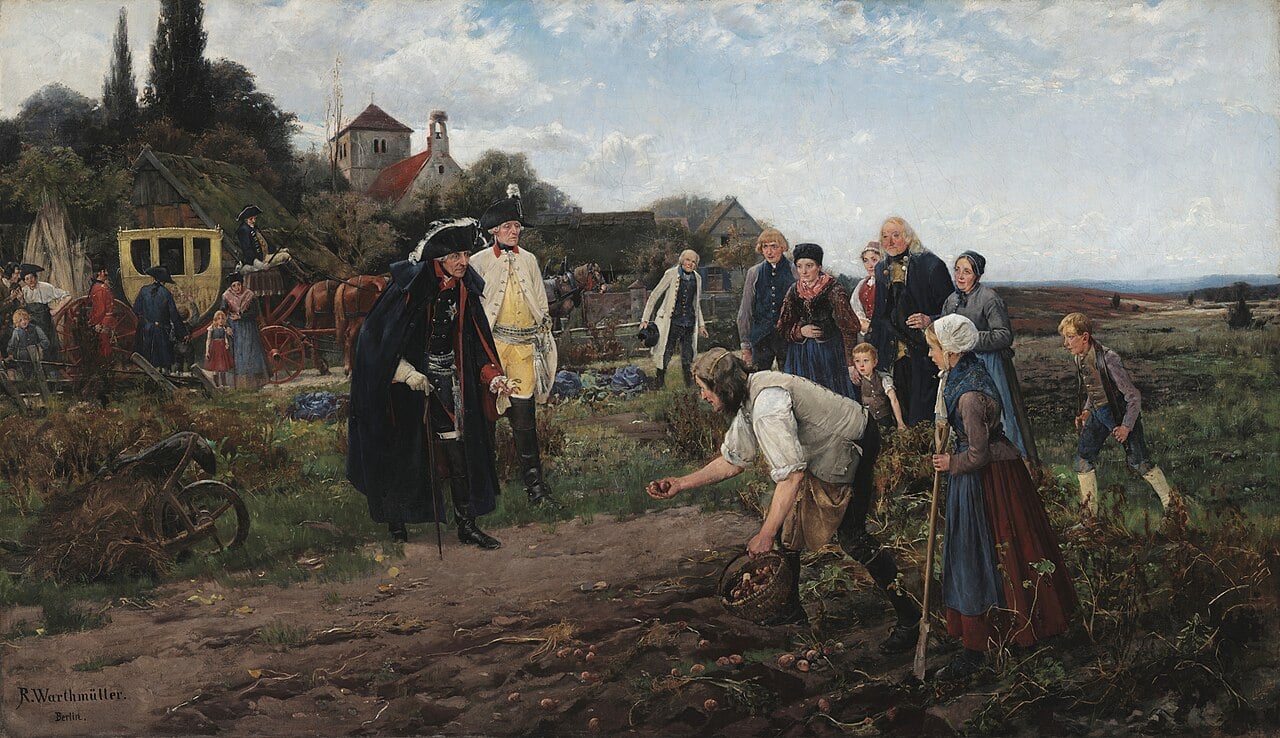
Robert Müller, Der König überall (The King Everywhere) 1886, Public domain, via Wikimedia Commons
As the month of Elul begins, Chassidic tradition offers one of its most beautiful images for this period of the year: ‘HaMelech Basadeh’ — “the King is in the field.”
Rabbi Shneur Zalman of Liadi, in his Likkutei Torah commentary on Parashat Re’eh, describes Elul through the parable of a king who leaves the formality of his palace and goes out to meet his people in the field. There, anyone can approach him. The King is close, accessible and present within the ordinary landscape of life. Usually, we understand the metaphor spiritually. Elul is a time of introspection, return and preparation for Rosh Hashanah. The King is “in the field” because the distance between the sacred and the everyday has somehow narrowed.
But living in Israel, and particularly at this moment in my own life, I find myself reading the image somewhat more literally. Perhaps there is holiness in the field itself. The King is not sojourning in the forest, the desert or even the city. The metaphor places the King — the Shechina, the Divine Presence — specifically in the field.
Over the past few years, I have been privileged to be part of the journey to establish Garin Yachad, a new community planning to settle the area of Mevuot Arad in the Negev. At the heart of our vision is the ambition to anchor the community’s economic development plans in resilient Zionist agriculture — agriculture that is economically viable, environmentally responsible and deeply connected to the Zionist idea of cultivating and taking responsibility for the Land of Israel.
For a long time, much of that journey existed in plans, meetings and conversations. But as the prospect of physically settling the land becomes more tangible, I have become increasingly conscious of a personal dissonance. It is one thing to believe passionately in settling the Negev, strengthening Israel’s periphery and creating a new model of community rooted in agriculture, resilience and shared responsibility. It is another thing entirely to contemplate uprooting my own family from the comfortable environment we know and taking them into a place that will inevitably be more challenging — physically, socially and economically.The closer Yachad comes to becoming real, the more intense this dissonance becomes.
And perhaps that is precisely why this notion of the ‘Hamelech BaSadeh’ – ‘King in the field’ – feels particularly meaningful this Elul.
Only a few weeks ago, on Tu Be’Av, Jewish tradition brought us another powerful image of the field: the daughters of Jerusalem going out in white garments and dancing in the vineyards. There is something wonderfully romantic in that imagery — youth, possibility, encounter and love among the vineyards.
Elul presents a very different encounter with the field.
When the King is in the field, the field is not necessarily romantic. It can be hot, dry and uncertain. It is rigorously demanding and requires unrelenting work. And the encounter with the King may therefore demand more than inspiration. It may ask for commitment, adherence and responsibility. Perhaps the spiritual significance of Elul is not simply that God comes closer to us, but that His closeness makes it harder for us to remain spectators. When the King is distant in the palace, ideals can remain abstract. When the King stands beside us in the field, we are confronted with the question of what we are actually prepared to do.
That question lies at the heart of my own familial decision. Where is the line between my responsibility to provide stability, comfort and opportunity for my family and my sense of responsibility to something larger — to community, to the Negev and to the continuing Zionist project? There is no simple answer. Nor should national responsibility become an excuse to disregard personal and familial responsibility and stability.
But perhaps Elul asks us to examine honestly where comfort ends and commitment begins.
Perhaps that is what ‘Hamelech BaSadeh’ is asking of us. Not merely to feel that the King is closer, but to recognize that spirituality can be found in the field itself — in the places where ideals demand action, where responsibility becomes personal, and where commitment asks something of us.
For me, as Yachad moves closer to physically settling the land and cultivating its own fields, Elul is becoming less about contemplating the field from afar, and more about asking whether I am ready to step into it.
Related Topics