When the Mayor Refuses to March With the Jews
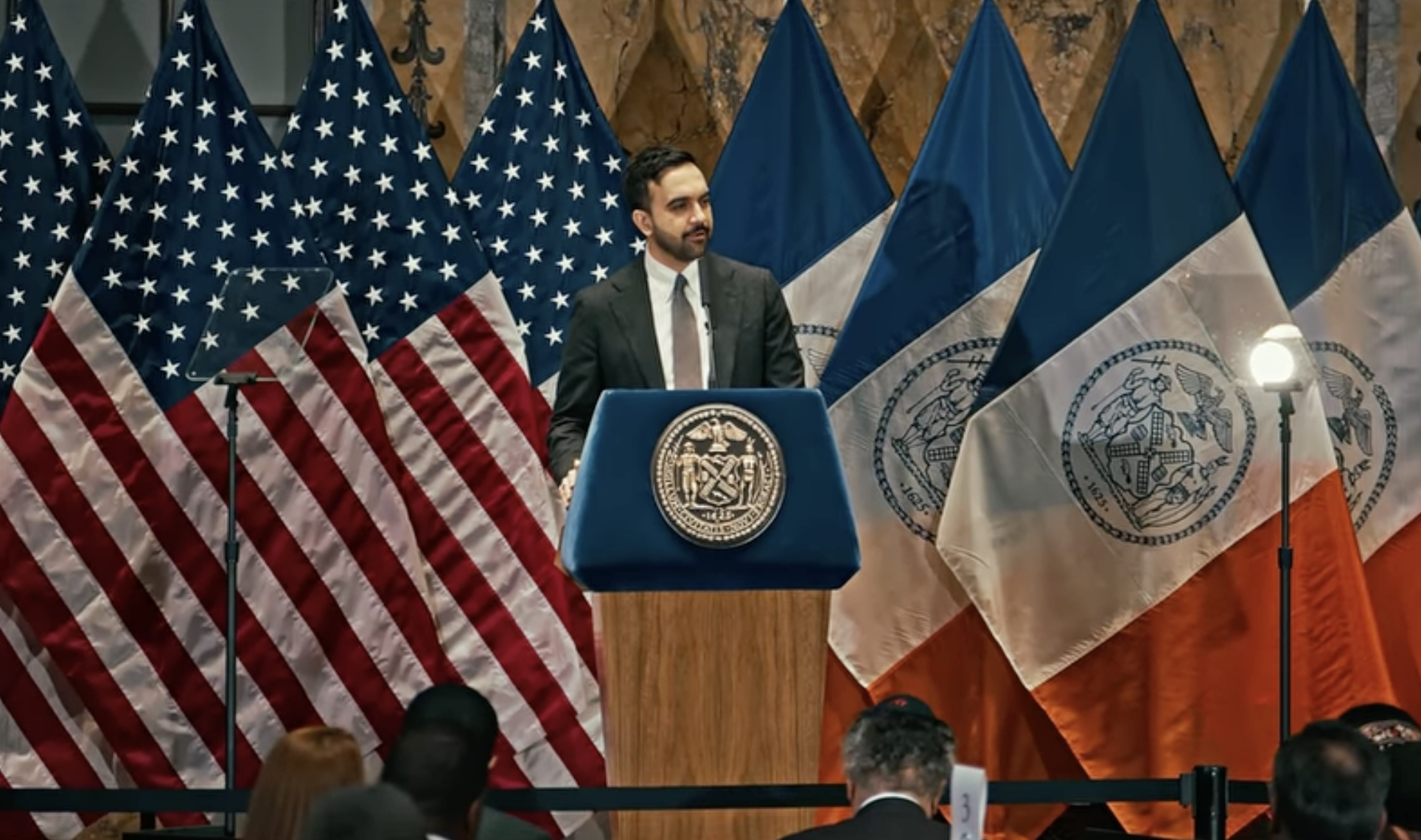
New York’s mayor does not have to agree with every Israeli government policy to march in the Israel Day Parade. But when he refuses to stand with Jewish New Yorkers at one of their most visible public celebrations, he confirms exactly what many in the community have feared.
There are moments in public life when symbolism is not “just symbolism.” It is the message.
Mayor Zohran Mamdani’s decision to boycott New York City’s Israel Day Parade is one of those moments.
The annual march up Fifth Avenue is not a cabinet meeting in Jerusalem. It is not a referendum on this or that Israeli prime minister. It is not a vote on settlements, judicial reform, Gaza policy or any of the other issues over which Jews themselves argue passionately, loudly and often.
It is, instead, a public affirmation that New York’s Jewish community belongs in the heart of the city, and that its connection to Israel is not some embarrassing private hobby to be hidden from view.
That is why the mayor’s absence matters.
Mamdani and his defenders will no doubt say that he supports Jewish safety, opposes antisemitism and distinguishes between Jews and the policies of the Israeli government. That is the standard explanation now offered by many politicians whose hostility toward Israel makes large numbers of Jews understandably nervous.
But that explanation does not answer the question. It avoids it.
The question is not whether a mayor may criticize Israel. Of course he may. Israelis criticize Israel every day. American Jews criticize Israel every day. The Jewish people survived Pharaoh, Haman, Rome, exile and the comments section. We can survive disagreement.
The question is whether the mayor of New York City understands that for much of the Jewish community, Zionism is not a foreign-policy preference. It is part of Jewish identity, Jewish history, Jewish memory and Jewish survival.
A mayor who cannot grasp that cannot fully understand the Jewish community he governs.
For decades, New York mayors marched in the Israel Day Parade not because they agreed with every Israeli government, but because they understood their city. They understood that New York is home to the largest Jewish population outside Israel. They understood that after centuries in which Jews were told to disappear, convert, assimilate, be quiet or be grateful, there is something profoundly American about Jews marching openly and joyfully in the streets of New York.
And they understood something else: Israel’s existence is not an abstraction to Jews. It is family. It is refuge. It is memory. It is a place where our children study, our relatives live, our dead are buried and our prayers have pointed for thousands of years.
That does not mean every Jew agrees on Israel. Far from it. Walk into any synagogue kiddush and you will hear a dozen opinions before the herring is gone.
But the parade is not about unanimity. It is about belonging.
That is why Mamdani’s boycott lands so hard. He is not merely declining an invitation. He is sending a signal that a public celebration of Jewish connection to Israel is something from which the mayor must distance himself.
At a time of rising antisemitism, that signal is dangerous.
Jewish New Yorkers do not need lectures about the distinction between “anti-Zionism” and antisemitism from politicians who show little interest in how that distinction is experienced by Jews on the receiving end. We have seen what happens when hostility to Israel spills into hostility toward Jews. We have seen synagogues guarded, students harassed, Jewish businesses targeted, hostages rationalized away, and the word “Zionist” turned into an accusation.
So when a mayor says he will protect Jews but will not march with Jews when they celebrate Israel, many Jews hear a very specific message: You may be safe, perhaps, so long as you keep the Israel part of your Jewish identity out of public view.
That is not reassurance. It is conditional tolerance.
Mamdani’s supporters may insist that he is only objecting to Israeli policy. But the Israel Day Parade is not Israeli policy. It is Jewish civic life in New York. It is day schools, synagogues, youth groups, Holocaust survivors, Israeli-Americans, families of hostages, immigrants, children waving flags and grandparents wiping away tears.
To boycott that is not a brave act of diplomacy. It is a refusal to stand with the mainstream Jewish community at a moment when standing with it should be easy.
And that brings us to the old question many of us heard growing up: Is it good for the Jews?
It is a phrase sometimes said with humor, sometimes with anxiety, and sometimes with the weary wisdom of a people that has learned to listen carefully when politicians speak — and even more carefully when they choose silence.
Mamdani’s boycott of the parade does not by itself prove hatred of Jews. That is not the argument that needs to be made. The stronger argument is also the fairer one: His boycott confirms that his view of Israel is not merely a policy disagreement safely separated from Jewish life in New York. It affects how he relates to Jewish New Yorkers themselves.
A mayor who cannot bring himself to march in the Israel Day Parade is telling us something.
He is telling us that Jewish fears were not invented by alarmists. He is telling us that for Zionist Jews, which means a large portion of the Jewish community, his solidarity has limits. He is telling us that he is willing to attend many civic celebrations, but not this one.
That is a choice. And choices have meaning.
New York’s Jews should not have to beg their mayor to understand that Israel is central to their identity. They should not have to explain, yet again, that Zionism is not a dirty word. They should not have to accept a civic bargain in which their safety is acknowledged but their peoplehood is treated as politically radioactive.
On Sunday, thousands of Jews will march anyway. They will march proudly, loudly and visibly. They will march because New York is their city, too. They will march because Israel is not going away. They will march because Jewish life has never depended on the approval of those who misunderstand it.
But the mayor’s absence will be noticed.
And it should be.
Because sometimes not showing up says everything.