Exploring Memory, War, and Survival
When the Sky Stayed Whole
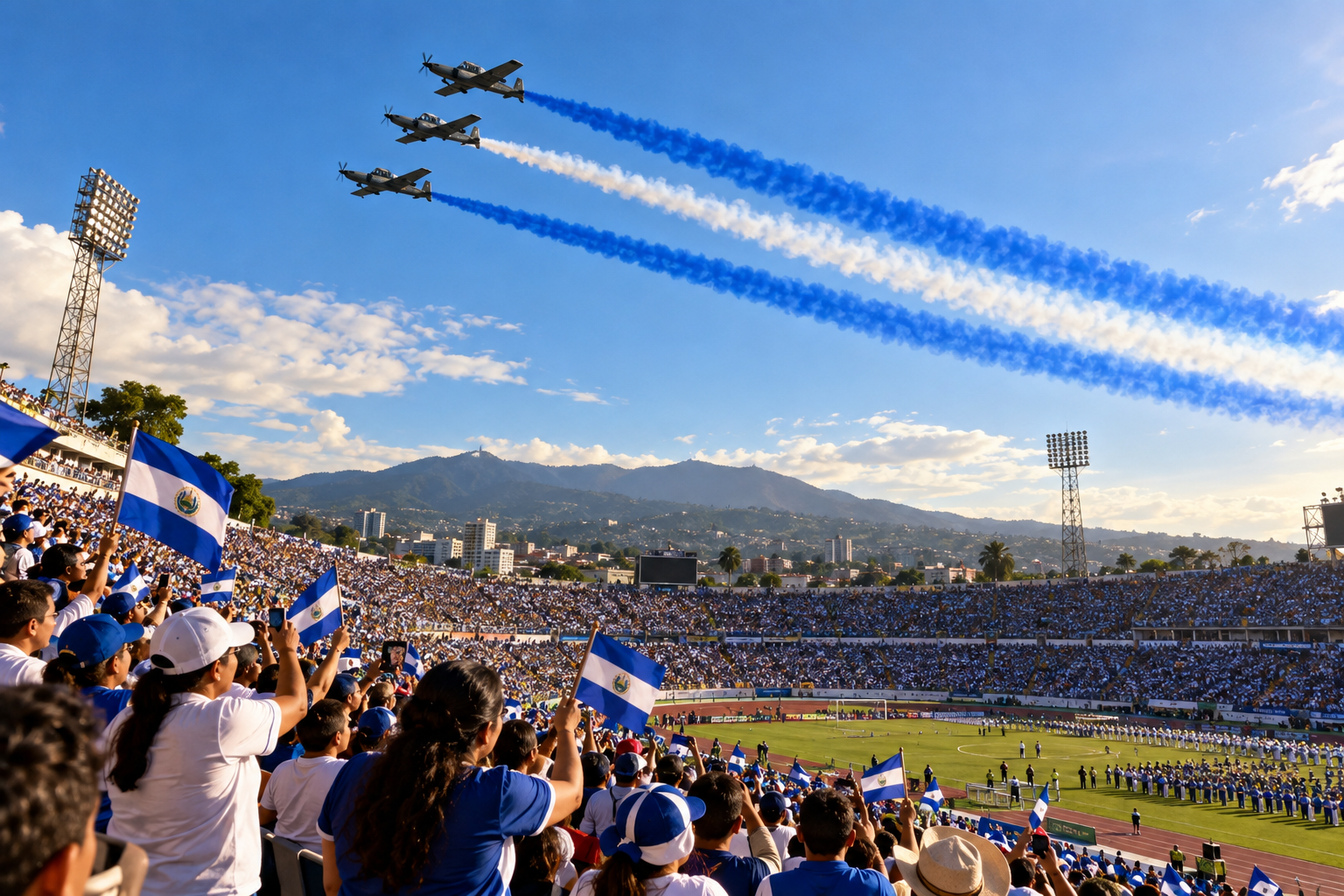
Illustration generated with AI, inspired by the Independence Day air show in San Salvador, September 15, 2006.
I grew up in a place where the sky could not be trusted.
As a child in El Salvador during the war, I learned to read the air before I learned to read books. Silence was not peace; it was a warning. The sky was not distance; it was a direction from which something might fall. You did not look up in wonder. You looked up to calculate.
Years later, I left. I crossed into a country where the sky behaved differently—where it remained intact, where it did not interrupt lives without warning. People said I was safe. And I understood the word, but not the feeling.
Safety, like any language, has to be learned.
For a long time, my body refused to believe in peace. Loud sounds rearranged my pulse. Helicopters were not neutral objects; they were echoes. Even joy—fireworks, celebration, noise—felt like a rehearsal for something that might go wrong. I lived like that for years: outwardly adapted, inwardly braced.
Then, in 2006, I returned to El Salvador for the first time.
It was September 15—Independence Day. I sat in the stands of San Salvador’s Flor Blanca stadium, now known as Estadio Jorge “Mágico” González, surrounded by thousands of spectators. Claudia, my girlfriend at the time, was beside me. Vendors moved through the aisles, children waved flags, and the air carried heat, dust, and something familiar I had not realized I missed. It felt like the past, but not entirely. I was no longer the child who had learned to hide from war.
Then everything quieted. Not silence—the kind I knew—but a collective pause. Thousands of people lifted their heads at once.
Helicopters appeared.
They moved across the sky in formation, followed by military aircraft trailing streams of blue and white smoke—the colors of the Salvadoran flag.
I remembered those aircraft from my childhood. During the war, they had brought gunfire and bombs, or dropped leaflets carrying messages about the conflict. Their presence in the sky had never meant celebration.
For a moment, the old fear returned. My muscles tightened. My breath shortened. I knew those sounds, those shapes moving overhead.
But no one ran. No one crouched. No one searched for cover. Around me, people watched the aircraft with excitement, their faces turned toward the sky.
I looked at them, then back at the helicopters. Slowly, I began to relax. And then I made a decision that would have been unimaginable to the child I once was: I decided to enjoy the show.
I turned to Claudia and told her that, for the first time in my life, I was watching helicopters in El Salvador perform for a crowd instead of taking part in a war. Above us, the aircraft continued their performance, leaving the colors of our flag suspended in the air.
The sky did not break. It held.
And something inside me—something that had remained unfinished for years—finally reached a conclusion it had been postponing.
The war was over. Not on paper. Not in speeches. In me.
For years, I had carried the war within me, even after leaving the country where it happened. But that afternoon, sitting among thousands of people who had come to celebrate, I discovered that remembering did not have to mean reliving. I could remember what those aircraft had once meant without allowing that memory to determine what they meant now.
That day, I learned that memory can change shape. That what once meant danger could, in another time, mean something entirely different. That the sky can remain whole.
Since then, peace has not arrived all at once. It has come slowly, the way light enters a room through a narrow opening—first uncertain, then undeniable. There are still moments when sound travels too quickly through me, when memory arrives before reason. But there are also moments—quiet ones—when I notice that I am standing still, unafraid, under an open sky.
And I understand something I could not have understood as a child:
The opposite of war is not silence. It is trust.
Trust that the sky will remain where it is. Trust that the past will not repeat itself in the same way. Trust that what once defined you does not have to contain you.
I still remember the sky as it was. But I also remember the day it stayed whole.
And now, I carry both.
Related Topics
Related Posts