
When the State misleads itself
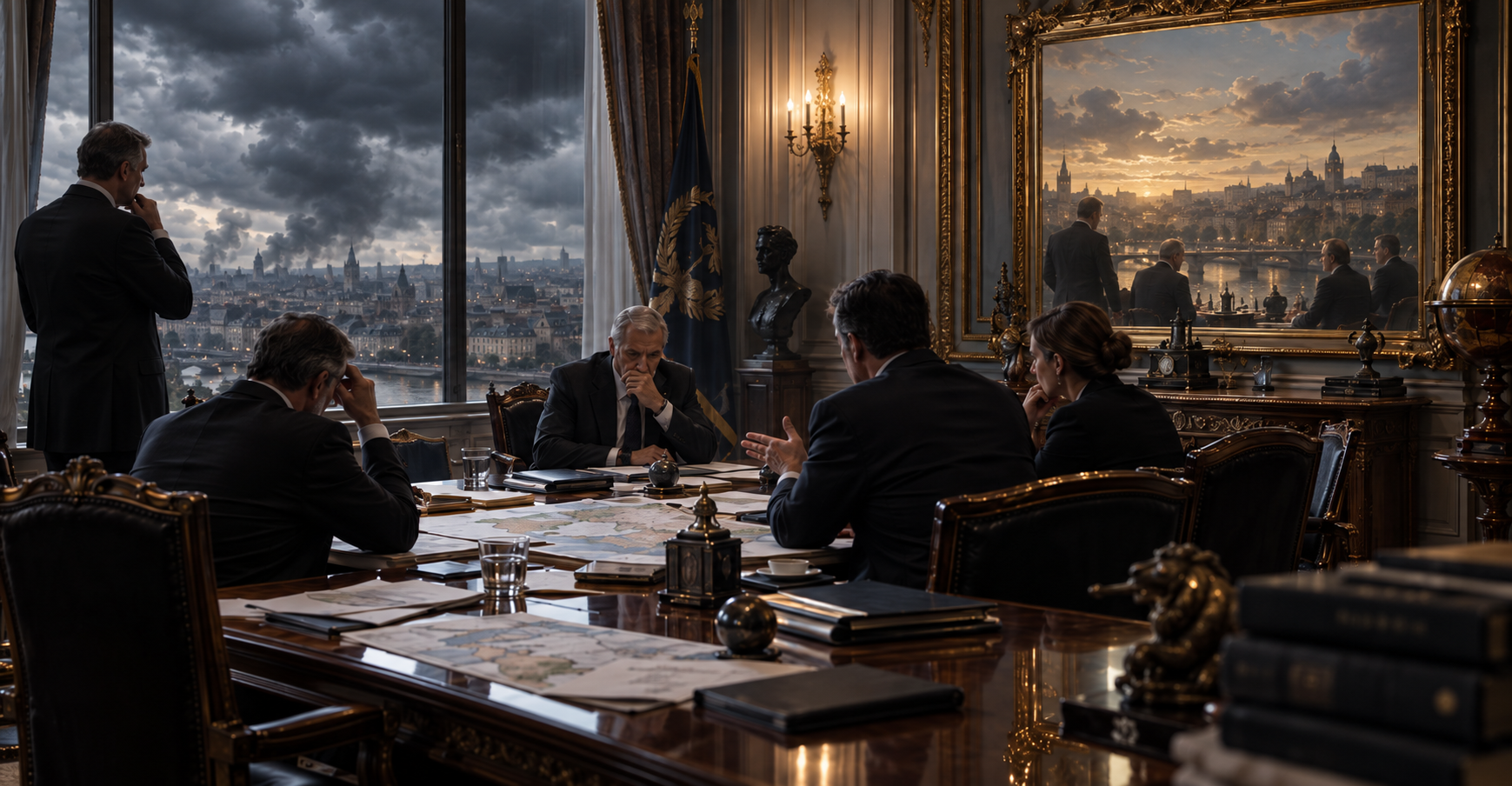
A lack of information seldom causes disastrous political decisions, though it remains one of the handiest excuses. Officials offer three claims: the leadership was in the dark, the reports failed to reach it or state agencies misread the situation. The excuse collapses when embassies have sent cables and agencies have submitted assessments, yet the decision is handed down as if every page had gone unread. The flaw is rooted in the state’s thinking, and the pile of documents on its desks is irrelevant.
Sure, some regimes command large institutions and capable advisers. But they lack any office empowered to tell the leader that his judgment is wrong. Information loses its value once it fails to change the decision. It becomes paper circulating through the bureaucracy and then settling in the archive. The decision it was meant to stop moves ahead, carried by the leadership’s certainty that its wishes dictate outcomes.
On this point, I remain unconvinced that major counterproductive decisions can always be dismissed as misjudgments. Every state errs, but a state that has weighed the odds and still erred differs fundamentally from one that kept an unwelcome possibility from reaching the leadership’s table. The first was blindsided by an outcome it failed to foresee; the second manufactured the surprise itself, then behaved as if the world had conspired against it.
This dynamic always begins when state institutions know in advance what the leadership wants to hear. The adviser knows a warning may cost him his job while optimism is free. Harsh reports soften as they move upward. The bad scenario gets buried in the final pages, and the expert who says the adversary will refuse to retreat gives way to someone with a reassuring account of its imminent pullback.
Ultimately, the leader sees only the version of the world he wants, while the real world has disappeared. That is when a state lies to itself.
Such regimes often employ excellent diplomats, professional officers and economic experts who grasp the full scale of the risks. Their expertise becomes worthless once their task turns from stress-testing the decision to justifying it.
What the leadership needs then is someone willing to say, first, that it may be wrong, and then ask what happens if the adversary refuses to retreat, if it is less isolated than assumed or if the cost stretches over years while the decision rested on an estimate that the crisis would last only weeks.
Sometimes, the flaw runs deeper than fleeting arrogance. Some regimes view the world through an obsolete map and act on an outdated sense of their own size and influence, even as economies have changed, alliances have been remade and centers of gravity have moved. Decision rooms still invoke old roles and assume others see them in the same light.
In truth, some states have anchored their external legitimacy in history, with actual capability a secondary concern, until history itself became a trap. They boast of an inherited status while neglecting to ask what remains of it. When their old self-image collides with a new reality, accusing others proves easier than admitting they have fallen from the position they imagine.
Thus, I am rarely surprised by decisions that seem incomprehensible. Place them in the environment that produced them and you find almost everyone reading the same history, knowing the bounds of permissible speech and repeating the assessment the leader has already endorsed.
The error then outgrows its author and becomes an institutional culture, one that produces the disastrous decision and then manufactures an explanation that shields it from review.
An outside observer can spot the signs early. Media language comes to mirror official discourse. Few dare remind the leadership of the view that once warned it.
The adversary’s isolation is inflated until its retreat seems merely a matter of time, and allies’ silence is read as readiness to stand with the state.
By the time state institutions spend more energy proving the justice of their cause than studying the other side’s capabilities, the outcome has already begun to form, even if few yet dare name it.
What strikes me personally is the decision’s aftermath as much as the decision itself. The institutions that failed to prevent it quickly become its defense team. The media cranks up its rhetoric until any retreat becomes humiliation, and officials begin searching for a face-saving formula that lets the leadership climb down. The state then pours its energy into protecting the reputation of a decision that has already harmed it, neglecting its own interests, and it may commit an even worse error before admitting the first one was avoidable.
The danger grows when foreign policy becomes a tool for demonstrating prestige. A confident state sees little reason to declare itself a great power in every crisis. A state haunted by the question of its standing, by contrast, may spend its real interests defending an outdated image of itself. Retreat becomes humiliation, review weakness and compromise defeat.
Yet pride leaves the balance of power untouched. Markets ignore a state’s history and the volume of its slogans. The party a state writes off may line up a substitute before the state can find one, or it may simply let the decision work against its author.
Every state has the right to differ and reorder its relationships. Such moves are natural and legitimate when interests change. But true sovereignty demands knowing the price of a decision before taking it, knowing what the other side can do and possessing the capacity to withstand the worst outcomes.
Discovering the bill only after announcing a position, then mobilizing state institutions to justify it, hardly qualifies as a calculated sovereign decision, whatever the volume of rhetoric claiming otherwise.