When the World Lines Up for Israel
CES crowds expose Europe’s empty boycotts
I had a strong feeling that CES 2026 would matter. Not just as another global tech jamboree, but as a milestone, a prelude to the show’s 60th anniversary next year. What I did not quite anticipate was the sheer electricity around Israel’s presence.
Crowds were not merely passing through the Israeli pavilion. They were clustering. Lingering. Circling back. Investors, executives, engineers, journalists – people were quite literally falling over themselves to see what Israeli companies had brought to Las Vegas.
It felt almost like pent-up demand. As if the world, exhausted by headlines of war and politics, was quietly saying: show us what Israel builds. And Israel obliged – confidently, calmly, and brilliantly.
From digital health and AI to semiconductors, sensors, AR, and edge computing, the breadth was striking. But what struck me most was the mood. This was not curiosity driven by sympathy. It was interest driven by value. By relevance. By necessity.
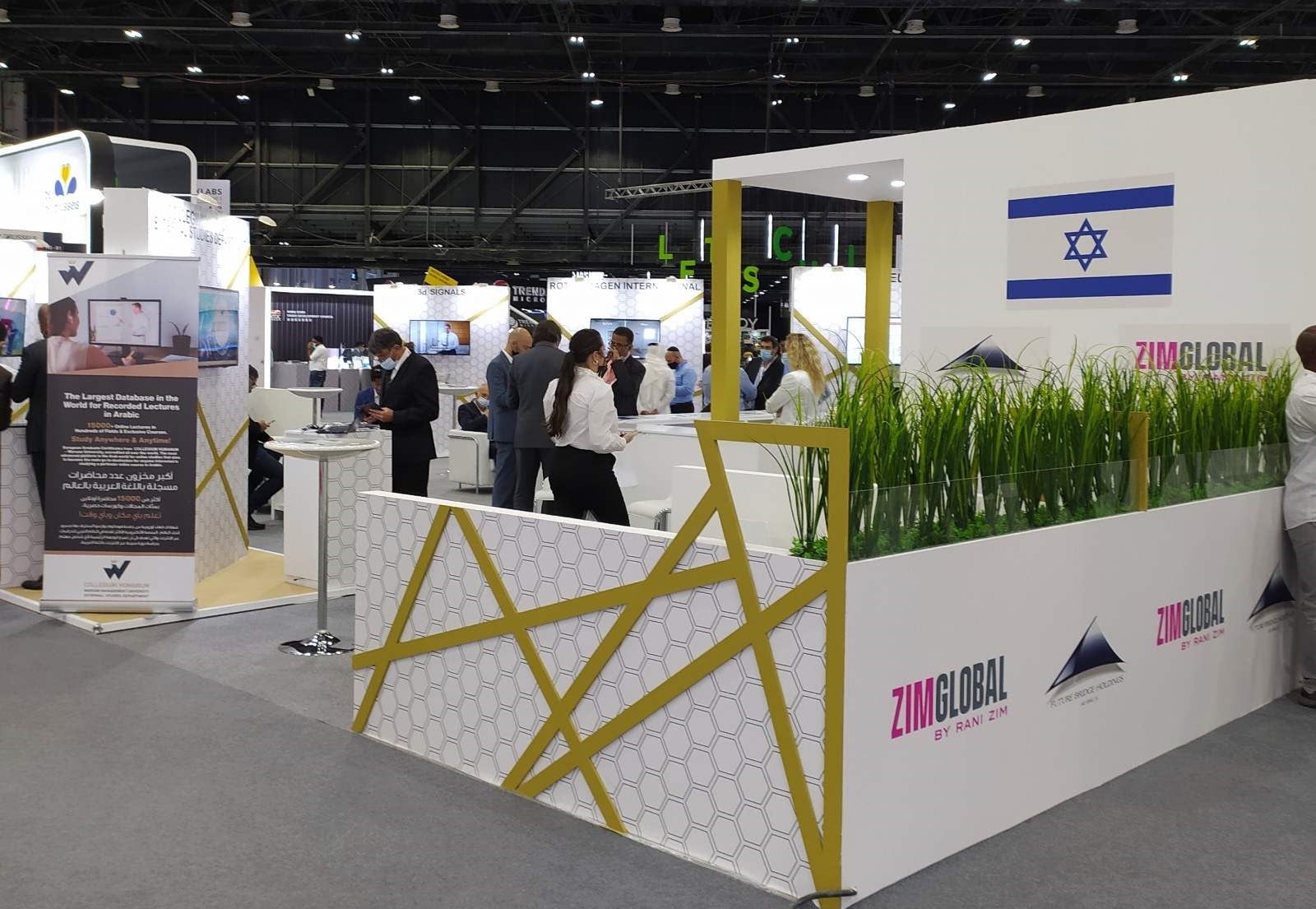
Why would not it be? I saw something similar recently at an Expo in Dubai that welcomed Israeli participation. When innovation is real, borders soften.
Israel’s national pavilion, organized by the Israel Export Institute, was not flashy for the sake of it. It was focused. Market-ready. Practical.
These were not speculative concepts. They were solutions already being deployed: ultra-low-power AI chips, real-time video enhancement, non-invasive diagnostics, AR platforms for sports broadcasting, advanced manufacturing tools. Technology born not in comfort, but in constraint.
Listening to conversations around the booths, a theme emerged again and again: we need this. Renewed partnerships. Serious commercial discussions. Quiet progress toward deals. This is what confidence looks like – not press releases, but people pulling out notebooks and calendars.
As Avi Balashnikov, chairman of the Export Institute, put it, Israel’s presence at CES reflected economic resilience and sustained international demand. That line stayed with me. Demand is the word that matters.
Which brings me, reluctantly, to Europe.
Watching the crowds at CES, I could not help feeling a flicker of pity for some European governments – France, Netherlands, and Ireland – that chose, in recent months, to bar Israeli defense and security companies from their exhibitions, or to boycott Israeli exports outright.
Political correctness, taken to theatrical extremes.
France erects black curtains at the Paris Air Show. The Netherlands politely excludes Israeli firms from its defense exhibition. Ireland legislates a boycott with all the moral self-assurance of someone else paying the price.
And yet, in Las Vegas, thousands queue to meet Israeli innovators.
There is something almost surreal about it. Europe closes doors in public, while quietly continuing to rely on Israeli technology behind the scenes. It is gesture politics at its finest: loud enough to satisfy domestic audiences, shallow enough not to disrupt real dependencies.
In the end, the market does not care for moral theater. It cares about solutions.
One of the quiet joys of walking through the Israeli pavilion was noticing how little anyone felt the need to explain themselves. No defensiveness. No justification. Just work.
Take safety technology. Israeli startups like dotSAGA are rethinking how public events, ski resorts, and crowded venues handle emergencies – moving from blind, reactive systems to real-time situational awareness that can save lives. This is not about weapons. It is about dignity, speed, and responsibility.
Or look at cybersecurity, mobility, AI infrastructure. Israeli firms are not trying to win arguments; they are trying to solve problems. And the world is listening.
That, perhaps, is the most revealing contrast with Europe’s bans. While politicians argue about optics, Israeli engineers are shipping products.
I often write about resilience and renewal as national qualities – psychological, social, cultural. But at CES, resilience was tangible. You could touch it. Demo it. Test it.
Many of the tech entrepreneurs who came to the show had spent months in reserve duty since October 7. Some had put fundraising on hold to serve. And yet, there they were in Las Vegas – pitching, polishing, refining, and collaborating as if the future depended on it.
This is not resilience as rhetoric. This is resilience as habit.
Israel does not innovate because it is fashionable. It innovates because it must. Scarcity has always been its teacher. Pressure its accelerator. When supply chains falter, Israel designs alternatives. When networks fail, Israel builds off-grid systems. When markets hesitate, Israel finds new ones.
And when Europe shuts a door, Israel simply walks into another room.
Who is really laughing?
So yes, watching the crowds at CES, I did find myself asking a slightly mischievous question: who is laughing now?
Not the governments congratulating themselves on symbolic bans. Not the exhibition halls left quieter for the absence of Israeli talent. Certainly not the policymakers who confuse exclusion with virtue.
The laughter – soft, confident, almost private – belongs to the entrepreneurs signing NDAs. To the investors booking follow-up meetings. To the engineers who know their work will be deployed somewhere in the world within months.
History has a habit of siding with builders.
Europe may continue to posture. It may continue to single out Israel while overlooking far worse offenders. But the world’s innovation ecosystem is moving on – toward relevance, reliability, and results.
At CES 2026, Israel was not pleading for acceptance. It was being sought out.
That is resilience and renewal in action. And that is what it looks like when a nation quietly goes on innovating its future – while others are still arguing about whether it should be allowed in the room at all.