When Trump’s Threats No Longer Scare Tehran
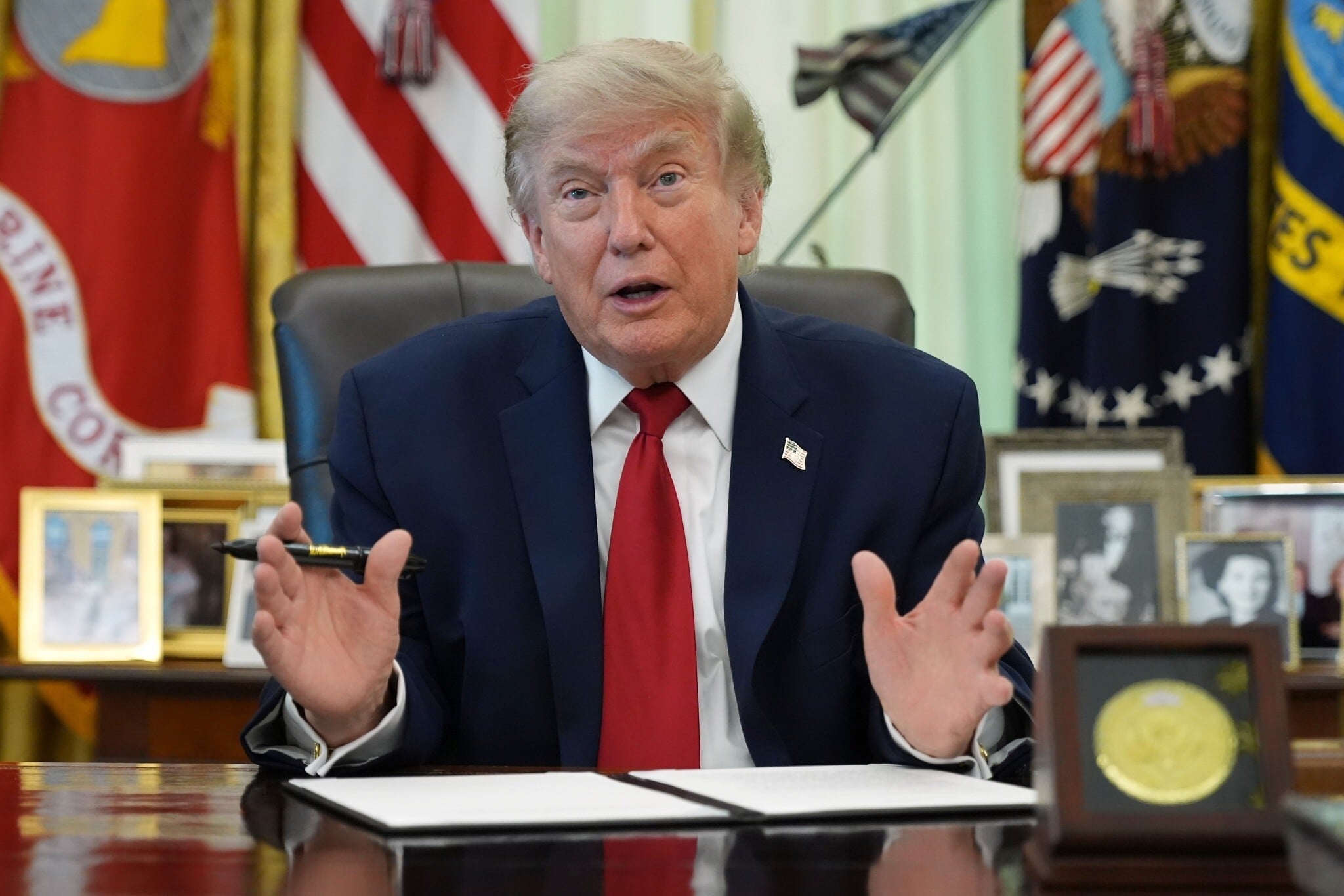
Here is a growing impression in the crisis between Washington and Tehran: when Donald Trump speaks, threatens, warns, or raises his voice, Iran no longer seems to react with the same concern as before. The American tone remains harsh. Words remain powerful. The military threat remains real. But the psychological effect seems less strong.
This is perhaps one of the most important elements of the moment.
But the analysis is correct: Iran does not despise American power. Tehran knows that the US can strike quickly, at a distance, and with great force. They can target military infrastructure, logistical networks, bases, sensitive sites, and regional relays. America’s military superiority remains overwhelming. The Iranian regime knows it, and so do the Revolutionary Guards.
But in geopolitics, raw power is not enough. What matters is the credibility of its use. A threat doesn’t just scare because it’s spectacular. It’s scary if the opponent believes that it will go all the way.
This is precisely where Tehran believes it sees a loophole.
Donald Trump uses the threat as a political instrument. He dramatizes, puts pressure, speaks loudly, and creates a balance of power. That is his method. But Iran has learned to observe not just what Trump says but also what he does after speaking. And above all, what he probably doesn’t want to do.
Tehran seems to have understood one essential thing: Trump may strike, but he does not necessarily want to get stuck in a long conflict. He can punish, but he wants to avoid a long war. He can raise his voice, but he is also looking for an agreement. He wants to show that he is tougher than his predecessors, but he also wants to be able to tell his public that he has averted a regional disaster and protected the global economy.
It is this contradiction that allows space to Iran.
Iran cannot defeat the US militarily; that is not its goal. Its strategy is different: to make any escalation too costly. It’s the logic of the weakest against the strongest. It’s not about winning head-on but about complicating the other person’s victory. It is not a matter of destroying America but of making its actions politically, economically, and regionally risky.
The Iranian regime has several levers at its disposal for this purpose. The Strait of Hormuz, of course, remains a major map. It is enough that the world’s energy flows are threatened for markets to worry, prices to move, and Western allies to become nervous. There are also regional militias, Iraq, Lebanon, Hezbollah, and the Houthis, putting indirect pressure on Israel. Iran does not need to be stronger than the US; it only needs to open up several fronts of uncertainty.
That is why Trump’s word has less effect than before. Tehran hears the threat, but it weighs the cost that Washington is willing to pay. He wonders: do the US really want a prolonged confrontation? Does Trump really want a regional war before important political deadlines? Is Washington prepared to endure an oil crisis, attacks on its bases, pressure on Israel, or a crisis with its Gulf allies?
The Iranian answer seems to be uncertain.
This is where we see the difference between force and deterrence. The US still has it. Deterrence, however, depends on the adversary’s conviction that this force will be used to the end. But Iran is testing precisely this conviction. It is testing American patience. It is testing Trump’s limits. It tests the distance between threat and action.
There is also an internal dimension: the Iranian regime cannot appear humiliated by Washington. Even if he is worried, even if he is under pressure, even if he fears a strike, he must speak as if he were resisting. It must show its people, the Revolutionary Guards, and its regional proxies that it does not bend. In this type of regime, the image of resistance is almost as important as military reality.
Iranian insolence is therefore not necessarily proof of total confidence. It can also be a posture of survival. Tehran knows that a regime that gives the impression of giving in to America too quickly loses some of its internal authority. He must therefore transform every negotiation into a balance of power, every possible concession into a narrative victory, and every setback into a tactical maneuver.
That is why too simple a reading should be avoided. To say that Trump is no longer scary would be an exaggeration. To say that Iran is no longer scary would be wrong. But to say that the US threat is no longer enough on its own is probably right.
Trump remains dangerous for Iran. But he is no longer necessarily unpredictable in the same way. Tehran thinks it has figured out its method: hit hard, talk loud, create a shock, then seek agreement. This reading can be dangerous because it can push Iran to take too many risks. But it explains its current attitude.
So the real change is here: Trump retains the power to strike, but he has lost some of the automatic intimidation power. Iran does not necessarily think that the US is weak; rather, it says that the US is powerful but in a hurry. That means Trump is tough, but he wants a quick outcome. He can threaten, but he doesn’t want to get bogged down.
In this space, Tehran plays its card.
And this is perhaps the most worrying thing. Because when the threat no longer deters completely, but military power remains intact, the risk of error increases. Iran may believe that it can push Trump a little further. Trump may believe that one strike will be enough to restore fear. Everyone may think they are in control.