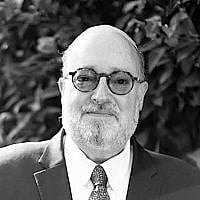
President and Rosh HaYeshiva, Ohr Torah Stone
When Words Become Deadly
Immediately following the antisemitic terror attack that took place on Sunday in Sydney, Australian Prime Minister Anthony Albanese described “shocking and disturbing scenes,” and generically referred to the victims as “any person who was harmed.” This choice of words, which failed to highlight the obvious antisemitic nature of the attack or the fact that it targeted the celebration of the first night of Chanukah, angered Jews and people of good conscience around the world.
Several hours later, amid public criticism and video footage that left no room for doubt regarding the failure of Albanese’s initial statement, he adopted a different tone. He acknowledged that this was indeed an antisemitic terrorist act against the Jewish community and even went further, reaffirming that Jews have “every right to be proud of who you are and what you believe.” In light of his clear and unequivocal support for the Jewish community in these later remarks, some may argue that too much weight should not be placed on the wording of his initial response. But unfortunately, Albanese’s record of statements from the not-so-distant past suggests otherwise.
In the face of the growing number of antisemitic incidents, attacks, and threats against Jewish citizens of Australia since the attacks of Oct 7 that forced Israel into war two years ago, Albanese and his government have repeatedly chosen to use neutral terminology that ignores antisemitism. In addition, too many Australian officials have disregarded repeated warnings from Israeli security and intelligence officials about the threat of attacks against Jews in their country.
It is doubtful whether even now, confronted with consequences so severe that they can no longer be ignored or denied, Albanese understands that “life and death are in the power of the tongue” (Proverbs 18:21). The language that leaders, public figures, and media professionals choose to use — or choose to avoid — has the power to create reality. Sadly, as Sunday’s attack showed, that reality can be a murderous one that brutally takes even the lives of innocent children who sought only to celebrate the joy of Chanukah.
Albanese is not alone. He is merely another link in a historical chain that has sought to obscure antisemitism and its devastating consequences. Among many examples is the Russian Empire, which framed the pogroms of 1881–1884 as “popular rage” and civil disorder rather than as institutionalized antisemitism that was fueled by anti-Jewish newspapers and government officials. Meanwhile, in France, during the Dreyfus Affair, the French military and political establishment constructed a narrative of pure national security when framing a Jewish officer for treason based on forged evidence, while categorically denying antisemitism.
We see the same patterns now. New York City’s mayor-elect, Zohran Mamdani, did indeed issue strong words of condemnation, calling the Sydney attack “a horrifying act of antisemitic terror” and promising to keep the city’s Jewish residents safe and to “expel this terrible violence from our midst.” However, he has still not reckoned with his own role in fostering that same antisemitic violence, through previous statements like supporting the “globalization of the intifada.” That idea, when encouraged with the words of public figures like him, has not remained a mere slogan but has fueled waves of global antisemitic violence, striking most recently on Bondi Beach.
Language creates reality and legitimacy – through explicit statements, the writing of falsehoods (particularly regarding the war in Gaza), or through silence and the choice of sanitized, neutral terminology. We see this all around us: Antisemitism is painted as legitimate “anti-Israel” sentiment. Presidents of Ivy League universities in the United States refuse to condemn rising antisemitism on their campuses and treat opposition to calls for Jewish genocide as “context-dependent.” The publisher of the Israeli daily Haaretz calls Hamas terrorists freedom fighters. The BBC officially announces it will not use the term “terrorist” in the name of neutrality, even when referring to the deliberate massacre of civilians. A candidate for mayor of the city with the largest Jewish population in the United States expresses support for violent global uprising. Even if the leaders involved in all of these incidents later change course and retract their statements under public pressure, the seed of antisemitism that normalizes escalation and invites the next attack has already been planted in soil.
In the face of this, we as Jews have a duty to bring the dangerous ideas in the words of these public figures into the public light. We must insist on naming antisemitism as it exists, even when others attempt to obscure it beneath a smokescreen of hollow human-rights discourse, imagined colonialism, and fictitious genocide. Otherwise, we leave Jews around the world to fight in the darkness of shadows — shadows that can only truly be defeated once they are exposed to the light.
As we sing Ma’oz Tzur this Chanukah and recall Pharaoh, Babylon, Haman, the Hellenistic Greeks, and the Roman Empire — all forces that promoted global rebellion against the people of Israel — we must remember that Jews also heroically stood up to them, with both the visible and invisible help of God. That is why they all faded and became distant memories, while we and millions of Jews around the world continue to light the candles of Chanukah.
Related Topics