Where are you breaking the fast this year?
A typical question as Yom Kippur approaches.
An unusual response for our family this year: In room 206 at ABC Observatorio Hospital in Mexico City.
My daughters study outside Guatemala and have been here for a couple of years now.
We came two days ago, after our eldest daughter was rushed into an urgent surgery.
Receiving that news in the middle of the night, an airplane ride away, was incredibly distressing. Thankfully, everything fell into place, and with her youth, strength, and her amazing team of doctors, she is well on her way to a full recovery.
After more than 40 years of fasting, my ritual usually involves the same comforting bowl of chicken soup with matzah balls and noodles. But how does one prepare for Yom Kippur when this time you find yourself in a hospital room, in a country that is not even your own?
I was told to call the “Yesod Haolam” organization. With so much distress, I really didn’t mind starting it with a bowl of pre-cooked ramen, from the vending machine. After all, us Jews eat at Chinese restaurants all the time, although I haven’t seen many Chinese people eating at Jewish delis. In any case, we called the contact we had been given and, as it turned out, the coordinator of this amazing mitzvah of delivering kosher food to hospitals throughout Mexico City, is a childhood friend who is originally from Guatemala and has lived here for years.
More than the food itself, it is knowing that there is an entire community behind you, caring for the soul of the patient and their family. Being Jewish, food is naturally one of the main ways of showing it.
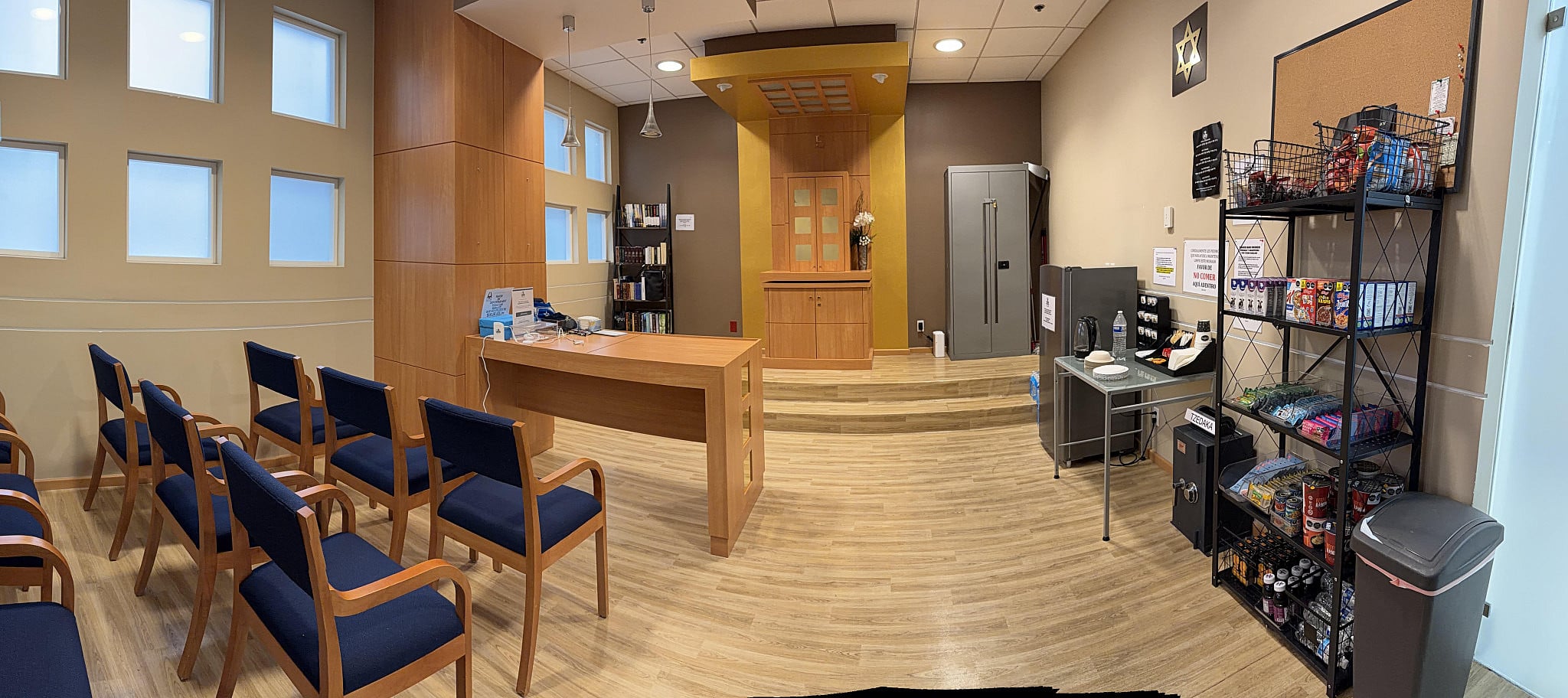
There is also a Jewish prayer room run by the organization, that is immaculate, with ten chairs in case a minyan comes together, kosher snacks, and prayer books. To reach the chapel area, as they call it, I walked through the Cancer Center. I read the names of generous donors on its walls. Judging by their surnames, many of them were undoubtedly Jewish. I passed through benches donated in honor of friends, auditoriums named for eminent members of the medical profession, gardens dedicated in loving memory of family members.
It’s the eve of Yom Kippur. Nothing like being in a hospital to make you reflect about who of us “…shall live and who shall die, who shall reach the end of his days, and who shall not. ” That unbearable sense of being just dust in the wind.
For years, I also visited my great-aunt in Cuernavaca, a city near the Mexico City, at the Eishel Jewish home for the seniors. It is said that a community is measured by the way it cares for its elders, and if that is the measure, Mexico earns a perfect 100.
I could go on listing the dozens of services offered by this remarkable Jewish community, the third largest in Latin America. These are only the services we happened to encounter. Behind them is an extraordinary network that educates children, assists families in need, cares for the sick and the elderly, responds to emergencies, accompanies families in mourning, and stands up against antisemitism whenever it raises its ugly head.
The irony is hard to miss. Just days ago, on the eve of Rosh Hashanah, a group of what appeared to be bussed-in protesters gathered outside a prominet synagogue in Polanco, chanting the xenophobic words “Jews out of Mexico.” Mexican Jews have left an extraordinary mark on the country through generations of contributions to business, education, medicine, science, culture and philanthropy. I wonder how many of those chanting antisemitic slogans owe their livelihood, directly or indirectly, to the very Mexican Jews they are demanding be expelled.
Far from home, in a hospital room, it could be easy to feel alone. Yet I feel very much accompanied. From the “Magen David Uber” that picked us up at the airport, to the Jewish community ambulance “Hatzalah” that rushed my daughter to the hospital, the Jewish doctor that is part of her medical team, the kosher food sent before and after the fast, a place to pray, joining the Ne´ilah service through the live streaming platform of the synagogue, and a familiar re-encounter with a childhood friend from our tiny Jewish Community back home, a sense of belonging has been present at every turn.
No doubt this is one of the extraordinary things about growing up Jewish in the Diaspora: community does not end at the borders of your country. You may arrive as a foreigner, only to discover that you are not a stranger at all.
G’mar Chatimah Tovah.