
Life, faith and stories from the Holy Land.
Where Are Your Mom and Dad?
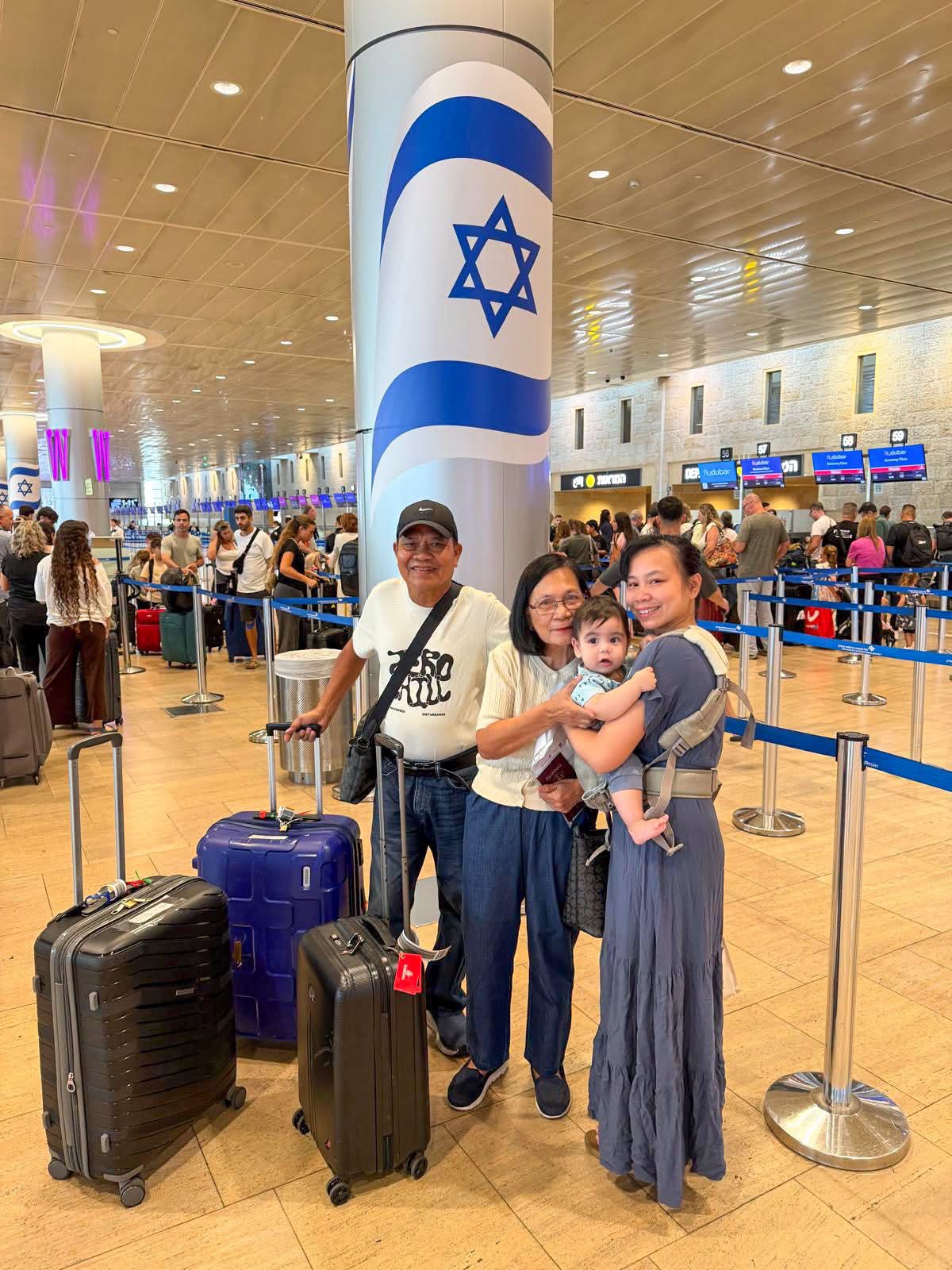
Saying goodbye to my parents at Ben Gurion Airport after their month-long visit with us in Israel.
Today, I went to the supermarket with my 11-month-old son, Aviad.
It looked like a completely normal day—just our usual routine. Aviad has been eating more solids lately, so I needed to buy a few things because I wanted to cook him a good lunch.
We walked around, picked up what we needed, and finally went to the cashier to pay.
Then the elderly woman at the cashier looked at me and asked in Hebrew,
“Eifo ima ve’aba shelach?”
“Where are your mom and dad?”
Such a simple question.
But suddenly, my eyes filled with tears.
I smiled and answered her in Hebrew—which I still need Google Translate to help me with:
“Ha’horim sheli tasu le’Amerika etmol balayla.”
“My parents flew to America last night.”
And somehow, standing there in the supermarket with Aviad beside me, their absence suddenly felt so real.
What touched me even more was that this woman noticed.
She is simply an elderly cashier at the supermarket we usually go to. During the month my parents were here, she had seen us several times shopping together. She remembered them. She noticed that today, they were no longer with me.
And I think this is one of those little things about Israel that is difficult to explain until you live here.
People notice you.
Sometimes Israelis can seem direct, loud, or even a little tough. But behind that toughness, there is often so much warmth. The woman at the supermarket remembers your parents. Someone asks about your baby. People notice when someone who was always beside you is suddenly missing.
There is something very personal about life here.
It’s funny because while my parents were here, I told them that living in Israel taught me to be tough.
And yet, when it comes to missing them, I am not tough at all.
I cannot help but cry.
They were here for one month, and in that short time, I became so used to having them around again. They helped me so much, especially with Aviad. They played with him, cared for him, carried him, made him laugh, and became part of his everyday routine.
And now the house feels different.
Aviad misses them too. He became so used to seeing them every day, especially having his grandparents there when he woke up in the morning.
When we took my parents to the airport, they told me something I will remember.
They said they will miss Israel.
They told me how quiet and peaceful they found life here. And they said something that stayed with me:
“You cannot understand Israel only by watching the news. You have to come here and see it for yourself.”
Because the Israel they experienced was not only the Israel they had seen on television.
It was morning walks, supermarkets, family meals, ordinary streets, people going to work, grandparents pushing their grandson’s stroller, strangers remembering your face, and an elderly cashier noticing when two familiar people were suddenly gone.
Israel taught me how to be strong.
But today, standing at a supermarket cashier with tears in my eyes, I realized something else:
Being strong does not mean you stop missing the people you love.
Sometimes love looks like an airport goodbye.
Sometimes it looks like an empty room at home.
And sometimes, it comes through one simple question from a cashier:
“Where are your mom and dad?”
And maybe that is what home really is:
A place where people notice when the ones you love are missing.
Related Topics
Related Posts