Where history is made
It was Hoshana Rabbah, the exalted final night of Sukkot. Past midnight in Los Angeles, and all through the house, not a creature was stirring — except me, wide awake, watching history in the making. Glued to the live news, as the leader of the free world was about to land at Ben Gurion Airport to herald the release of all living hostages that we prayed for two years straight. The moment we were waiting for.
I watched Air Force One majestically touch ground. The red carpet rolled out. Mic stands ready. I felt like I was there. I had goosebumps. The door hatch was just about to pop open. Any second now…then:
“Daaaaaaadddddy!!!!!!!!!”
One of our kids cried from upstairs. They had thrown up all over the place. My night experiencing history was… history.
I ran up, scrubbed the floors, did the laundry, settled the kid down. By the time I came back down an hour later, the moment had passed. The speeches were over. I’d missed all the action.
Or had I?
* * *
The Book of Genesis does something which, to my knowledge, no other religious text does: it is disproportionately interested in the mundane family lives of its main characters.
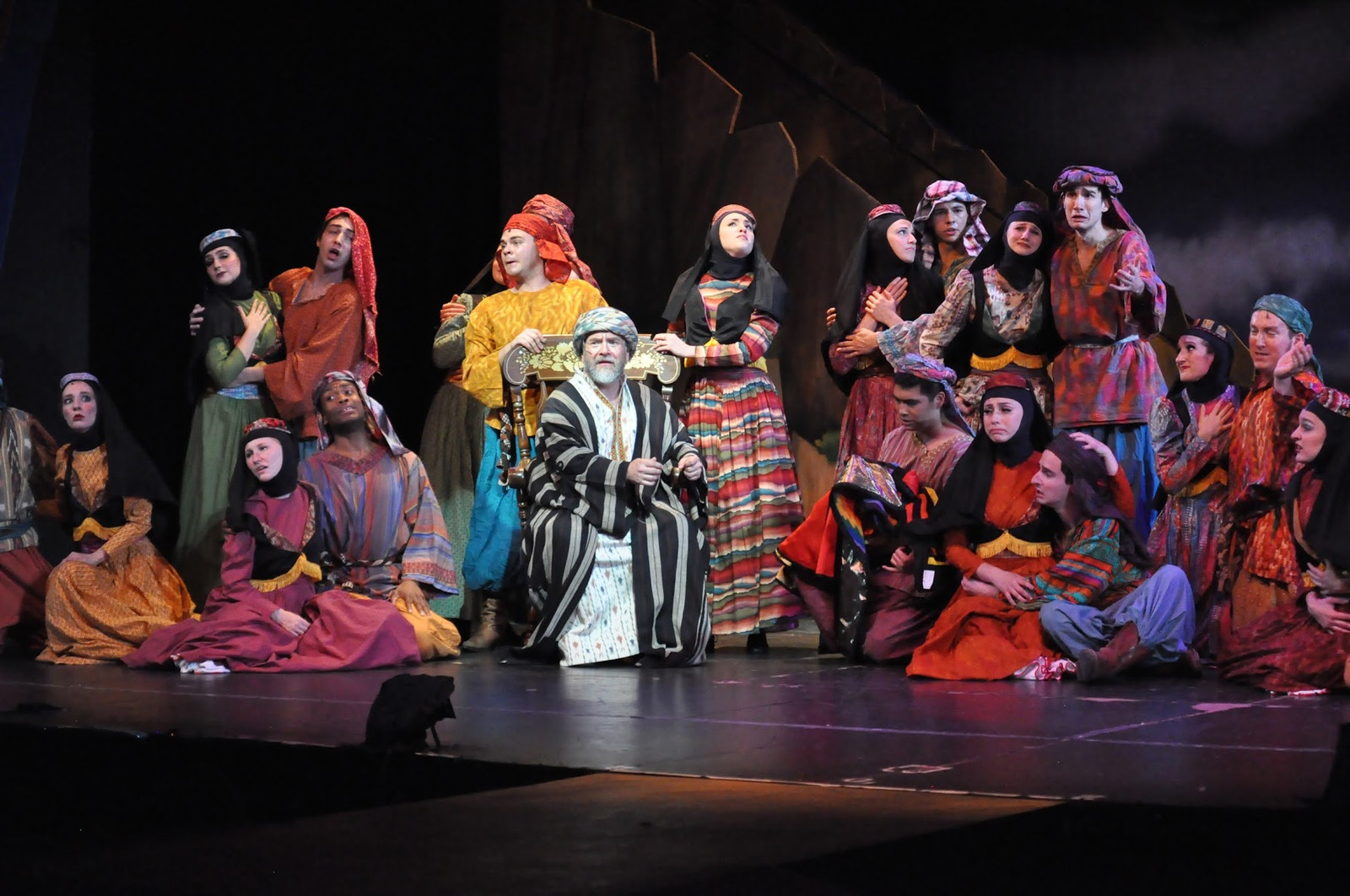
This week’s portion, Vayetzei, is one of the best examples. Nearly the entire narrative focuses on Jacob’s family and career formation. Falling in love. Complex marriages. A toxic boss who awkwardly also happens to be his father-in-law (twice over). Infertility. Kids with behavioral issues. Salary negotiations. Making partner. Social comparisons. Longing for home. It all seems too… everyday to be the Bible. In movie analogies, it’s Parenthood, not The Passion.
And at the center of it all, those kids — they just keep coming, one after the next, 13 in all.
As the proud papa of five kids of my own, ages 13 and down, I get exhausted just reading it. Much like the original children of Israel, we Rosenbergs are constitutionally unable to produce docile children who follow directions. (A 1950s schoolteacher once scolded my grandmother about my father and his rowdy brothers: “Mrs. Rosenberg, your children are rugged individualists.”) We wouldn’t know any other way — who wants kids with no personality?
But in all transparency, there is a price. Not just in dollars and time, but in sanity. As I read on the faces of some who visit our boisterous home: Is this really worth it?
Jacob’s life is not easy. His kids are definitely not easy. His parenting is far from perfect. And yet, to quote Andrew Lloyd Webber, he is the “fine example of a family man.” More than any other aspect of his personality — even more than his prophecy — the Torah is fixated on his fatherhood. So much so that his adopted name — Israel — eventually becomes ours.
The Torah does not gloss over Jacob’s domestic life to get to the important part. It is the important part.
The implication is radically simple: God deeply cares about Jacob’s personal world, and by extension, all of ours. God cares about our marriages, our kids, our struggles with parenting and making a living. Judaism does not see these things as distractions from some higher calling. They are the calling.
Why would Judaism look for divine service not on mountaintops or monasteries, nor in vast historical dramas, but in late night diaper changings and parent-teacher conferences?
Perhaps, if a main goal of Judaism is to become more God-like — to express the divine image through our actions — then there would be no better way of imitating the ultimate Parent. By caring for difficult, obstinate, irrational human beings. By leading them toward independence and conscience. By doing everything for them and getting nothing in return.
* * *
In a generation where more and more people, both men and women, on the political right and left, are choosing to remain single, the idea of family as a vocation becomes increasingly countercultural. Even among those for whom marriage and children are a given, domestic life is often portrayed as something to be “balanced” with more sublime pursuits of career and personal growth.
Yes, our HR departments tell us to put “family first.” We dutifully buy cards for Mother’s Day and Father’s Day. But when we ask our own children what they want to be when they grow up, how many of them say “a parent”?
Yet there are young voices reclaiming the narrative. As Gen-Z writer Freya India recently observed: “We can’t self-actualize alone. We become ourselves through other people. Happiness comes from caring for others, yet we are telling a generation to put that off for as long as possible, to arrange their lives so almost nothing is ever asked of them.”
She’s right. Because when you’re raising actual human beings with real personalities, when you’re showing up for people who challenge you and need you and drive you crazy—that’s paradoxically when you blossom into who you’re meant to be. When you live for others, you become yourself. It’s the message that Jacob’s story taught us, thousands of years ago.
* * *
On my hands and knees on the bathroom floor at 1 a.m., choking on Lysol spray, I understood that God had me right where He needed me. Not watching history being made 10 thousand miles away. But making history, as a father, in my own home.
On Thanksgiving, and for the next several weeks, most Americans will spend more time with family than we do the entire rest of the year. There will be moments of joy and tenderness. And there will also inevitably be moments of chaos and conflict. Multiple personalities under one roof, many of them demanding, each one needing something different.
It’s a challenge and a blessing, and it’s exactly what we should be thankful for.
As Jacob’s wife Leah proclaims upon naming her fourth son, “this time I will thank the Lord” (Genesis 29:35). The name, Judah, is that from which the word “Judaism” itself derives. She, and we, give thanks for yet another child, for the blessings and the craziness of family. For kids with strong opinions and stronger personalities. For the relentless work of showing up for them, day after day, asking nothing in return — except that one day, they too grow into themselves by doing the same.