
Which Truths Shape How Israel Is Viewed?
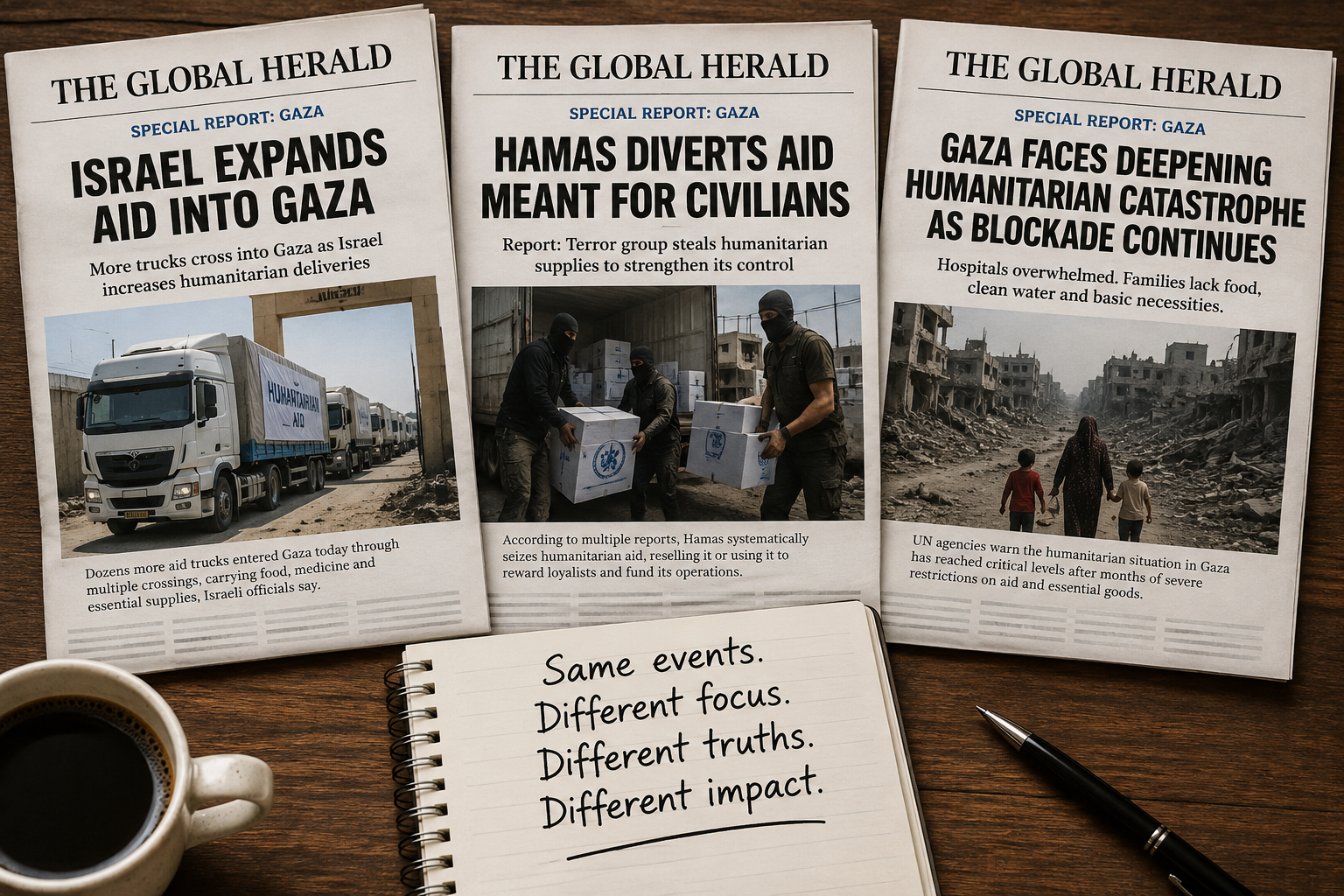
A few days ago, I was listening to the Commentary podcast when John Podhoretz quoted a remark Barack Obama made shortly after the October 7 massacre. I had almost forgotten the comment, but hearing it again brought back the same feeling I had when I first heard it—a feeling of unease and foreboding.
We were urged to hold two truths at once:
- Hamas’s atrocities were horrific.
- The occupation and the conditions under which Palestinians had been living were unbearable.
The first truth required no explanation. The second has stayed with me for nearly three years. I never doubted that many Gazans lived difficult lives before the war. But what troubled me was this:
Why was that particular second truth chosen?
There were many second truths that he could have chosen:
- Hamas had openly declared for decades that its objective was not ending the occupation but destroying Israel.
- Israel withdrew every soldier and every settler from Gaza in 2005, hoping disengagement would reduce violence and allow Gaza to develop peacefully.
- Hamas violently seized power, expelled Fatah, and launched thousands of rockets into Israel.
- Hamas built one of the most extensive underground military systems in the world.
- Hamas repeatedly declared that armed struggle—not economic development—was its highest priority.
Instead, he chose Gaza’s suffering. The more I thought about it, the more I realized that this wasn’t simply a question about facts—it was a question about which facts we choose to emphasize.
Every historical event is surrounded by countless truths, but the truths we place beside an event shape how we understand it.
When people hear, “Hamas committed horrific atrocities, but Gaza’s conditions were unbearable,” many listeners naturally begin to view October 7 primarily through the lens of Israel’s actions.
I’m sure President Obama never intended to justify Hamas, but I do believe that his framing encouraged millions of people to interpret October 7 primarily through the lens of Israeli actions. And that realization led me to ask a question I have been wondering for a long time:
How unique were Gaza’s living conditions before October 7?
As I began looking into the question, I found a far more complicated picture than I expected.
Gaza had been struggling economically for a long time. The World Bank described an economy damaged by years of conflict, restrictions, and declining access to Israeli labor markets. Israel’s 2005 disengagement did not leave behind a thriving economy. But it did create an opportunity—however uncertain—for Gaza to chart a different future.
Tragically, that opportunity never materialized.
Instead, Hamas won elections, violently drove its Fatah rivals from Gaza, expanded rocket attacks against Israel, and increasingly devoted its attention and resources to military confrontation. Israel, joined by Egypt, imposed increasingly severe restrictions aimed at limiting Hamas’s military capabilities. Repeated wars followed. Gaza’s economy deteriorated further, unemployment soared, and much of the population became dependent on international assistance.
I think I finally understood the source of my unease. Gaza’s suffering was real. But attributing that suffering primarily to “the occupation” compresses nearly two decades of history into a single phrase. It leaves little room for Hamas’s choices, its priorities, its repeated attacks on Israel, or the way those choices shaped the restrictions that followed. But I also continued to wonder:
Did Gaza’s suffering explain October 7?
Around the world, millions of people live under conditions of poverty, political repression, corruption, violence, or displacement: there are impoverished communities in Egypt, refugee camps in Lebanon, and communities throughout the Middle East where unemployment, hopelessness, and poor public services are part of everyday life.
These conditions can produce despair. They can even produce violence. But they almost never produce an October 7.
They do not, by themselves, explain an operation that required years of planning, an immense tunnel network, stockpiles of rockets and weapons, detailed intelligence gathering, the deliberate murder of civilians, hostage-taking, and leaders who repeatedly declared that their objective was Israel’s destruction.
When I began thinking about the “second truth,” I started noticing the same pattern much closer to home. In Brookline, discussions about the war increasingly centered on Israel’s responsibility for Gaza’s suffering. Organizations like AIPAC, whose mission is to strengthen the U.S.-Israel relationship, increasingly came to be portrayed by some participants as supporting genocide, while Hamas’s ideology, decisions, and objectives often disappeared from the conversation. I saw something similar after a Jewish-owned deli in Brookline was repeatedly targeted with “Free Palestine” and other political stickers. Much of the discussion focused on whether placing the stickers constituted a felony or a misdemeanor, while almost no one asked why a Jewish-owned business had been singled out in the first place.
Again, I found myself asking:
How much has the choice of which truths to emphasize shaped today’s attitudes toward Israel and its supporters?
I don’t know whether President Obama’s formulation changed the Democratic Party’s thinking about Israel; political movements rarely have a single cause. But I do wonder whether it gave voice to a way of understanding the conflict that has since become increasingly common. None of us can tell every part of every story. We all choose which truths to emphasize. But those choices are not morally neutral. They shape how we understand events, where we assign responsibility, and ultimately whom we hold accountable.
Perhaps the more important question is this:
Among all the truths surrounding October 7, which ones best help us understand why it happened?
Because the answer to that question does more than shape our understanding of the past—it shapes where we place responsibility in the present.