Staff Correspondent, Netra News
Whisperers of Peace: Israel’s Anti-War Activists
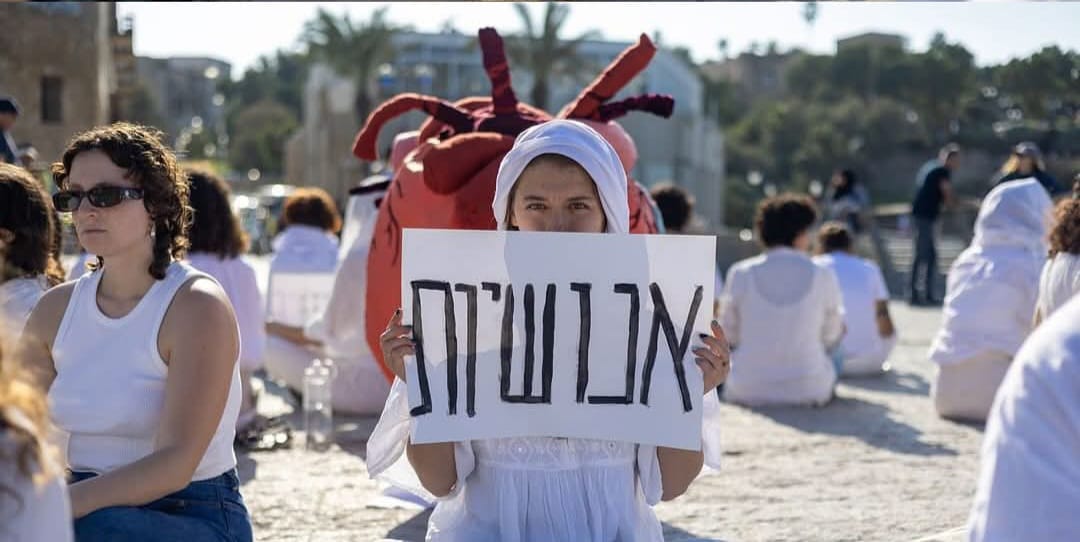
Photo Credit: Combatants for Peace
In a land often defined by division, a quiet revolution unfolds—one not broadcast in headlines, but carried in voices that whisper hope through fences of fear. These are the voices of parents, bereaved families, youths, students, artists, rabbis, teachers, poets, academics, and former soldiers—people from all walks of society who carry the audacity of hope. They bear signs and speak in Hebrew—with words that reach for peace like the Psalms reach for the Almighty: “Seek peace and pursue it.”
This verse, sung in synagogues and whispered in hearts, has now become a heartbeat among thousands of activists—spray-painted on walls and chanted at marches. These are the stories of Israeli peace activists—individuals and groups. They teach children to imagine the faces on the other side not as enemies, but as potential friends. In a region where hate and vengeance are languages everyone speaks, they craft new dialects—of coexistence, of forgiveness, of shared futures. They are constantly cultivating a longing for peace between Israelis and Palestinians. Both peoples share more than a border. They share the sun. The soil. The sea. The stories.
Seeds of Conscience
In Tel Aviv and Haifa, in the Negev and the Galilee, they gather. They march under banners that read “Ceasefire Now” and “Another Way Is Possible.” They are sowers of seeds. Though the soil is dry and the seasons long, they plant anyway—they know that perpetual war is not security; it is a slow erosion of the soul. They understand that occupation is not a shield; it is a poison, seeping into the moral groundwater of the society they love. For them, the dream of Israel is not one of domination, but of justice. 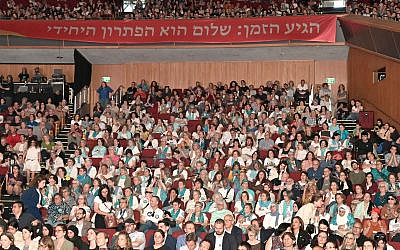
In the aftermath of airstrikes and stabbings, when the news cycle spins and graves are dug, these activists gather in circles of grief. They read names. They cry for all the dead—Israeli and Palestinian. They mourn with candles, not with vengeance. Together, they form a fragile coalition of empathy—an underground river of humanity that runs beneath the headlines.
Grassroots movements like Breaking the Silence and Combatants for Peace, where former fighters from both sides now walk together for justice, embody this spirit. Other groups like Women Wage Peace—a collective of mothers and grandmothers dressed in white—stand at checkpoints and on the steps of the Knesset, singing songs of unity. Standing Together, an Israeli-Palestinian grassroots movement, gathers regularly in joint demonstrations that defy the rigid narratives of separation. Holding bilingual signs that read “Only Peace Will Bring Security,” their presence is a quiet rupture in the echo chamber of hate.
But these actions come at a cost. To be an anti-war activist in Israel is often to be branded a traitor, accused of betrayal. They risk arrest, and alienation from their communities. Some are spat on in the street. Others lose jobs. Yet their resolve grows stronger with every injustice witnessed.
The real bravery of Israeli anti-war activists lies in this: where others see enemies, they see neighbors. What makes them extraordinary is not just their opposition to war, but a deeply personal act of love. Love for a country they believe can be better. Love for a people—Jewish, Palestinian, all—who deserve more than the logic of vengeance.
Art as Resistance
As the Gaza War rages on, with each day bringing fresh wounds—a quiet resistance persists in cafés, community halls, and city squares from Tel Aviv to Haifa. “Peace Now.” Not tomorrow. Not after the next war. Now. These are the voices of Israeli peace activists: a mosaic of ordinary citizens who refuse to let the language of war write the last chapter of their shared humanity with Palestinians. 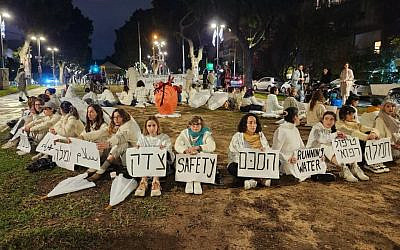
These peace activists are not waiting for permission from governments or green lights from the international community. They are planting peace with their own hands. Their movement is a pilgrimage—slow, sacred, and uphill. In a world addicted to speed and spectacle, the most radical thing left is patience—and the belief that under the weight of decades, something new can grow. And in the end, it will not be the politicians or generals who forge the path forward, but the dreamers who, even in war, dare to whisper the language of peace.
Joint Memorial
This year marks the 20th Joint Israeli-Palestinian Memorial Ceremony, organized by the Parents Circle – Families Forum. The ceremony brings together bereaved Israeli and Palestinian families who have lost loved ones—to mourn together, and to call for an end to bloodshed and war. 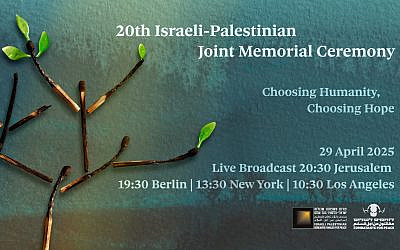
The challenges facing the organizers and participants are more daunting than ever. Israeli authorities have routinely blocked West Bank participants from attending (including last year), and the ceremony has long been targeted by Israeli right-wing groups who reject any form of shared grief. This year, right-wing protesters broke into a synagogue in the Israeli city of Ra’anana that was hosting a screening of the memorial, throwing stones and setting off fireworks. At the same time, some pro-Palestinian voices have also criticized the event, arguing that it draws a false equivalence between the occupier and the occupied.
Yet the joint ceremony seeks to sow seeds of hope among both sides—and to end the wars that have taken the lives of cherished loved ones. The Israeli-Palestinian Memorial Day reminds us that war is not a predetermined fate, but a human choice.
A Shared Hope
No utopia. No illusions. Just the stubborn belief that children should not grow up with sirens in their ears. That homes should be places of sanctuary, not rubble. This is a dream—it is planted, like a seed, in the soil of shared humanity. It waits for rain.
Let this not be another call drowned out by cynicism. Let it be a new chapter—written by all who dare to imagine the other not as enemy, but as neighbor. As friend.
Related Topics
Related Posts