
Jewish photographer and author. Also, indigenous Ryukyuan.
White Supremacism. Arab Supremacism. Colonialism.
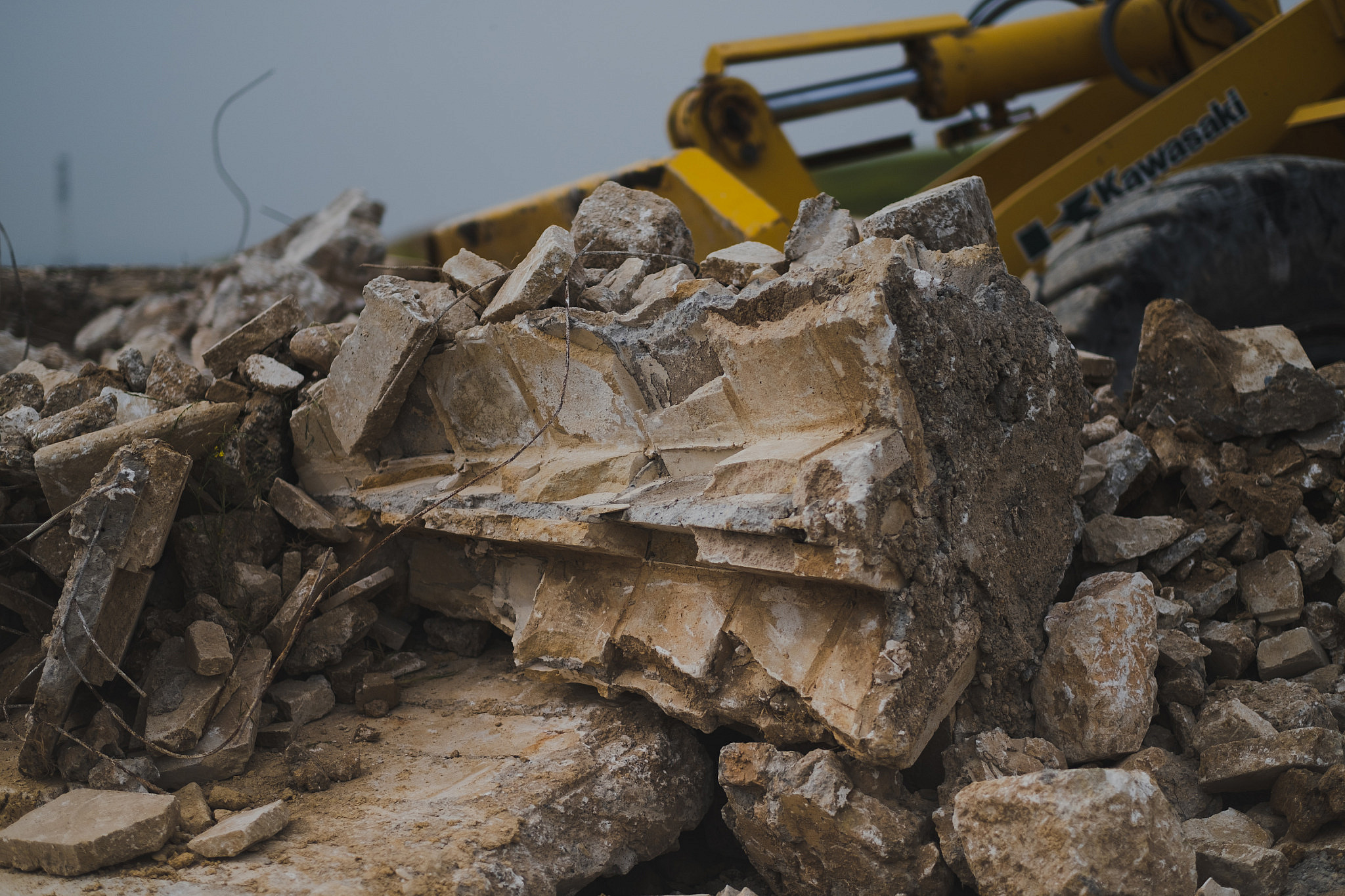
The ruins of an Ezidi temple in Shingal (Sinjar) in Iraq, destroyed by local militias of the Islamic State. Photo by the author.
Colonialism was never just about taking land. It was about rewriting the world—who owns it, who rules it, and who disappears into history. It was about creating a hierarchy so deeply entrenched that people would stop seeing it at all.
Two systems succeeded in doing this more than any others: White and Arab supremacism.
No other colonial ideologies have reshaped the world on this scale. No other systems have carved up continents, erased entire civilizations, and dictated global power structures for centuries. No other legacies are so deeply intertwined, reinforcing each other while pretending to be opposites.
Look at the world map. Who decided these borders are natural?
Northern America, Europe, Australia, North Africa, and much of West Asia together account for a fifth of the world’s landmass, dominated by the same two colonial systems. The British Virgin Islands and the Arab Comoros—thousands of kilometers from Anglo and Arab mainlands—exist because colonialism never ended. It just became the world order.
Colonialism did not just take over lands—it erased the past to justify its presence. That is why an Ezidi temple in Sinjar was destroyed by Arab supremacists the same way Indigenous sites in North America were bulldozed by White supremacists. It is why the Jewish Quarter in Jerusalem, which predates Arab conquest, is reframed as a violation of “international law” while British, French, and Spanish colonies remain unchallenged.
These are not accidents. They are the mechanisms of colonial permanence.
First, conquest. Then, erasure. Then, control.
Both White and Arab supremacists framed their expansion as a civilizing mission, portraying the lands they took as primitive and their subjects as needing guidance. Both imposed religious justifications—one through Christianity, the other through Islam—branding native peoples as heathens or infidels whose land could be seized. Both replaced indigenous languages, imposed rigid social hierarchies, and used slavery on a massive scale to extract labor and wealth.
The Spanish and Portuguese empires did not stop at expelling Jews and enslaving Africans. The same blueprint played out in the Americas. They imposed the encomienda system on Indigenous populations, stripping them of land and autonomy, forcing them into dependency, and justifying it as a civilizing mission.
At the same time, the Ottoman Empire built one of the most structured slave economies in history. The Kanunname-i Osmani (Ottoman Law Codes) contained extensive regulations on the ownership, taxation, and legal status of slaves, treating them as an embedded part of imperial administration. Enslaved peoples provided labor, concubines were trafficked through harems, and entire populations were uprooted through the devshirme system, which forcibly conscripted Christian boys to be raised as Muslim elite troops.
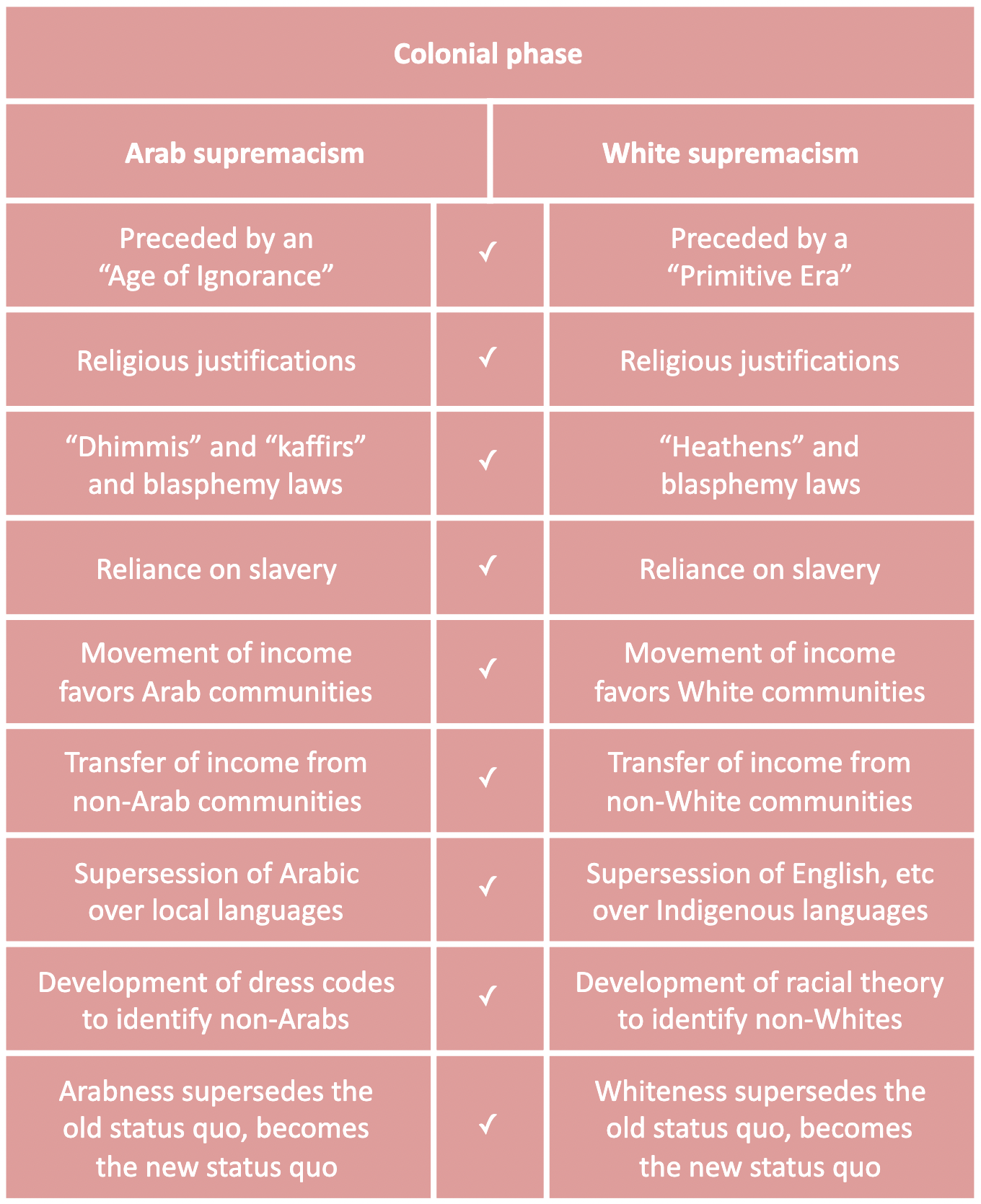
This was not an accident. It was a formula.
And when direct conquest became unacceptable? The structure remained. It evolved.
By the 18th century, the Russian Empire relocated its entire Jewish population to the Pale of Settlement—a rigidly controlled region in Eastern Europe. Jews were treated as a permanent, exploitable caste.
The Islamic world followed similar patterns. In 1679, Yemen’s Jewish population was expelled in the Mawza Exile, forced into the desert under the claim that their presence polluted the land. Many perished, and those who survived were allowed to return with their status permanently degraded.
In 1839, the forced conversion of Jews in Mashhad, Iran, known as the Allahdad, left an entire community living in secrecy for generations, practicing Judaism underground while outwardly appearing Muslim to survive.
In Eretz Yisrael, once every generation or two, there would be an expulsion or massacre of Jews at the hands of local rulers. Entire Jewish quarters were sometimes depopulated, only to be reopened to Jewish settlement when Jewish economic activity was needed again.
In the twentieth century, these Christo-Islamic patterns continued with only cosmetic changes.
Puerto Rico — once part of the Spanish Empire — was annexed by the United States, but remained a territory without a vote, governed but not represented. Hawaii was rapidly settled, making Indigenous Hawaiians a minority in their own homeland. About half of my paternal homeland, Okinawa, remains under United States military administration, shut off to us, the Indigenous Ryukyuans.
Similarly, Kurds, Assyrians, and other non-Arabs were thrown under authoritarian Arab rule. In North Africa, Berbers saw their language and identity erased under Arabization policies. In 1929, the British Empire and local Arabs collaborated in the Gaza Strip and Hebron to expel the last remaining Jewish inhabitants in those places.
All of this is colonialism without the name. But Zionism shatters the colonial structure by returning sovereignty to a people who had been stripped of it.
Zionism was particularly shocking for Arab Muslim societies. Jews were meant to remain a minority under Islamic rule, permitted to exist but never to govern. Zionism broke the structure inaugurated by Mohamed’s warfare against neighboring Jewish tribes. That is why opposition to Israel is not just about borders—it is about maintaining the colonial hierarchy where Arab Muslims rule Eretz Yisrael, and others remain subjects.
Zionism, however, is a decolonization movement, an ingathering of exiles, and a rejection of foreign dominance over Jewish sovereignty.
Zionists were the first people to reverse our own displacement.
Zionists were the first people to completely shatter the order that ruled us for generations.
And the first people to say we will never be ruled again.
Related Topics
Related Posts