
Families belong in the ICU — and prejudice does not
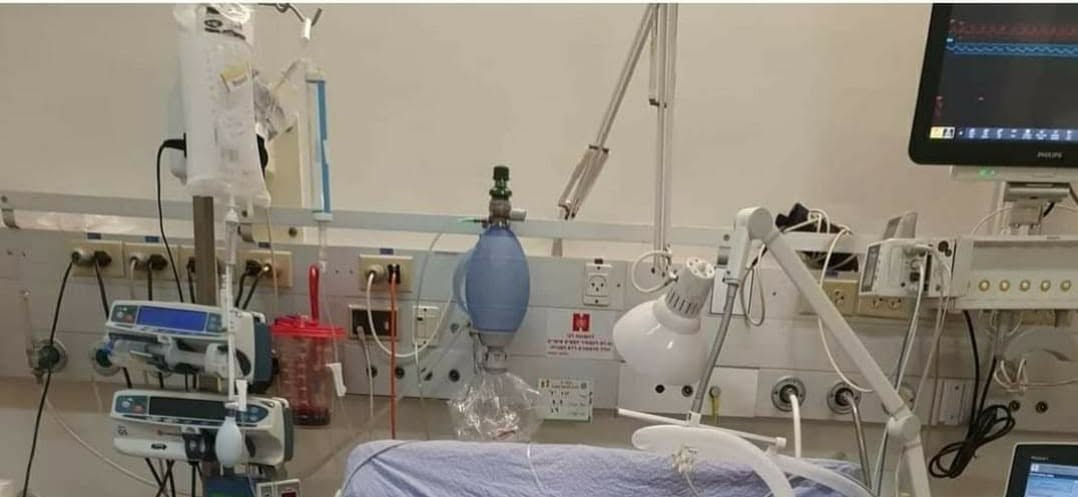
Last week, four Israeli soldiers were seriously wounded in an explosion in southern Lebanon and evacuated to a hospital in northern Israel. Soon afterward, allegations began circulating on social media about what happened to them in the intensive care unit. A family member claimed the soldiers had been treated poorly during a night shift and that their families had been made to leave the unit. Much of the public discussion focused on one detail: the night-shift staff were described as Arab.
The hospital has rejected the allegations. Israel’s defense minister has ordered the matter investigated. I was not there, and neither were most of the people now certain of what happened.
But the story has stayed with me, because it touches three things I care about: what happens when hatred enters a place of healing, what role families should have in intensive care, and how easy it is right now to take one painful event and turn it into a story about an entire group of people.
First, we should not be naive. Hatred can enter a hospital.
This week, Israeli content creator Max Veifer announced he is traveling to Australia to testify in the criminal trial of two former nurses at Sydney’s Bankstown Hospital. The case followed a viral video in which the two spoke about Israelis with chilling hostility. They said they would refuse to treat Israeli patients, and made statements about killing them.
There are few places more sacred than a room where one person is fighting to save another’s life. Hatred based on nationality, religion or ethnicity has no place there, and any case where it influences medical care must be investigated and addressed with the utmost seriousness.
But acknowledging that possibility cannot mean treating identity itself as evidence. That is where the conversation around the wounded soldiers began to trouble me.
Arab doctors, nurses and pharmacists are an integral part of Israeli healthcare. In 2023 they made up roughly a quarter of Israel’s physicians and nurses, and nearly half of its pharmacists. Whatever happened in one hospital on one night, it cannot become grounds for casting an entire community of healthcare professionals as suspect.
I know this not only professionally, but personally.
Years ago, my family spent long, terrifying months in intensive care after a medical crisis left our son with a severe brain injury, unconscious and unresponsive. One of the people who tried hardest to reach him was an Arab nurse from East Jerusalem. She looked directly into his eyes, spoke to him constantly, called him affectionate names, encouraged him. Again and again she tried to coax a response from him, to draw him back toward consciousness. We watched her believe in him at moments when others did not. She gave us hope, and that hope helped carry us through the hardest days of our lives.
Over that long hospitalization we met other Arab healthcare professionals who cared for our son with extraordinary dedication. Today, through my work in healthcare advocacy, I continue to meet and collaborate with remarkable Arab physicians.
My experience is not a reason to idealize an entire group, just as one disturbing allegation is not a reason to condemn an entire group. That is precisely the point: people must be judged by what they do.
There is a second issue here, one that deserves attention regardless of what the investigation finds: the role of families in adult intensive care.
The hospital where the soldiers were treated, and where family members were reportedly not allowed to remain, lists designated visiting hours for its adult ICUs on its website. And it is hardly alone. Many adult ICUs across Israel still operate with fixed visiting hours rather than continuous family presence at the bedside. I believe that model belongs to an older generation of medicine.
Families in intensive care are not visitors. They often know the patient in ways no clinician can. They can orient and reassure someone who is frightened, confused, sedated or struggling to understand what is happening. They may notice subtle changes. And they are themselves living through an event that can be profoundly traumatic.
Critical care elsewhere is already moving in this direction. The Society of Critical Care Medicine’s 2024 guidelines for adult ICUs make one strong recommendation, and only one: that liberalized family presence be the default practice. The guidelines also suggest offering families the option to join ward rounds, to take part in bedside care and, with a staff member assigned to support them, to be present during resuscitation. Hospitals in Britain, Canada and the United States have already moved to open units.
That is where I would like to see Israeli adult ICUs go: at least one designated loved one able to remain with a critically ill patient around the clock, unless there is a specific clinical reason to ask them to step outside. Families should not be there to supervise medical staff. They should be there because they are part of the patient’s support system and, in many ways, part of the care itself.
The other thing this case has made me think about is what we do with fear and anger when something goes wrong. It is easy right now to move from a troubling allegation to a much broader conclusion: us and them, loyal and disloyal, those we can trust and those we cannot.
If the investigation finds that any member of the medical staff treated these wounded soldiers improperly, that must be addressed seriously and specifically. Soldiers seriously wounded defending this country, and their families, deserve excellent medical care, compassion, dignity and security. But whatever happened in that hospital must not turn thousands of Arab doctors, nurses and other healthcare professionals into enemies by association.
Hatred has no place in medicine, and when it appears we must confront it without hesitation. But ethnicity is not evidence of hatred.
I keep thinking about the bed where my son once lay in intensive care. For us that bed holds almost unbearable memories of fear, grief and uncertainty. It also holds the memory of an Arab nurse leaning toward my unconscious child, looking into his eyes, asking him once again to come back to us.
That, too, is part of the story of medicine in Israel.