
Who do Israelis hate more?
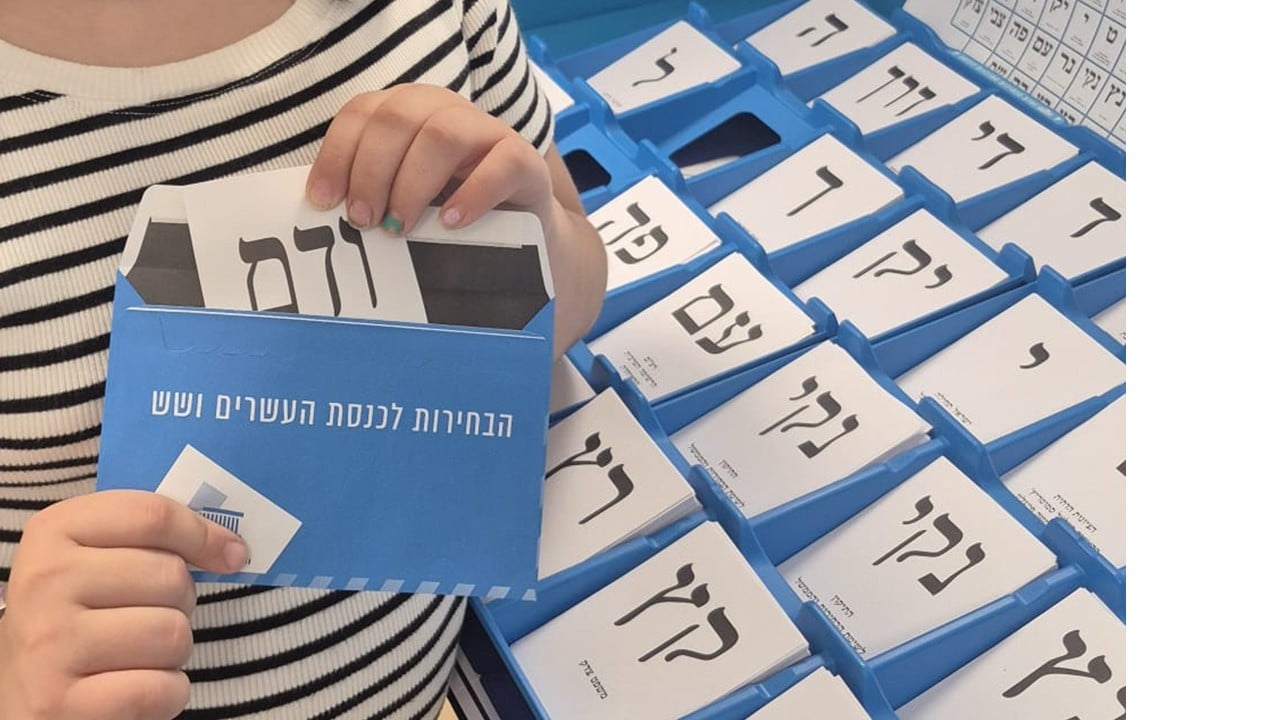
Every single Israeli voter who voted for the so-called change bloc needs to ask themselves one fundamental question.
Do I hate or fear my fellow Arab Palestinian citizens more than I hate or fear Bibi Netanyahu and this quasi-fascist authoritarian government?
The answer matters. The leaders of the anti-Bibi Zionist bloc will decide in the coming days and weeks whether it matters to them too.
Let’s be very clear: despite the disappointment and the not-inconsequential fact that mainstream pollsters failed miserably, Netanyahu has lost this election. His far-right government has lost its Knesset majority. Despite the inevitable avalanche of spin, his government has been defeated at the ballot box.
The final tally may take days. But whether the Bibi Block wins 53 or 55 seats, it has lost its majority.
Every single party in the opposition is committed to removing Netanyahu. Together, they will have a 10- or 14-seat majority. That majority, however, depends on whether the Zionist opposition is prepared to work with the Arab Palestinian parties.
They face a choice.
Remove Netanyahu by taking the electoral arithmetic seriously, or leave him in power rather than negotiate with Palestinian representatives.
Turnout in this election was extraordinarily high. At 77.7%, it is projected to be the highest since 1973.
As of Wednesday afternoon, the Joint List and Ra’am were on 19 seats, an historic high. The provisional Central Election Committee website shows exceptional Arab turnout. Palestinian turnout now appears to have eclipsed Jewish turnout.
If true, it is a remarkable result that Palestinian-Arab turnout exceeded Jewish turnout in a national election in the Jewish state.
In Um el Fahm it is 79.9%; in Baka El Arabia it is 80.1%; in Taibeh it’s 80.8%; in Tira it’s 81.5%. In Kefar Qassam it is a striking 86.4%. From Tamra (84.7%) in the Galilee in the north to the Bedouin town of Rahat (84.8%) in the Negev in the south, the story is the same.
This is a seismic event in Israeli politics. Arguably, it is the most important electoral fact of this election.
Arab-Palestinian turnout has historically been in the mid-40s.
Yes, this high turnout was in part a reaction to Itamar Ben Gvir and his failure as Israel’s Minister of National Security. It is a response to soaring crime rates in Palestinian cities. It also reflects the hard work of the leaders and election workers of Joint List and Ra’am.
But let us not reduce these extraordinary numbers to a single issue or to the actions, or inactions, of an individual Israeli minister.
This turnout is a collective scream for inclusion by the Palestinian citizens of Israel.
But who is listening?
The pundits on Channel 11, 12 and 13 seem flummoxed. It is as if they are waking up in a different country. For months, the so-called Arab vote has been airily dismissed as “others”. Few media outlets have dared to include them in overall “opposition” numbers.
For decades the Israeli left has heaped insults on Arab-Palestinian voters for abstaining in elections – or at least not turning out in similar numbers – as they do – to Jewish voters.
Now that they have, the Israeli Zionist opposition faces a critical test.
Should it flunk this test – and rush to declare that Palestinian parties cannot be included in the next government, without even sitting down and negotiating before they are ruled out – do not feign shock when Palestinian turnout collapses in an election next year or the year after.
Let me be clear. No political party, no matter whom it represents, has an automatic right to join a government coalition. To suggest that, simply because the Palestinian parties performed exceptionally, they have automatically earned or deserve a place in government is absurd. What they have earned is the right to be respected and treated as equal citizens, and for Zionist opposition leaders to sit down and negotiate the terms of a formal or informal coalition arrangement.
If they are dismissed, the Israeli voters of Gadi Eisenkot, Yair Golan, and Yair Lapid deserve to know why their leaders chose to keep the Likud party (with or without Bibi Netanyahu) in power.
After four years of trampling on the rights of Israeli citizens, demonizing the opposition, right-wing pundits now screech Zionist unity.
Talk of Zionist unity now is at best a self-interested slogan. At worst, it is a hopeless fig leaf for racist exclusion. After this election, it is little more than a cheap catchphrase parroted by political stooges and pundits alike.
What does the Joint List or Ra’am demand that is so unacceptable?
Israeli voters need to know.
Given Israel’s demographic trajectory, the only hope of staving off successive far-right governments is for the centre-right to come to terms with the need for an alliance with Israeli Palestinians. Not fear it, but embrace it. Own it.
Bibi would do the same if he could.
If Eisenkot and the other Zionist opposition leaders refuse to meet this moment, they risk destroying the very mobilization that has made an alternative government possible. Palestinian turnout may collapse at the next election.
Netanyahu is likely to be salivating at that prospect in the months ahead.
A far-right religious government with a thumping majority awaits.
We have been warned.