Middle East Analyst
Who Is the Trump–Mossad–Epstein File FBI Informant Charles Johnson?
by author
The FBI memo that surfaced last week was not a contemporary document. It was written on October 18, 2020 — two weeks before the presidential election — during a period when federal investigators were receiving increased reporting about potential political instability in the event of a Trump loss. Its timing places it inside a volatile institutional moment: a contested election, internal tensions within the administration, and politically sensitive source reporting flowing into field offices, including Los Angeles.
The memo’s reemergence prompted immediate reactions from figures named in its pages. Alan Dershowitz, who once employed Charles C. Johnson as a high school intern, dismissed him as a “fraudster” and a “Holocaust denier.” Johnson’s public record contains elements that support the characterization of him as highly controversial and legally exposed; he has been found liable in civil litigation and has made statements that drew widespread criticism. Those facts are relevant to evaluating his credibility. They do not, however, resolve the central analytic question: who was Johnson at the time he was providing information to the FBI, and what incentives may have shaped his reporting?
Understanding that question requires situating Johnson within the political ecosystem he inhabited.
A Networked Political Actor
Johnson emerged from the populist conservative media world, writing for outlets such as Breitbart and the Daily Caller during the rise of the Trump movement. Over time, he moved through multiple overlapping circles: activist media, congressional offices, intellectual institutions associated with nationalist thought, venture-capital networks, and political campaigns.
In 2018, he attended the State of the Union Address as a guest of Congressman Matt Gaetz — a nationally televised event that underscored his access to sitting members of Congress at a moment of peak Trump-era visibility. Attendance at such an event does not confer authority. It does, however, signal acceptance at a level beyond fringe activism. Johnson was operating within reach of elected officials and high-profile political actors.
Reporting has also documented that he maintained extended private communications with then Senator JD Vance during this period. He interacted with prominent lawyers and political donors. He has publicly acknowledged serving as a Confidential Human Source (CHS) for the FBI.
None of this establishes influence. It does establish proximity.
Johnson’s career reflects a recurring pattern: partial acceptance across multiple power centers without permanent institutional anchoring in any one of them. That pattern is analytically significant.
A “multi-vector operator” in political ecosystems is an individual who maintains working relationships across competing factions, enabling him to carry information — and occasionally narratives — between networks. Such actors derive leverage less from formal authority than from access, perceived access, and the ability to signal connectivity. Their position is often unstable. Their influence depends on credibility with multiple audiences simultaneously.
Johnson’s public trajectory fits that description. He was neither an officeholder nor an isolated provocateur. He moved between media, donors, elected officials, and federal investigators. He accumulated both real connections and reputational claims about connections. That combination can create influence even when formal power is limited.
It can also create incentives.
Informing on a Familiar Circle
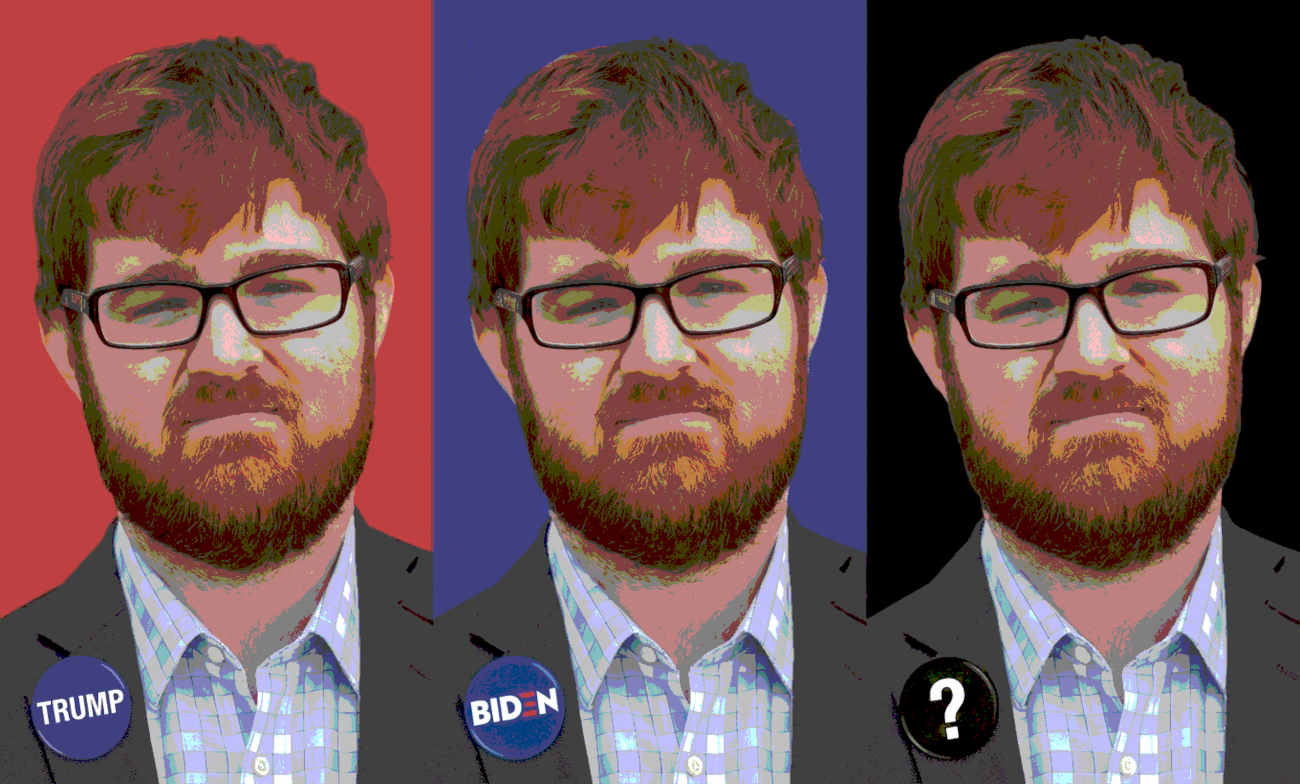
By October 2020, Johnson had become a confidential human source. Public reporting and Johnson’s own statements confirm that he cooperated with federal authorities. Around the same period, he was distancing himself from elements of Trump-aligned politics. In 2021, he told Rolling Stone that he had shifted his loyalties to Joe Biden. The precise timing of that realignment is not publicly documented, but political transitions of that magnitude typically unfold over time rather than instantaneously.
If Johnson was in the process of breaking with portions of Trump world during late 2020, that context matters. Informants frequently report on communities they once belonged to. They possess knowledge, relationships, and grievances. The transition from insider to source does not automatically invalidate their information. It does, however, introduce layered incentives: personal repositioning, reputational recalibration, legal exposure mitigation, or ideological reassessment.
Johnson was not informing on a foreign network he had never touched. He was reporting on a milieu that shared many of his traits: media-driven, factional, personality-centric, and often indifferent to institutional guardrails. He understood its internal rivalries and communication channels because he had operated within them.
That familiarity can enhance insight. It can also shape narrative framing.
Access Versus Accuracy
One analytical error in politically charged cases is to assume that proximity proves truth. Another is to assume that controversy disproves it. Neither holds.
Johnson demonstrably had contact with politically connected figures. He demonstrably had disputes with some of them. He demonstrably had legal and reputational vulnerabilities of his own. Those facts establish a complex incentive structure. They do not establish whether specific allegations in the October 2020 memo were accurate.
Confidential human source reporting is typically graded internally by federal agencies based on reliability and corroboration. The public does not have access to those internal evaluations. We do not know how Johnson’s reporting was assessed within the Bureau at the time. We do not know what corroboration, if any, accompanied the memo. We do not know which elements were considered credible, speculative, or unverified.
What can be said with confidence is narrower: the memo reflects source reporting received in a politically volatile moment, from an individual who had deep familiarity with — and growing distance from — the circle he described.
The Los Angeles Context
Johnson was living in Los Angeles during this period. The October 2020 memo originated from the FBI’s Los Angeles field office. Around the same timeframe, FBI supervisory special agent Johnathan Buma later filed whistleblower disclosures alleging that headquarters had restricted or shut down certain politically sensitive source activity. Public reporting confirms Buma’s role and his allegations of interference. Johnson publicly expressed support for Buma’s whistleblowing claims and acknowledged his own status as a confidential human source.
The precise operational overlap between Johnson’s reporting and Buma’s complaints is not fully public. It is therefore inappropriate to draw conclusions about causality. The relevant point is institutional: politically sensitive source reporting was flowing through that field office during a period of internal tension between field agents and headquarters over how aggressively to pursue certain leads.
The memo emerged from that environment.
What We Know — and What We Do Not
We know that Charles C. Johnson operated within overlapping Trump-aligned political and media networks.
We know that he later served as a Confidential Human Source (CHS).
We know that he became estranged from parts of the community he once inhabited.
We know that the October 2020 memo captured reporting from that moment.
We do not know the full scope of his reporting.
We do not know how the FBI internally graded his reliability.
We do not know which elements were corroborated.
We do not know whether his incentives were primarily ideological, strategic, or personal.
Conclusion
Charles Johnson is not an anomaly. He is a structurally typical figure in a political ecosystem where many principals — from Donald Trump, Paul Manafort, Michael Flynn, Charles Kushner, Ken Kurson, Michael Cohen to name a few — have faced criminal convictions or ethical collapse. Johnson’s CHS activity, factional drift, and intelligence‑adjacent identity place him squarely within that pattern.
Understanding him does not resolve the truth of the memo. But it does clarify the environment that produced it — an environment where access was real, accuracy was uncertain, and intent was layered.
Related Topics