
Who wears computer vision?
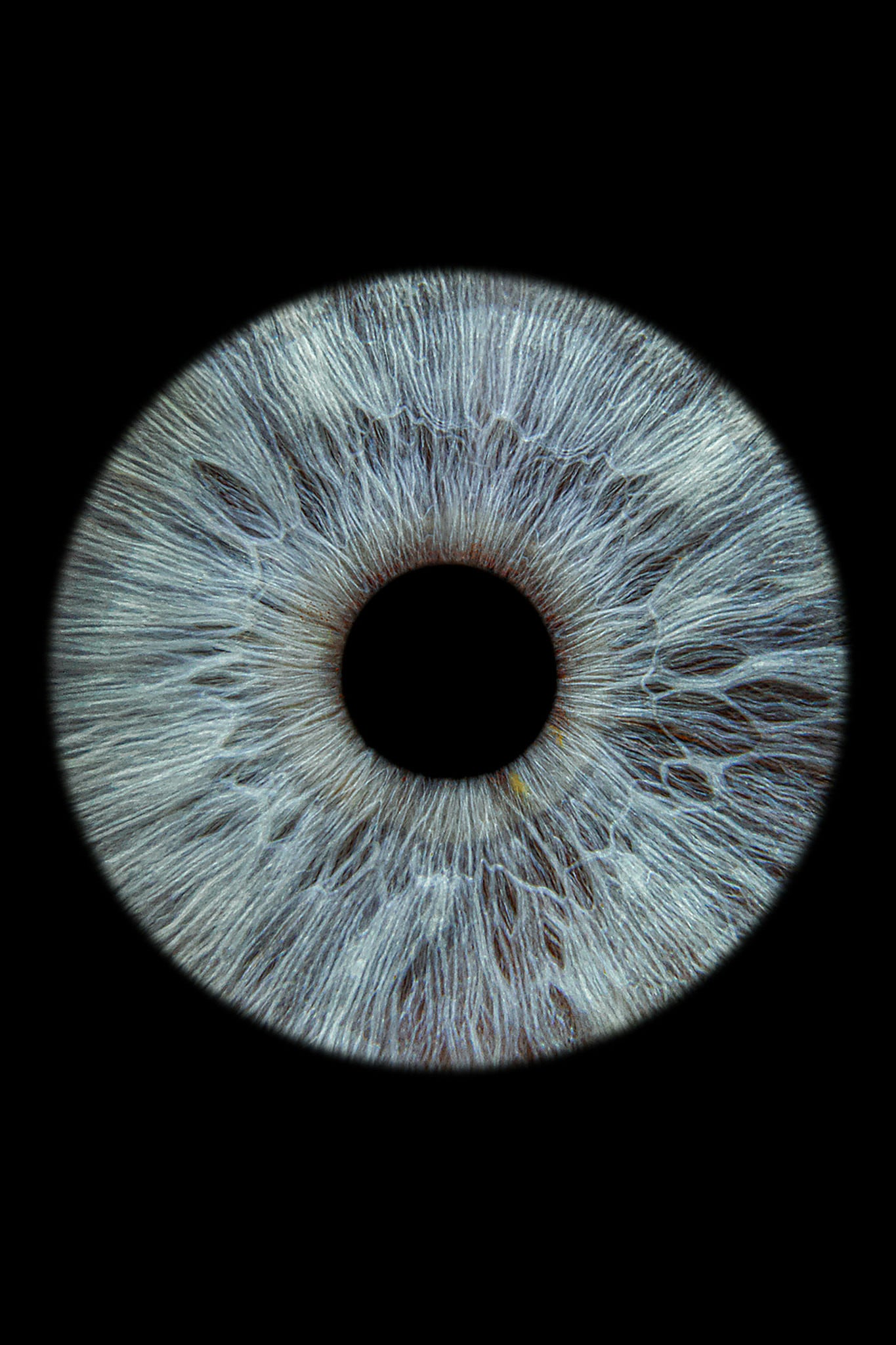
Dear reader, if you are interested in the development of artificial intelligence, particularly in its potential to improve people’s quality of life, and its applications in the field of vision, then this article is for you. This is a market analysis and an attempt to diagnose a problem nobody mentions.
Trust is Required
Let’s begin by looking at what companies deploying computer vision at scale are actually saying. The proof-of-concept phase is over.
Daniel Gabay, CEO and Co-Founder of Trigo, whose Physical AI platform is live in supermarkets across Europe and the US, is explicit: “We are past the proof-of-concept phase. The most critical milestone we are crossing right now is proving to the industry and the public that this is a highly secure, scalable technology that they can completely trust.”
Trust. Not accuracy. Not latency. Not model performance. Trust.
Ohad Hever, COO and Co-Founder of UVeye, which analyzes over five billion vehicle images a year for General Motors, Amazon, and Volvo, frames the same shift from a different angle: “The democratization of AI means that basic algorithms are becoming commoditized. Our enduring advantage is shifting from pure algorithmic innovation to the ability to productize AI at scale — fusing computer vision, hardware, edge computing, and operational software into a seamless, trusted system that solves massive industry problems.”
The words “trust” and “trusted” appear in both answers. Independently, unprompted, from two companies operating in completely different verticals. This is a signal, not a coincidence.
What Trust Actually Requires
Prof. Ofer Hadar, Full Professor of Communication Systems Engineering at Ben-Gurion University, has spent decades studying the conditions under which visual AI breaks down: “The challenge is to build AI perception systems that understand complex environments, operate in real time, and remain reliable under uncertainty, image degradation, limited communication resources, and even deliberate adversarial attacks.”
“Reliable under adversarial attacks” is a different bar from reliable in a controlled environment. It is the bar that military and security applications have always demanded, and that consumer and commercial deployments are now being held to as the technology moves from pilot to infrastructure.
The gap between “it works in the lab” and “the public entrusts it with their safety, their data, and their money” is where the next five years of computer vision will be decided. Not in the algorithm. In the system around it.
The Scale Problem Nobody Is Saying Out Loud
Gabay describes what scale actually looks like when it works: “Once computer vision AI masters the context of human behavior and interactions within a complex environment, a store becomes an intelligent, automated ecosystem. Imagine a brand offering a hyper-targeted digital coupon at the exact second a shopper is actively comparing two products on a shelf.”
That is a compelling vision of scale. It is also, quietly, a description of a system that knows everything about the human, and gives that intelligence entirely to the retailer, the brand, and the distributor.
The human in the store is the most instrumented participant in the system. They are also the only ones without access to the intelligence layer surrounding them.
This matters for adoption in a way the industry has not fully reckoned with the shopper, the driver, the patient. The pedestrians are not just variables in a deployment. They are the paying customers of every company that buys a computer vision system. They are, ultimately, the reason the market exists.
Ohad Hever points to where the advantage is heading: “It is about fusing computer vision, hardware, edge computing, and operational software into a seamless, trusted system.”
Seamless. Trusted. The friction between the technology and the human using or affected by it is the last engineering problem.
And it may be, quietly, a hardware problem as much as a software one. Computer vision has expanded into virtually every built environment, from vehicles and retail stores to security checkpoints and countless other hardware platforms. Cameras were already there. The intelligence was added on top.
The human body does not have that infrastructure yet. It is the one environment in the ecosystem without a native sensor layer, which may be exactly why it is also the one environment where adoption has stalled, not because the technology is not ready, but because the hardware interface between the intelligence layer and the human has not been solved.
What Comes Next
The Israeli computer vision ecosystem built its advantage by solving problems that others considered too hard and too constrained: security environments where failure was not an option; physical retail spaces where the camera had to understand human behavior, not just detect objects; vehicles where the system had to make decisions in milliseconds under conditions no lab could fully replicate.
That same discipline, applied to the hardest remaining interface in the ecosystem, is where the next chapter begins.
“The next major advances,” Prof. Ofer Hadar says, “will emerge from combining robust visual perception with multimodal information, contextual understanding, efficient representation and communication of visual data, and reliable decision-making under real-world conditions.”
Multimodal. Contextual. Reliable under real-world conditions. The environment is ready. The intelligence is ready. The question that the industry hasn’t answered yet is. “Who wears it.”