
Love is a skill. Repair is a practice.
Who’s Afraid of Palestine?
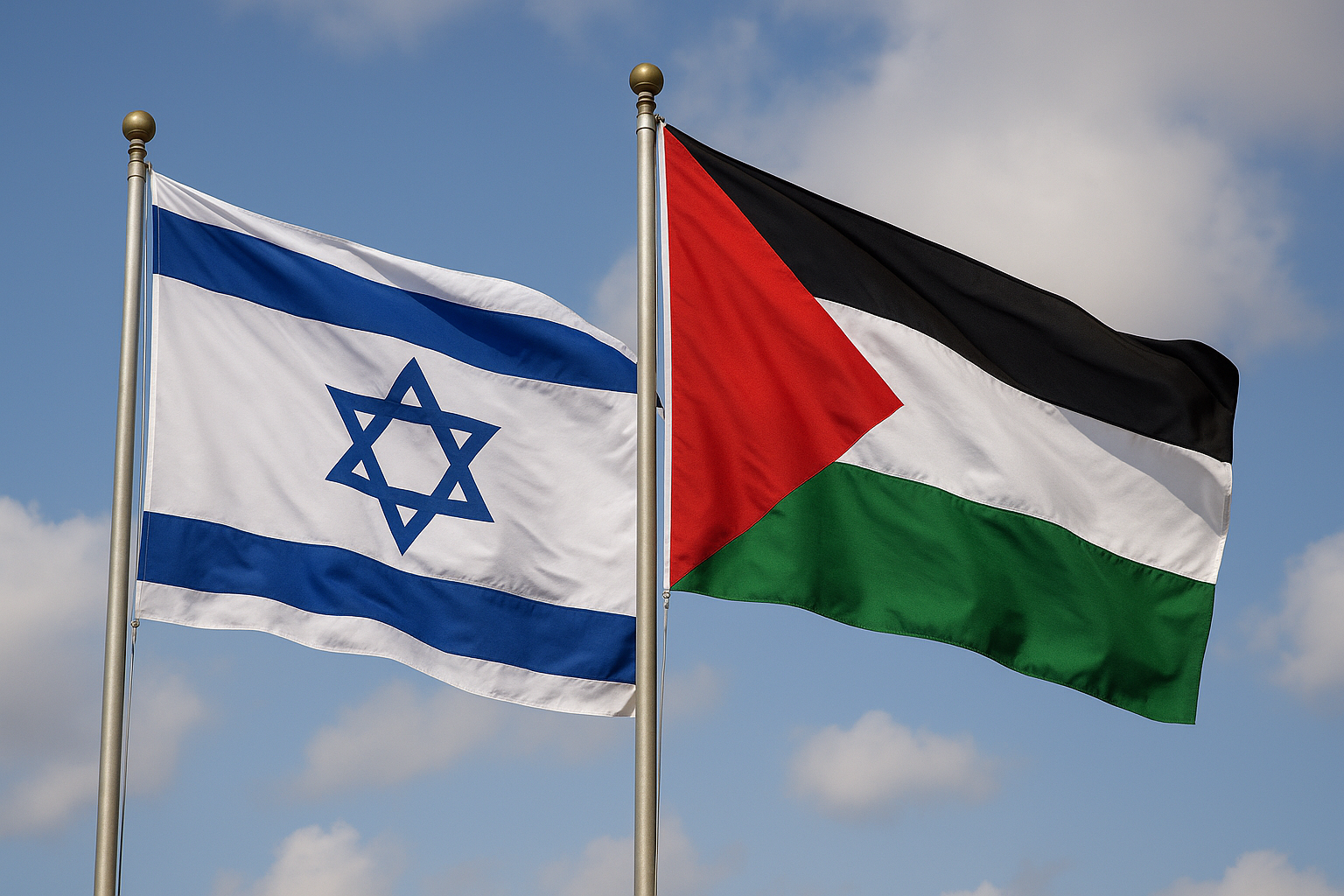
Illustrative: ChatGPT image created by the author.
The sound of sirens wailing through Israeli cities, families huddling in shelters, soldiers on the front lines — this is the reality of Israel at war. And yet, while Israelis bury their dead and pray for the safe return of hostages, some of the world’s most powerful democracies prepare to make a move that could alter the future of the conflict.
With Rosh Hashanah upon us, a season of reflection and renewal, Jews everywhere are asking hard questions about what must change so our children can inherit peace, dignity, and security. At the very same moment, the UK, Australia and others are expected to announce unilateral recognition of a Palestinian state.
To some, it sounds like justice long overdue. To others, it feels like betrayal. But the real question is this: will such recognition move Palestinians and Israelis closer to peace — or strengthen the very forces that have kept peace beyond reach for generations?
The Weight of Missed Opportunities
The dream of Palestinian statehood is not new. It has been offered again and again — but repeatedly refused. Each rejection carried a human cost that scarred both peoples.
-
1947: Jewish leaders accepted the UN Partition Plan. Arab leaders rejected it, choosing war over coexistence. The result: newborn Israel under siege, and hundreds of thousands of Arabs and Jews displaced in a tragedy that haunts the region to this day.
-
1967: After the Six Day War, Israel signaled readiness for negotiation. The Arab League responded with the infamous “Three No’s”: no peace, no recognition, no negotiations. Instead of a beginning, the world saw decades of occupation, terrorism, and despair.
-
2000: At Camp David, Prime Minister Ehud Barak offered Yasser Arafat a state with East Jerusalem as its capital. Arafat walked away. What followed was the Second Intifada: buses exploding in Jerusalem, cafes bombed in Tel Aviv, children terrified to ride to school.
-
2008: Prime Minister Ehud Olmert offered Mahmoud Abbas nearly all of the West Bank with land swaps and shared Jerusalem. Abbas refused to even respond. While the offer gathered dust, rockets rained on Israeli towns, and another generation of Palestinians remained without sovereignty.
-
2014: U.S.-brokered talks collapsed when Palestinian leadership chose reconciliation with Hamas over negotiation with Israel. The choice empowered those who glorify violence, leaving moderates weakened and families — Israeli and Palestinian alike — bracing for yet another round of war.
These were not just missed chances for statehood. They were moments when the door to peace was open, only to be slammed shut. Each rejection crippled moderates, strengthened extremists, and deepened the wounds of mistrust.
What Unilateral Recognition Risks
To recognize a Palestinian state now, while Israel is under fire, risks rewarding rejection and violence instead of negotiation and compromise.
-
It empowers rejectionists. Hamas, Islamic Jihad, the Houthis, and their Iranian patrons will celebrate recognition as vindication, claiming their violent “resistance” and the barbarism of October 6 delivers results.
-
It sidelines moderates. Palestinians who advocate compromise and institution-building are weakened when the world gives legitimacy without accountability.
-
It hardens Israelis. For Israelis already under siege, unilateral recognition confirms fears that the world discounts their security. That drives politics further right and makes peace talks less likely.
A Season for Honest Reflection
Rosh Hashanah is a call to self-examination. Israelis, too, must face difficult truths about policies and choices that complicate peace. But honesty demands acknowledging another truth: statehood cannot be willed into existence by foreign parliaments.
It must be earned through courage — the courage to sit at the table, to say “yes” to compromise, and to accept the painful but necessary sacrifices that peace requires.
Unilateral recognition bypasses that courage. It risks creating a Palestine on paper, not in reality — one that emboldens rejectionists, deepens divisions, and locks both peoples into more cycles of loss.
A Closing Word
With Israel at war and with Rosh Hashanah upon us, shortcuts are tempting — but deadly. This is not the moment for symbolic gestures that reward the past. It is the moment for courage that builds the future.
We should not fear a Palestinian state. We should fear a Palestine born of rejection, incitement, and unilateralism — a Palestine that does not unambiguously and universally recognize Israel’s right to exist, that cannot deliver security for its people or its neighbor. That path leads not to freedom or dignity, but guarantees another generation of war.
The world must choose: will recognition be the fruit of hard negotiations between Israelis and Palestinians, grounded in compromise and mutual respect — or a hollow gesture that rewards those who always say “no”?
For the sake of Palestinians, Israelis, and the generations yet to be born, let it be the former.
Related Topics
Related Posts