
Whose Pardon Is It Anyway?
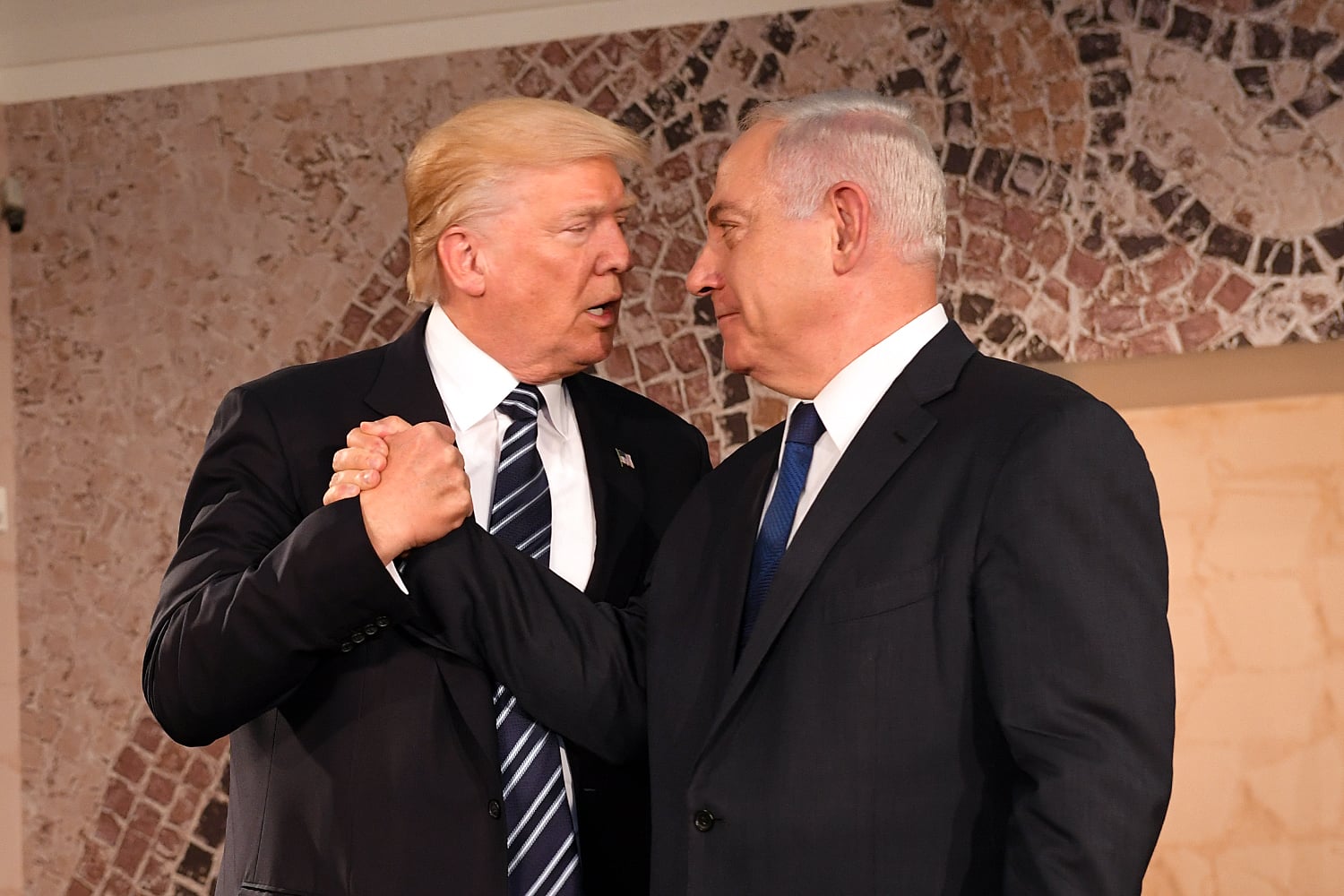
“I spoke with the President and he told me it’s on the way.”
That was Donald Trump on Monday evening, informing reporters that Israel’s president had assured him Netanyahu’s pardon was coming. Hours later, Herzog issued a denial: there had been no such conversation since the pardon request was submitted.
Set aside, for a moment, the question of who is telling the truth. The remarkable thing is that we’ve reached a point where the President of the United States feels entitled to publicly announce the outcome of a sovereign Israeli legal process–and expects to be believed.
This is not the first time. In October, Trump called out to Herzog from the Knesset podium: “Why don’t you give him a pardon? Cigars and champagne–who the hell cares?” In November, he sent an official letter urging Herzog to grant clemency, calling the corruption case “a political prosecution.” His ambassador attended Netanyahu’s trial. And now he declares, as if it were his decision to announce, that the pardon is on its way.
The pardon power in Israel belongs to one person: the President of the State of Israel. But here’s what Trump may not understand or may not care about: Israeli pardons work differently than American ones. In the U.S., the president can pardon anyone at any stage–before indictment, during trial, after conviction. In Israel, by established practice, the president considers pardons only after all legal proceedings have concluded. A pardon before conviction is, in the Supreme Court’s words, “a rare and extreme measure” to be used only as a “constitutional safety valve.”
The only precedent is the Bus 300 affair in 1984, when President Chaim Herzog–the current president’s father–pardoned Shin Bet agents before trial. But they had admitted guilt, and the Shin Bet chief resigned. Netanyahu admits nothing and intends to remain in office. The cases are not comparable.
So when Trump demands a pardon as if it were a routine presidential prerogative, he is asking Israel to break with its own legal traditions. He is asking Herzog to do something that Israeli law considers exceptional, not normal–and to do it under foreign pressure, which makes it even more problematic.
What does it mean when a foreign leader–even the leader of Israel’s most important ally—campaigns publicly for a particular outcome? When he announces what Israel’s president supposedly told him? When he frames an ongoing criminal trial as a persecution that must end?
Herzog can still say no. The legal process can continue. But the pressure is now part of the equation–visible, public, impossible to ignore. Whatever Herzog decides, it will be seen through the lens of Trump’s intervention. Grant the pardon, and it looks like capitulation to American pressure. Deny it and risk the wrath of an ally who doesn’t take rejection well.
Netanyahu understands this perfectly. Reports suggest he asked Trump to keep pushing on the pardon issue. He has released English-language videos about the case, clearly aimed at an American audience. The strategy is transparent: internationalize the pressure, make it about the U.S.-Israel relationship, turn a domestic legal matter into a diplomatic one.
And it’s working. We are no longer simply discussing whether Netanyahu deserves a pardon, or whether a pardon before conviction is legally appropriate, or what precedent it would set. We are discussing what Trump wants, what Trump said, what Trump announced.
The philosopher Karl Popper argued that democracy depends on functioning mechanisms for holding power accountable. Courts, investigations, legal processes–these are not obstacles to governance but safeguards against its abuse. When those mechanisms are subject to external pressure, when their outcomes can be shaped by foreign interests, something fundamental is compromised.
Israel has always navigated a complex relationship with the United States. Dependency and alliance, gratitude and resentment, sovereignty and accommodation. But there are lines. The independence of the legal system is one of them. The authority of Israeli institutions to decide Israeli matters is another.
Trump’s intervention doesn’t erase those lines. But it blurs them. It creates a precedent: that American pressure on Israeli legal processes is acceptable, normal, even expected. That the President of the United States can announce what Israel’s president will do before Israel’s president does it.
Herzog denied Trump’s claim tonight. But he should not have had to. And the damage extends beyond this single exchange.
The Israeli presidency is meant to stand above partisan politics–not apolitical, but non-partisan. The president represents all citizens, not one camp. That’s precisely why the pardon power was placed in his hands: because he alone can exercise it without partisan calculation. But when a foreign leader publicly campaigns for a specific outcome, when the pardon becomes entangled with U.S.-Israel relations and diplomatic considerations, the presidency is dragged into exactly the kind of partisan battle it was designed to transcend. The institution itself is diminished.
The pardon decision–whatever it turns out to be–should be Israel’s alone, made by an institution that belongs to all Israelis. The fact that we’re even asking whose pardon this is tells us something has already gone wrong.