
Urban Sociologist and Global Affairs Commentator
The 2026 Mandate: Israel Must Govern Its Message
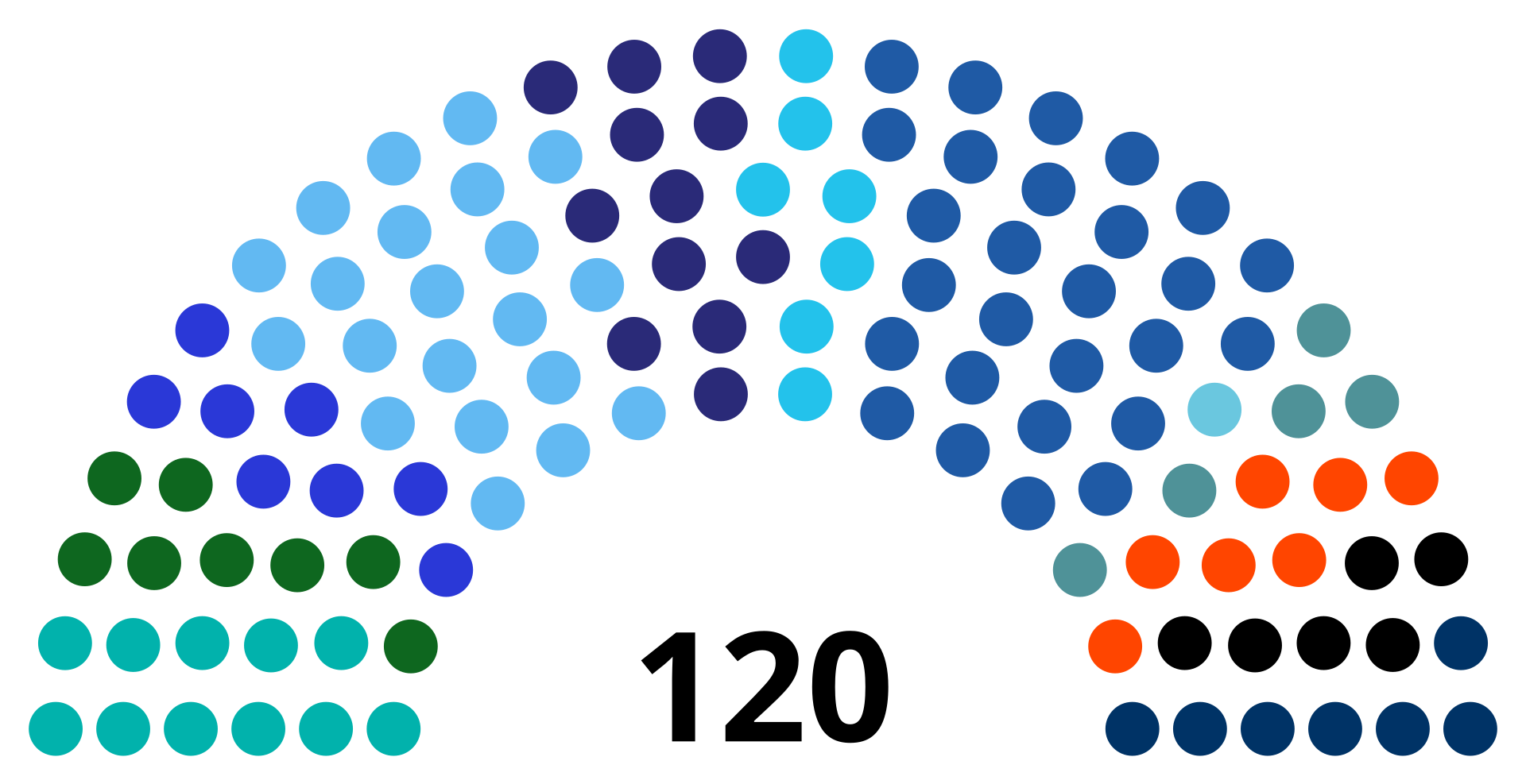
Israeli Knesset Composition 2026. October 28, 2026. (Source: Parliament diagram tool/Wikimedia Commons)
In international relations, messaging is not decoration. A state is read by its allies and its adversaries through what it says, through the speed and coherence with which it acts, and through whether its institutions look equal to the moment. Credibility comes from the match between words and conduct.
Israel has often struggled on this front. Its military capability is formidable and its strategic weight is not in doubt. Yet the force of its actions has too often outrun the clarity of the story told about them, in the world and at home. Some analysts argue that Hamas has tried to exploit exactly this gap, betting on Israeli political division, on hesitation, and on a distance between what Israel does and how it is understood abroad. Messaging does not decide wars. It does shape the environment in which wars are fought and judged.
Israel now faces a moment when the message will be sent whether it is chosen or not. After the October 27 election left neither bloc with a majority, President Herzog handed Gadi Eisenkot the mandate to form a government. Eisenkot’s party said he had won 67 recommendations from lawmakers, the most any candidate had received since 2015. Under the law he has 28 days, to December 6, with a possible extension of up to 14 days that would push the outer limit to December 20.
The constitutional clock tells us how much time Israel may take. It says nothing about how much time Israel should take.
There is a difference between a process that is legal and a process that is persuasive. Coalition talks that drift toward the final day, with rolling speculation, leaks and brinkmanship, would break no rule. They would still tell a story: that a decisive electoral signal cannot be turned into governing authority, that the system bargains while the country waits, and that fragmentation is the default condition. Israel’s detractors would not need to invent that narrative. They would only need to quote it.
The alternative is purposeful urgency. A government assembled well inside the window would say the opposite. It would show a political system that can resolve its differences under pressure, and a mandate converted into authority rather than consumed by delay. For allies, it would mean a counterpart who can make decisions. For adversaries, it would mean a state whose institutions hold steady when tested. For critics, it would remove the easiest argument of all, that Israel’s politics have become an obstacle to its own security.
Here a distinction matters. Haste is not the goal, and a coalition stitched together in a rush and likely to collapse would send a worse message than a slow one. A fragile government announces weakness in advance. The aim is a government that is fast and durable, built on real agreement about essentials, with the remaining demands separated from the red lines that cannot be crossed. That takes political maturity. Negotiating parties must be willing to tell apart what is principle and what is price, and to let the national interest set the limits of the bargain. Eisenkot has himself spoken of the need for a national emergency government, and his camp has urged that the mandate be used quickly. The test is whether that language becomes practice.
The stakes are not only domestic. If this effort fails, the mandate passes to another candidate, and the country moves closer to a further round of uncertainty. Every week of visible paralysis adds to the picture of a state that cannot decide. Israel faces security, diplomatic and social challenges at the same time, and none of them waits for coalition arithmetic.
The wider lesson reaches beyond this negotiation. Strategic communication is not confined to press conferences, communiqués or well-drafted statements. A state communicates through the speed of its decisions, the discipline of its politics and the competence of its institutions. These are the signals that people believe, because they are the hardest to fake.
So the way Israel forms its next government will itself be a statement. If it comes early and stands firm, it will show a country that can argue fiercely and still come together to act. That is a message no spokesperson could deliver as well.
Sometimes the most powerful message is not what a government says, but what it does.
Related Topics
Related Posts