
Why Antizionism Gets a Movement But Antikhomeinism Doesn’t
Among the oddities of modern political morality, few are stranger than this: the only democracy in the Middle East, Israel, is the one whose very existence is denounced, while its most brutal theocracy, the Islamic Republic of Iran, is treated as a legitimate member of the international community. Antizionism thrives; its analog—call it antikhomeinism—barely registers.
The modern and most successful form of antizionism was not born in the Arab world but in Moscow. After Israel’s victory in the Six-Day War of 1967, Soviet “Zionologists”—state-sponsored scholars such as Yuri Ivanov, Lev Korneev and Trofim Kichko—launched a vast propaganda campaign to redefine Zionism as racism and imperialism. Through pseudo-academic tracts like Beware: Zionism! and Judaism Without Embellishment, Zionism was recast as a conspiratorial ideology serving Western colonial interests.
This Soviet campaign—carried into the UN by its client states—culminated in the 1975 resolution declaring that “Zionism is a form of racism.” Since then, antizionism has evolved into a global ideology dedicated not merely to criticizing Israel’s policies but to abolishing the state altogether. Its language of “decolonization” and “resistance” flows directly from that Cold War crucible and now saturates universities, NGOs, and activist networks that have inherited Soviet rhetoric almost verbatim. Entire ecosystems exist solely to advance this goal.
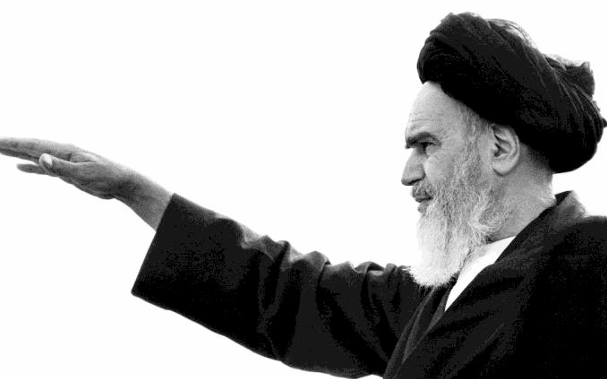
In 1979, twelve years after that campaign began, the Islamic Republic of Iran was born. Here was an act of colonization by an ideology alien to Iran’s own cultural soul. A proud, ancient nation with a deep pre-Islamic heritage was supplanted by Islamist revolutionaries. Overnight, a civilization that gave the world enduring works of poetry and philosophy was handed to men who saw joy as sin and women as second-class citizens. Ayatollah Khomeini promised justice but delivered terror. Khomeinism still rules Iran through fear, executing protesters, jailing dissidents, and financing transnational terrorism across six continents. A 2,500-year-old civilization was replaced with a theology of death.
Since then, Tehran has built its own imperial project, explicitly seeking to dominate vast territories across Iraq, Syria, Lebanon, and Yemen. Henry Kissinger once described the Islamic Republic as “a cause, not a nation”—but it is also an empire masquerading as a state. In this empire, Tehran is the home metropole and the colonies are its client territories, governed not by consent but by ideological occupation. Through the Revolutionary Guards and their proxies, Iran implants agents, exports its theology, and extracts loyalty in the service of its clerical state. It is colonialism in its purest sense—a mother country projecting its religious and political power through the subjugation of others.
Despite this unmistakable imperialism, the moral spotlight remains fixed elsewhere. Those who absurdly scream for the “decolonization” of Israel avert their eyes from the only active colonial enterprise in the modern Middle East—the Khomeinist one. In forty-six years, there has been no global campaign to dismantle the Islamic Republic, no academic manifestos, no boycotts of Iranian universities, no UN resolutions condemning Khomeinism. Antikhomeinism, outside Iran, scarcely exists.
Yet such a movement, grounded in solidarity with the Iranian people, would be morally justified. Were justice and liberation truly the animating tenets of modern activism, the streets of the West would echo with cries of “Free Iran!” rather than “From the river to the sea!” The same circles that romanticize antizionism show studied indifference to the suffering of Iranians. Academics boycott Israeli universities while attending conferences funded by Tehran. The bien-pensant Left treats Iranian theocrats as “resistance” to Western power even as Basij militias shoot women in the face and hang gay men from cranes.
Why, then, is the world’s only Jewish state treated as uniquely illegitimate while the world’s only Shia theocracy is given a free pass? Though the Soviet Zionologists are long gone, their intellectual legacy endures. Antizionism still lets Western progressives flaunt anti-imperialist credentials while ignoring the imperial ambitions of non-Western powers. Despite Jewish indigeneity, Israel is cast as a “colonial outpost” while Iran’s expansionism through Hezbollah and the Houthis is excused as “geopolitics.”
It also fits the preferred narrative of oppression. Israel is successful, pro-American, and Western in spirit—therefore “suspect.” Iran’s regime, economically ruinous, virulently anti-American, and is instead deemed “authentic.” To denounce Israel costs nothing socially; to denounce the Islamic Republic risks undermining the Left’s hierarchy of victimhood.
Iran itself exploits this moral confusion, cloaking its antisemitism in the West’s own vocabulary of “anti-imperialism” and “decolonization.” A sovereign Jewish state on land that was once Muslim is, to the Khomeinist imagination, a religious affront—a refusal to accept the restored equality of the Jews once kept as dhimmi.
If the world’s moral compass were even vaguely calibrated, the hierarchy would be reversed. Antizionism—a Cold War relic steeped in propaganda—would be shamed into irrelevance. Antikhomeinism though, a cause rooted in genuine liberation, would rally the conscience of every decent nation.