
Why antizionism is spreading – and why it endangers Jews everywhere
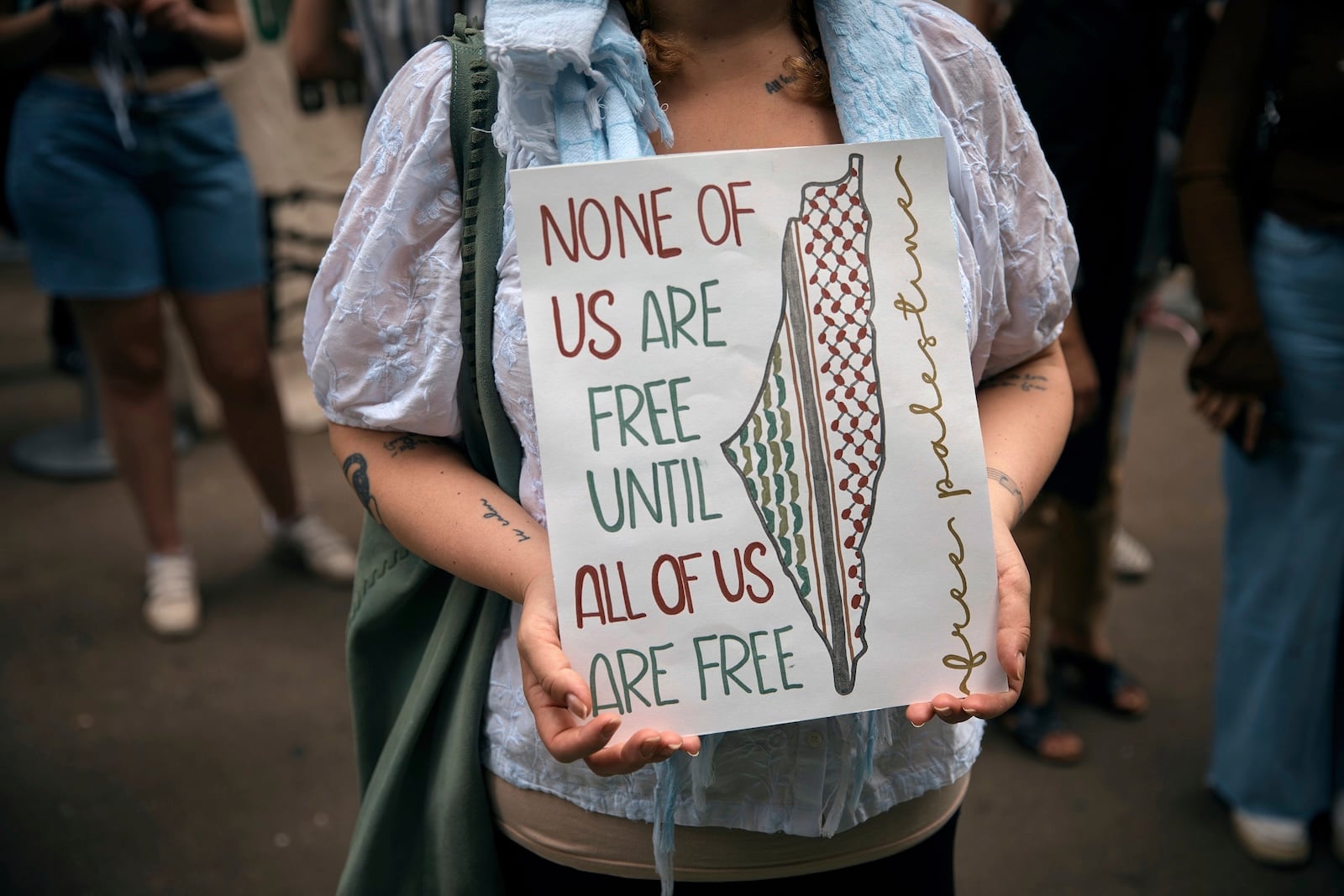
Antizionism has become one of today’s most powerful rallying cries. For a growing part of the radical – and even the mainstream – left, opposing Israel has turned into a way of expressing moral purity: a way to stand against everything they associate with “the West,” from racism to colonialism to genocide. Since the October 7 massacre, this attitude has only intensified, spreading through universities, media and activist movements.
Trying to bring facts into this highly charged atmosphere is increasingly difficult. Words like “genocide” or “apartheid” have precise definitions in international law, but in today’s political discourse, they function less as analytical terms than as moral verdicts. Applied to Israel, they are used not to clarify reality but to cancel it – to replace analysis with ideological certainty.
Yet the problem goes deeper. Antizionism today is built on a conceptual framework that is itself rooted in classic antisemitic patterns. It relies heavily on the language of settler colonialism and “whiteness,” extending the accusation from Israel to Jews more generally. In this view, Jews in Western societies are no longer seen as a minority but as part of the ruling class – privileged, powerful, and complicit in oppression.
This shift has been made possible through a series of conceptual reversals that reimagine Jews as the opposite of what they historically were. Jews are recast as the anti-intersectional group par excellence – as people who supposedly occupy every position of social dominance at once. A once-persecuted minority is transformed into a symbol of hegemonic power.
The first reversal: Jews as ‘white’ and therefore privileged
In contemporary “progressive” discourse, Jews are increasingly labeled as “white.” The term comes out of race and whiteness studies, where “whiteness,” beyond skin color, functions both as a marker of middle-class integration and as a symbol of systemic privilege.
Once Jews are defined as white, several consequences follow:
- Jewish minority status disappears: antisemitism is no longer seen as structural or even intelligible, and is often dismissed outright.
- Jewish success is reinterpreted as stemming from “white privilege” rather than as the achievement of a minority that historically fought for survival.
- Jews’ social mobility is reframed as betrayal. This ascent signals a voluntary renunciation of authentic minority status: Jews are cast as typical members of the dominant majority, complicit with capitalism, who identify with white America, the West, and even with anti-Black and anti-Muslim racism.
- Jews become the ideological architects of white, racist, capitalist society, a role that is further exacerbated by their identification with Zionism.
It is the conceptual move of making Jews white that is then projected back onto Zionism (and vice versa). If Jews are white, then Zionists are white settlers: Israel becomes an extension of Western colonialism. Also, Holocaust memory is said to shield Jews from accountability. And once Israel is framed as colonial in essence, its very legitimacy is put on trial.
The second reversal: Zionism as settler colonialism
This is where the logic of inversion deepens. Zionist Jews are portrayed as Europeans who “settled” the Middle East – regardless of their actual histories, identities, or origins. The fact that many Israelis trace their lineage to the Middle East and North Africa is treated as irrelevant; what matters is the ideological assumption that Jews became “white” sometime after the Holocaust and therefore represent Western domination.
Zionism’s supposed colonial features are conflated with the racialized essence attributed to “whitened” Jews, portrayed as Western dominators extending European colonialism and exploiting Holocaust memory to evade accountability. Once a state is defined as colonial at the theoretical level, all facts must fit that pre-established framing. Furthermore, at least in the case of Israel, it becomes normatively illegitimate – a racist project to be dismantled.
The result: Jews recast as the ultimate oppressors
Reframed through whiteness and coloniality, Jewishness becomes a form of counter-intersectionality: the convergence of dominant positions allegedly embodied by “white Jews.” In this logic, Jews are simultaneously erased as a minority and elevated as collective oppressors. Jewishness becomes a kind of negative intersection: not the accumulation of vulnerabilities but the accumulation of alleged power. Any successful Jewish position is deemed illegitimate and harmful. Meanwhile, any expression of Jewish grievance – past or present antisemitism – is dismissed as manipulative, a privileged discourse to be unmasked. Even “Jewish privilege in suffering,” whether referring to Holocaust memory or the perceived overemphasis on antisemitism, is recast as an expression of socio-cultural advantage. For other minorities, by contrast, the grammar of grievance remains central to articulating oppression and claiming recognition. For Jews, it is increasingly denied.
After October 7, the consequences are unmistakable
Since the Hamas massacre, the underlying logic of this worldview has become stark. Not only Israelis but Jews everywhere have been cast as collectively guilty – supposedly responsible for “abuse of power,” “oppression,” even “genocide.” Old antisemitic tropes reappear, repackaged as social and political critique.
The consequences of this antisemitism can be seen most clearly in the denial or relativization of the atrocities of October 7 and in the casual acceptance – or celebration – of violence against Jews worldwide.
What can be done?
The trend is alarming, and it will not reverse quickly. Pushing back requires two parallel efforts: First, a systematic intellectual challenge to the pseudo-critical theories that give antisemitic antizionism its cultural legitimacy. And second, a coordinated social and political response – the formation of an organized counter-movement of anti-antizionism, equipped with a coherent intellectual and strategic framework.
Ultimately, the task is not merely to rebut antizionism’s false claims but to reclaim the space of critical thinking itself – without surrendering the terms of debate to ideological distortion, while restoring it to its empirical and ethical foundations.
—
This post is adapted from a longer essay, part of a series examining antisemitism in the context of the second anniversary of October 7 by scholars of the Elizabeth and Tony Comper Center for the Study of Antisemitism and Racism at the University of Haifa. For the entire essay collection, visit The Comper Center