NAnews - Nikk.Agency Israel News
Why Did Israel’s Heritage Minister Fly to Moscow?
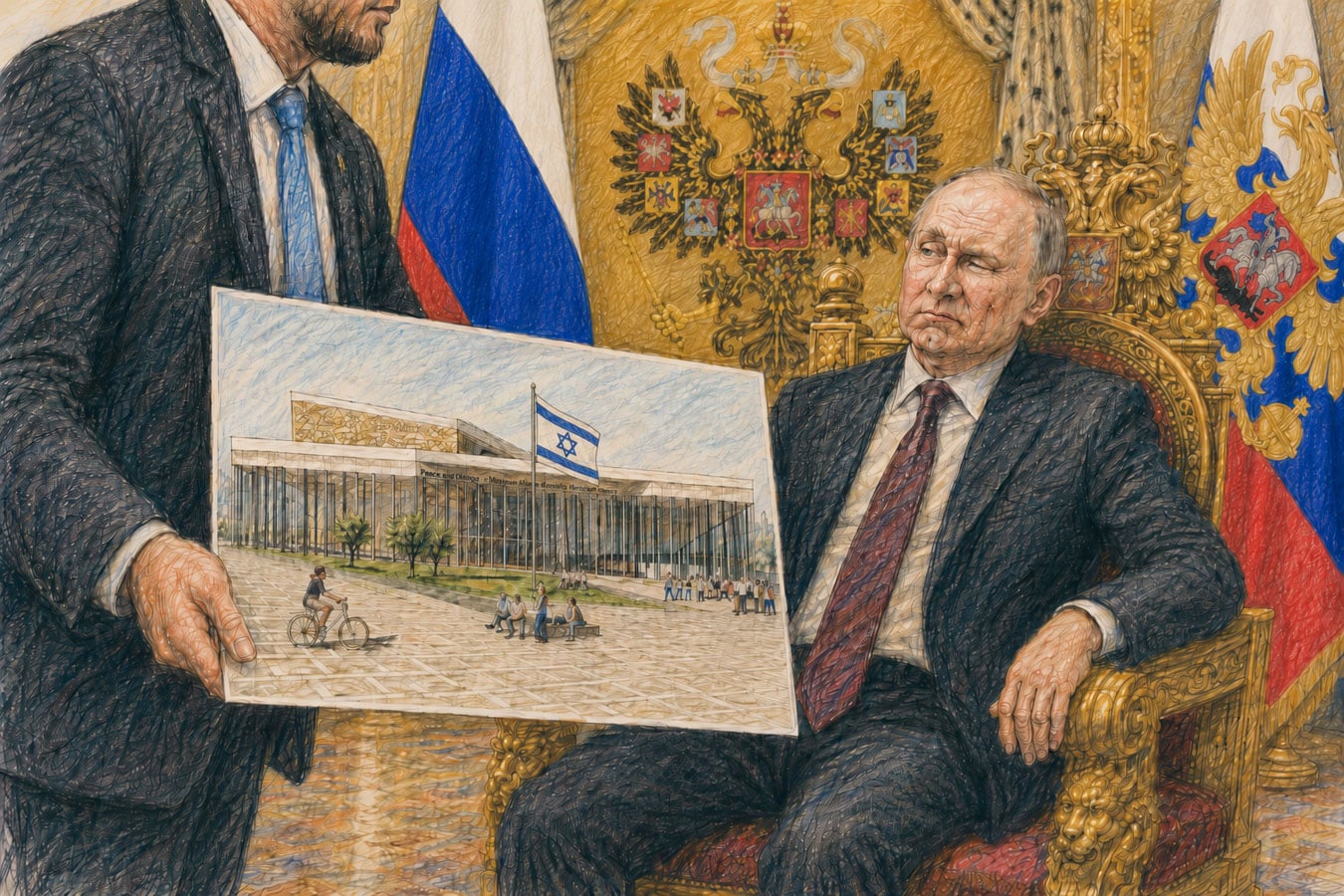
Why Did Israel’s Heritage Minister Fly to Moscow? Illustration created with AI.
“The Secret Visit” to Moscow by Israel’s Heritage Minister Amichai Eliyahu: Soviet Jewry’s Legacy or a Dangerous Door for the Kremlin? — June 4–7, 2026
What does this mean for Israel now?
The reported “secret visit” of Israel’s Heritage Minister Amichai Eliyahu to Moscow raises questions not because of the idea of a Soviet Jewry Heritage Center itself, but because of the political context surrounding the trip.
The project has been promoted inside Israel for years. That is precisely why the Russian stage in this story looks unnecessary, dangerous, and in need of public explanation.
There is also an obvious point that should not be ignored: today, no self-respecting democratic country treats Moscow as a normal destination for a routine ministerial working visit. This is no longer a neutral diplomatic venue. It is the capital of a state waging an aggressive war against Ukraine, describing that war as a confrontation with the “collective West” — and in Moscow’s own logic, Israel belongs to that same “collective West” — while simultaneously deepening its ties with Iran.
That is why this visit cannot be seen as just another cultural meeting.
According to Arutz 7, Eliyahu flew to Russia on June 4, 2026. The Israeli outlet itself described the trip in Hebrew as a “secret visit.” That wording matters.
It does not prove a secret deal. It does not prove a covert political mission. But it does mean the trip was not presented to the Israeli public in advance as a regular official visit with a clear agenda, a transparent list of meetings, and an understandable diplomatic framework.
For a democratic state, that distinction matters.
If a minister travels to a country that is waging war against Ukraine, cultivating ties with Iran, and treating the West as its declared adversary, the trip requires maximum transparency. When the public learns about it from the media, and the first report calls it “secret,” the issue is no longer technical.
It becomes political.
Why was the future of an Israeli center dedicated to Soviet Jewry discussed in this way?
According to the Arutz 7 report, the official purpose of the visit was to advance the creation of a heritage center for immigrants from the former Soviet Union in Rishon LeZion. The trip was expected to last through the weekend, with Eliyahu returning to Israel on Sunday, June 7, 2026.
For NAnews — Israel News | Nikk.Agency, the issue is not whether Israel needs a Soviet Jewry Heritage Center. It does. The issue is whether this memory should remain an Israeli story — or whether Moscow is being allowed to stand too close to a legacy that belongs to people who often escaped the Soviet system in order to live freely as Jews in Israel.
On the surface, the official purpose sounds almost harmless.
A center dedicated to the legacy of Soviet Jews is not only legitimate. It is long overdue.
This is not about a decorative museum. It is about the memory of a huge aliyah, of Jews who lived for decades under Soviet antisemitism, fought for the right to leave, preserved Jewish identity under pressure, studied Hebrew underground, faced refusals, interrogations, dismissals, surveillance, and state intimidation.
For years, the Jews of the former Soviet Union had no full national heritage center of their own in Israel. They had no major museum, no permanent state-backed space telling the story of this community.
That absence was real.
Israel has institutions dedicated to the heritage of Jews from Babylon, Yemen, Ethiopia, North Africa, and other communities. Yet the million-strong aliyah from the former Soviet Union — a community that transformed Israeli medicine, science, technology, culture, the army, the economy, and politics — remained without its own national memory platform.
Such a center is needed.
But precisely because it is needed, the Moscow visit raises more questions, not fewer.
The Soviet Jewry Heritage Center is an Israeli story. It is the story of Rishon LeZion, Haifa, Ashdod, Bat Yam, Netanya, Beersheba, Jerusalem, Karmiel, Ariel, and dozens of other Israeli cities where immigrants from the former Soviet Union, their children, and their grandchildren live.
It is the story of people who became doctors, engineers, scientists, musicians, soldiers, entrepreneurs, teachers, politicians, journalists, and an inseparable part of Israeli society.
This is not a Moscow story.
It is the story of people who often broke away from the Soviet system. People who wanted to live openly as Jews, speak Hebrew, move to Israel, and build a life outside Soviet control.
That is why symbolism matters.
If the Soviet Jewry Heritage Center is built in Israel, the logic is clear: the State of Israel is finally recognizing that the great aliyah and the Jews of the former Soviet Union are an essential part of the national story.
But if a secret ministerial trip to Moscow suddenly appears around this project, the symbolism changes. It begins to look as if the country many Jews left because of antisemitism, repression, and lack of freedom is being allowed back into the packaging of that memory.
That is dangerous.
Especially because this project did not begin in Moscow.
In 2016, an initiative group of scientists, cultural figures, and public activists came together in Israel. They created the board of trustees of “Maalot,” and the project was promoted for years inside Israel. Documents, testimonies, and artifacts were collected. Exhibitions, lectures, meetings, and seminars were held.
The initiative was supported by Natan Sharansky, Yuli Edelstein, and other public figures. In other words, the Soviet Jewry Heritage Center already had an Israeli public foundation, respected supporters, accumulated materials, and a clear national logic long before Amichai Eliyahu’s trip to Moscow.
In June 2024, the Israeli government had already allocated 25 million shekels for the center. Of that amount, 12 million shekels came through the Ministry of Heritage — the very ministry headed by Eliyahu.
So what happened two years later?
Instead of a public progress report, instead of presenting a concept in Rishon LeZion, instead of holding a broad discussion with Israel’s Russian-speaking community, there was a secret ministerial visit to Russia.
That is the political problem.
Not the center.
Not the memory.
Not Maalot.
Not the great aliyah.
The problem is the Moscow stage.
Russia today is not merely a “former Soviet” country. It is not simply an archival territory. It is not a neutral cultural partner.
Since February 24, 2022, Russia has been waging a full-scale war against Ukraine. For many Israelis of Ukrainian origin, for immigrants from Ukraine, and for families whose relatives live in Kyiv, Kharkiv, Odesa, Dnipro, Mykolaiv, Zaporizhzhia, Kherson, or Lviv, this is not abstract geopolitics.
It is a war against the cities where their parents, grandparents, friends, classmates, and neighbors lived.
At the same time, Russia is moving deeper into partnership with Iran — a regime that has become a direct threat to Israel.
This matters because Moscow is skilled at working through “soft” themes.
It does not always arrive with a direct slogan of “support Russia.” Often it comes through memory, culture, language, “historical truth,” veterans, monuments, archives, conferences, foundations, community ties, and the language of protecting “compatriots.”
A Soviet Jewry Heritage Center is therefore an extremely sensitive subject.
It sits at the intersection of Soviet history, Russian-speaking aliyah, Jewish identity, family memory, the trauma of antisemitism, gratitude to Israel, nostalgia for language and culture, and the politics of the so-called “Russian street” in Israel.
For Israeli society, this memory is important.
For the Russian propaganda machine, it may also be interesting.
That is exactly why any connection between this project and Moscow must be completely transparent.
Who invited the minister?
Who approved the trip?
Who attended the meetings?
Were only cultural matters discussed?
Were Russian state structures involved?
Were money, archives, organizational support, or political contacts offered?
So far, the public has no answers.
There is only the fact of a secret trip.
And that is not enough.
The Soviet Jewry Heritage Center must be Israeli memory, not a platform for Russian soft power.
The central question remains open: what exactly was the minister looking for in Moscow — archives, money, political contacts, or a channel of influence?
Or are elections already approaching in Israel, and someone decided to reach for the votes of the so-called “Russian street”?
As if to say: finally, we remembered you.
But the memory of the great aliyah is not an election decoration. It is not a convenient wrapper for Moscow’s signals.
Israel should build this center. It should honor the story of Soviet Jews fully, honestly, and proudly. It should teach Israeli children, soldiers, students, and new immigrants what Soviet Jews endured and what they gave to this country.
But that memory must belong to Israel.
Not to Moscow.
Not to the Kremlin.
And not to anyone who wants to turn it into a political tool at the worst possible moment.
Related Topics