
Why don’t you live in Israel?
“Why don’t you live in Israel?”
It was not the first time an Israeli had asked me that question, but this time felt different.
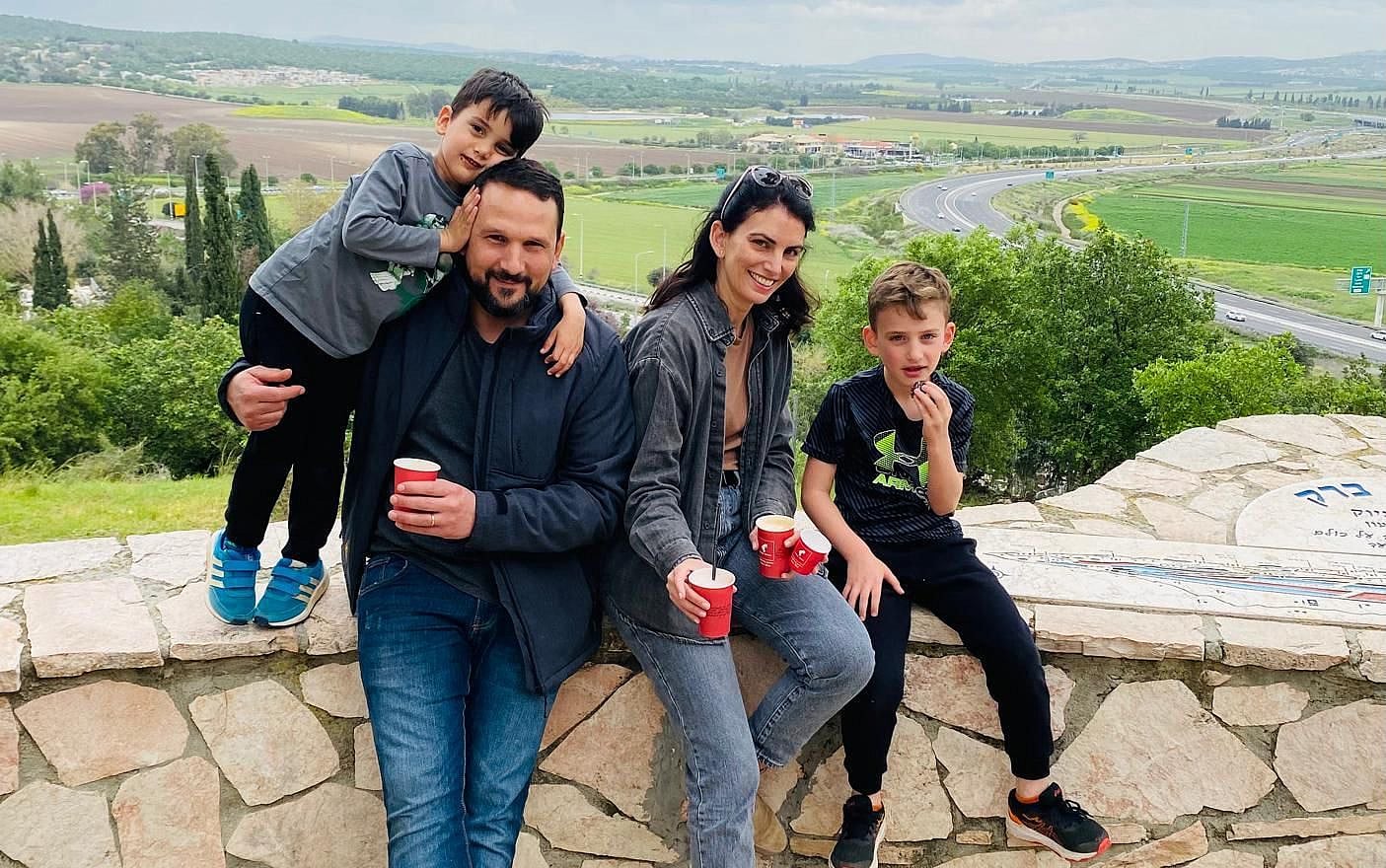
The person asking was Yael Maori, who had joined me in Philadelphia and New York on a speaking tour for IDF Widows and Orphans USA.
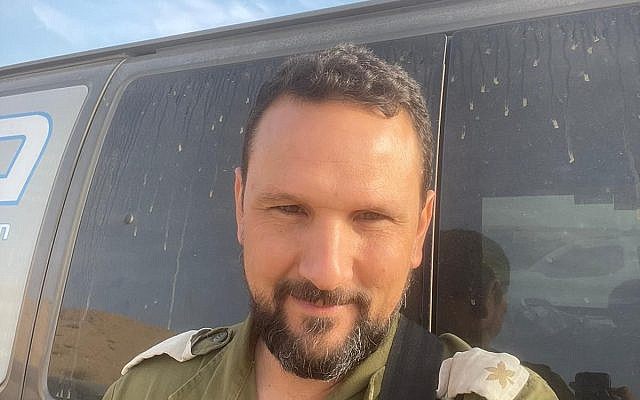
On October 24, 2024, Yael’s husband, Lt. Col. Dan Maori, was killed in Lebanon while protecting his soldiers. It was also their older son’s birthday. Since then, Yael has been raising her two young boys amid war, missile sirens, reserve duty call-ups, and the constant uncertainty that has become routine for so many Israeli families.
Yet in that moment, she wanted to understand why I, an American Jew living a comfortable life in a country that had not been invaded since before her nation’s founding, would choose to build my life anywhere other than the land of Israel.
Her question was not accusatory. It was sincere. And in its sincerity, it exposed both the miracle of the Jewish state and the growing emotional distance between Israel and much of the American Jewish community.
That distance is becoming increasingly difficult to ignore. Recent surveys show that while a strong majority of American Jews still feel emotionally connected to Israel, that connection is becoming more fragile, especially among younger generations. A 2025 Jewish Federations of North America survey found that 71% of American Jews say they feel emotionally attached to Israel, but among Jews under 35, that number drops sharply. At the same time, large majorities report feeling increasingly uncomfortable, isolated, or unable to have nuanced conversations about Israel within Jewish communal spaces.
The ongoing wars Israel now finds itself fighting, including the confrontation with Iran, have only intensified these tensions and divisions.
This of course comes at a time when we have seen a marked rise in antisemitic rhetoric and attacks, often intertwined with hostility toward Israel. It also comes at a time when Israel faces an unprecedented level of media coverage ranging from critical to outright libelous, to say nothing of the barrage of false information disseminated daily on social media.
And yet, sitting across from Yael, none of these statistics or political debates felt abstract.
For Yael, Israel is not an idea. It is home. It is the place where her husband lived, served, and died. It is where she now wakes up each morning to raise two young boys while carrying a grief that most American Jews will thankfully never fully understand.
Since October 7, more than 360 Israeli women have become widows and over 900 children have lost a parent in Israel’s wars and terror attacks. Behind every number is a family like Yael’s: birthdays forever altered, empty seats at Shabbat tables, children learning how to grow up without a mother or father.
At IDF Widows and Orphans USA, I have seen how extraordinary the American Jewish community can be when it chooses to enter into that pain rather than turn away from it. I have watched Jews from across denominations, political affiliations, and generations sit with bereaved families, listen to their stories, cry with them, and remind them that they are not alone.
Maybe in some way that is what Yael’s question was really about.
Not whether every Jew should move to Israel.
But whether Jews living in comfort and safety thousands of miles away can still see their fate as bound together with those raising children in bomb shelters, burying loved ones after reserve duty, and defending the Jewish future in ways most of us will never be asked to.
The strength of the Jewish people has never depended on unanimity. It has depended on mutual responsibility. On the stubborn insistence that another Jew’s pain belongs, in some way, to all of us.