Why Every Age Thinks Its Distractions Are the Problem

The recurring fear of a distracted age
Each generation seems convinced it is living through an unprecedented crisis of distraction. Attention spans are shrinking, focus is dissolving, and the noise of modern life feels overwhelming. In recent years, the focus has understandably fallen on smartphones, social media, and the always-on digital environment. Notifications interrupt thought, screens fragment attention, and moments of silence are increasingly rare.
These concerns are not imagined. Smartphones have changed how we work, communicate, and think, and I have written elsewhere about their psychological toll. But it is worth stepping back to ask a broader question: is distraction itself new, or have we simply found a new object on which to pin a much older anxiety?
History suggests the latter. Long before screens or electricity, societies were already worried that something external was weakening the human capacity for attention, memory, and judgment. What changes from era to era is not the fear itself, but the form it takes.
Plato and the fear of outsourcing the mind
One of the earliest recorded examples comes from Plato, who worried not about excess stimulation, but about writing. In the Phaedrus, Plato recounts a myth in which the Egyptian god Theuth presents writing as a gift that will improve memory and wisdom. The response is sceptical. Writing, Plato suggests, would do the opposite: it would encourage people to rely on external marks rather than cultivating memory internally.
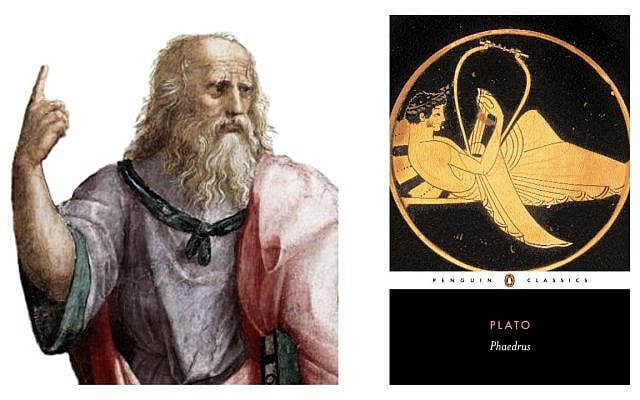
Plato’s concern was not technological in the modern sense. It was psychological. When inner capacities are offloaded onto external tools, something subtle is lost. Memory becomes thinner. Understanding becomes more superficial. Judgment becomes less practiced. Writing, for Plato, was not dangerous because it distracted, but because it displaced an internal discipline.
That anxiety has echoed ever since.
Judgment, attention, and responsibility
This concern about weakened judgment reappears in the 20th century in the work of Hannah Arendt, who I have written about. Writing in the aftermath of totalitarianism, Arendt was preoccupied with the erosion of thinking itself – not intelligence, but the habit of reflective judgment. For Arendt, thoughtlessness was not ignorance but a failure to pause, reflect, and take responsibility for one’s inner life.
Although she wrote long before smartphones, her warning feels uncannily current. When attention is constantly diverted, judgment becomes reactive rather than deliberate. The danger, for Arendt, was not that people would be overwhelmed by evil intentions, but that they would stop thinking deeply enough to resist them.
More recently, thinkers such as Yuval Noah Harari have expressed a related concern in contemporary terms. Harari has argued that as decision-making is increasingly delegated to algorithms and data-driven systems, human judgment itself risks atrophying. The danger is not simply loss of control, but the quiet erosion of responsibility as authority shifts outward – a modern echo of Plato’s fear that writing would thin memory, and Arendt’s insistence that judgment must be actively practiced if it is to survive.
Distraction, in this sense, is not merely inconvenient. It has moral and civic consequences.
A Jewish assumption: the world will never be quiet
Jewish tradition approaches the problem from a different angle, but with a strikingly similar assumption. Judaism does not expect the world to become quieter or less demanding. On the contrary, it assumes that human beings will always be pulled outward – by work, desire, ambition, and noise.
The response is not withdrawal from life, but the cultivation of restraint and attentiveness within it. Practices such as Shabbat do not eliminate the world’s pressures; they interrupt them. Study is not treated as passive information consumption, but as sustained engagement that trains patience and focus over time. Ethical texts such as Pirkei Avot return repeatedly to discipline and measure – not because distraction is new, but because it is perennial.
Seen this way, distraction is not an external invasion. It is a standing human vulnerability.
Historical repetition, not modern decline
This pattern becomes clearer during periods of rapid change. In the 19th century, Henry David Thoreau wrote Walden; or Life in the World in response to railroads, clocks, industrial labour, and the growing sense that life was accelerating beyond human scale. Thoreau’s retreat is often romanticised as an escape from society, but it was more accurately a protest against the loss of deliberateness.
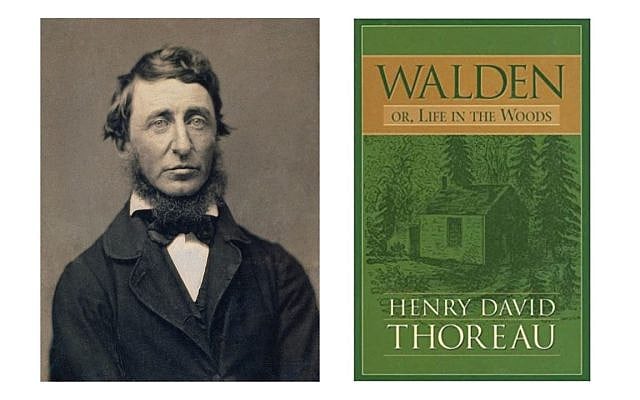
By contemporary standards, Thoreau’s world was relatively quiet. And yet the same complaint appears: attention scattered, values diluted, inner life thinned by external demands. The object of concern changes – writing, industry, television, smartphones – but the unease itself remains remarkably stable.
Why modern distractions feel different
This does not mean smartphones are irrelevant. Digital technologies are unusually effective at capturing attention, and their scale and intimacy make them harder to ignore than earlier forms of distraction. As Jonathan Haidt has argued, the shift to a phone-centred childhood has coincided with rising anxiety, fragility, and social withdrawal among younger generations.

What is new is not the human tendency to seek diversion, but the efficiency with which it is now supplied. Smartphones intensify a pre-existing vulnerability rather than create it from scratch.
Distraction often functions as relief. Sustained attention requires effort, self-restraint, and a willingness to sit with discomfort. Silence is not inherently peaceful; for many people it is unsettling. Smartphones succeed not only because they are well designed, but because they offer immediate escape from demands we already struggle to meet.
This helps explain why tool-based solutions rarely satisfy. Smartphone bans, digital detoxes, and nostalgic appeals to simpler times tend to fail or become performative. The noise returns, because the underlying difficulty has not been addressed. Centuries earlier, Blaise Pascal made a similar observation, noting that much of human misery arises from our inability to sit quietly with ourselves. Long before smartphones or industrial acceleration, he recognised restlessness as a defining human difficulty rather than a technological one.
Limits shape people, not environments
Judaism’s emphasis on structure over escape offers a quiet counterpoint. Limits are not designed to purify the environment, but to shape the person. The goal is not silence, but steadiness. Not the elimination of distraction, but the strengthening of attention.
Each age believes its distractions are unprecedented because each age encounters them through new forms. But the deeper challenge – governing attention, memory, and judgment in a demanding world – appears to be a constant feature of the human condition.
If clarity depended only on quieter surroundings, it would have arrived long ago. History suggests that it has always required something more demanding: inner work that no technology can replace.