
Where history exposes power and moral failure
Why Evidence Should Outrank Institutional Prestige
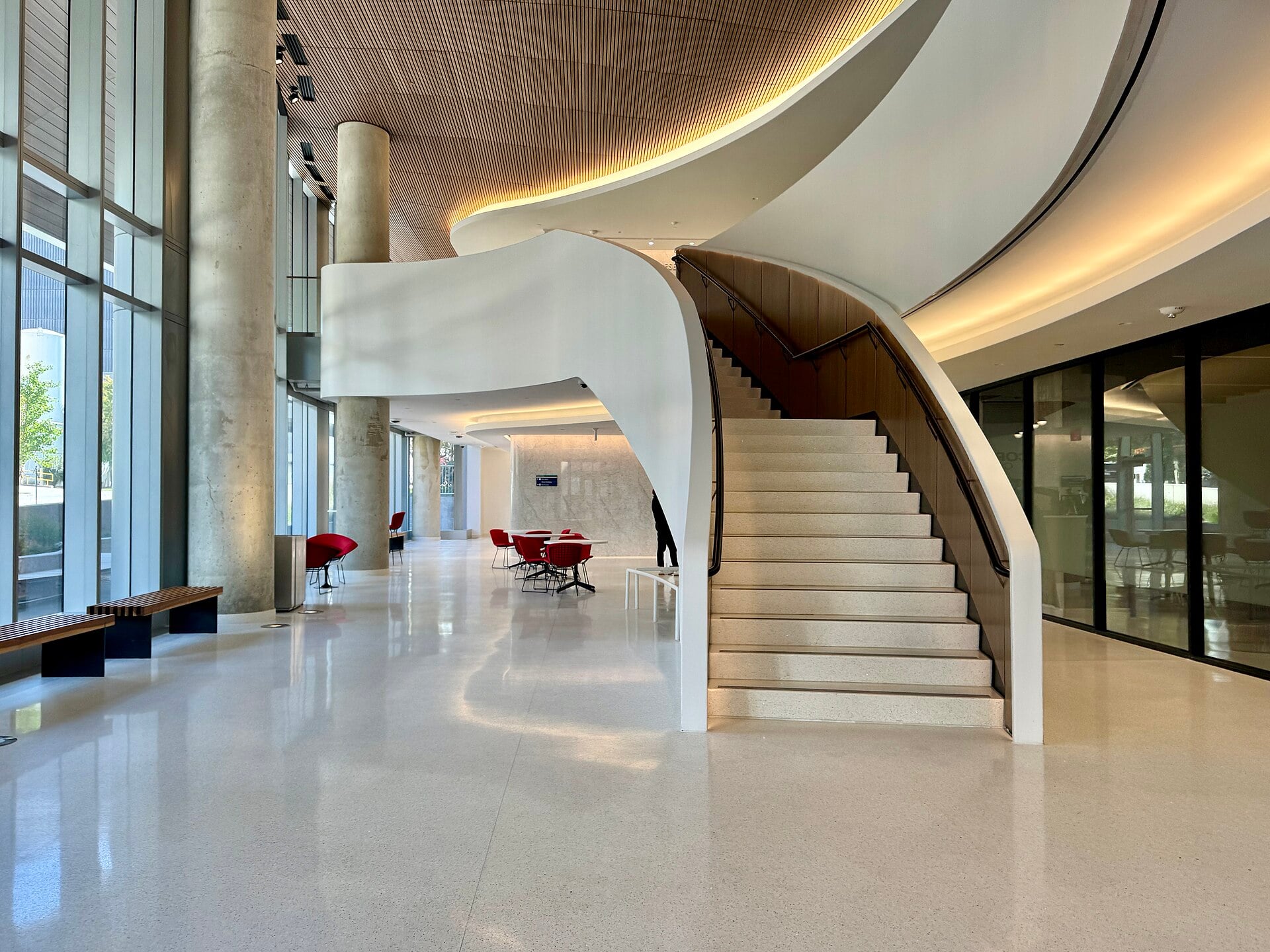
Anna-Maria and Stephen Kellen Building, Mayo Clinic, Rochester, Minnesota. Designed by HDR and completed in 2023. Photograph by w_lemay, October 7, 2024, via Wikimedia Commons
We have seen it happen again and again: a viral news story reveals a scandal at a mighty institution long considered high-quality, powerful, and prestigious. The world looks on in shock and speaks out with condemnation. There is a case of unfathomable mistreatment of a vulnerable person by people trusted to provide compassionate care. There is a horrifying instance of sexual violence that shakes the public to its core. There is a proposed act of public, official violence that triggers furious debate and condemnation. The indignation flares on social media, red carpets, and in email objections. Then it fades, forgotten, and people move on.
Powerful institutions rely on these reactions. They also rely on the privilege that comes from reputations grown over decades at conferences, invitation-only fundraisers, and by climbing the rankings of magazine-sponsored lists like “The Best Colleges For Veterans,” or “The Best Places to Receive Rheumatology Treatment.”
Places like these like naming wings, buildings, and even individual seats in auditoriums after donors. They like to tell success stories, like how George Gipp’s supposed deathbed wish to Knute Rockne became the legendary rallying cry that inspired Notre Dame’s 12-6 upset over undefeated Army in 1928, cementing Notre Dame football lore. Heartwarming. Historians have questioned whether Gipp ever actually made that deathbed request, but the story survives beautifully. These institutions are considerably less enthusiastic about discussing how 20-year-old student videographer Declan Sullivan died on October 27, 2010, when the hydraulic scissor lift from which he was filming Notre Dame football practice toppled in winds gusting above 50 miles per hour. The Indiana Occupational Safety and Health Administration subsequently cited Notre Dame for six safety violations and proposed $77,500 in penalties, finding that the university had permitted the use of scissor lifts in known dangerous weather conditions. The accident happened during Brian Kelly’s first season as head coach. Sullivan had even posted online about how frightening the wind was before he died.
They like to tell prospective students all about how Saint Mary’s College has long celebrated its academic partnership with the University of Notre Dame to provide a rigorous, faith-based liberal arts education for women in collaboration with the boys across the street. Sounds great! Just don’t ask either school about how 19-year-old Saint Mary’s freshman Lizzy Seeberg died by suicide in September 2010, days after reporting an alleged sexual assault by a Notre Dame football player. She had also received a text message from another player warning that “messing with Notre Dame football is a bad idea.” Her family challenged Notre Dame’s handling of the allegations. Prosecutors did not bring criminal charges, and Notre Dame defended its investigation. Neither of those facts erases the allegation Seeberg reported, the threatening message, or her family’s documented objections to the way the institution responded.
Powerful institutions on Broadway thrive on rags-to-riches tales. Eyes gleam at recounting the magic of a struggling young composer who spent years writing a revolutionary musical score that revitalized a historic theater district and brought classical storytelling back to the modern stage. Wow! But these same powerful, wealthy theatrical circles have also had to confront documented allegations against producer Scott Rudin, whose former employees described years of intimidation, abusive behavior, and incidents of physical aggression. In 2021, The Hollywood Reporter published allegations from former assistants, including an incident in which an employee reportedly required emergency treatment after Rudin smashed a computer monitor onto his hand. Rudin subsequently apologized for his troubling interactions with colleagues and stepped back from Broadway productions.
And the paperwork? In 2022, Actors’ Equity Association announced that it had secured the release of performers from nondisclosure agreements connected to four Rudin productions, including To Kill a Mockingbird, West Side Story, The Iceman Cometh, and The Lehman Trilogy. These agreements had restricted workers from speaking about workplace abuses. Broadway was perfectly capable of putting contractual restrictions around allegations of mistreatment while presenting itself publicly as a glorious community devoted to artistic expression.
Here in New York City, you’ll find plenty of people more than ready to talk about how a late-night sketch comedy institution launched the careers of generations of legendary comedic icons who shaped American culture from Studio 8H. But try not to take the allegations in the 2021 lawsuit involving former Saturday Night Live performer Horatio Sanz too seriously. A woman alleged that Sanz sexually assaulted her when she was seventeen and that people associated with the program enabled inappropriate access to an underage fan. The allegations were disputed, and a lawsuit is not a criminal conviction or a finding that every person named participated in the alleged conduct. Nevertheless, the litigation prompted reporting about the show’s workplace culture, backstage access, alcohol, power, and the treatment of young women around prominent entertainers. The institution’s celebrated comedy legacy supplied no answer to the specific allegations. It was necessary to examine the accounts and evidence themselves. Very vibe-killing, I know.
Some directly inside the healthcare industry and adjacent to it will ardently push narratives about world-renowned university medical centers on the West Coast that have done actual, serious good work and pioneered breakthrough surgical techniques and advanced life-saving therapies. That’s significant and real and serious. People were helped. But take Ronald Reagan UCLA Medical Center, a major academic hospital associated with one of the country’s most prestigious universities. Federal hospital inspection records have documented failures involving patient grievance procedures, monitoring and reassessment of an Emergency Department patient, medical-staff oversight, and safe clinical practices. One inspection identified deficiencies in the hospital’s handling of complaints from two patients and its monitoring of another patient awaiting emergency assessment. Another identified failures involving physician documentation and credentialing oversight. These are concrete deficiencies recorded by inspectors, involving identifiable hospital operations and patient-safety obligations.
Yet the prestige of the institution remains a remarkably convenient answer whenever somebody raises concerns about their own care. We keep defaulting back to, “Sorry that happened to you, but this is fundamentally a highly-ranked hospital.” Wonderful. Was the patient adequately monitored? Was the medical record accurate? Did somebody actually answer the grievance? A ranking does not establish any of those things.
Too often, institutions like to celebrate how a vibrant, multi-ethnic coalition of New Yorkers has been trying to come together in historic solidarity for civil rights, weaving diverse immigrant traditions into the cultural fabric of the five boroughs. But City Hall and municipal leadership must also answer for the actual safety of the people living here. According to the NYPD, 55.3% of confirmed hate crimes in New York City during the first six months of 2026 were anti-Jewish, despite Jewish New Yorkers representing approximately 10% of the city’s population. That is 178 confirmed anti-Jewish incidents during that six-month period. New York’s elected officials can celebrate pluralism, immigrant communities, interfaith solidarity, and the city’s supposed tolerance as enthusiastically as they like. Jewish New Yorkers experiencing threats, harassment, and antisemitic violence are entitled to have that very real problem acknowledged and addressed. Jewish, Israeli, Palestinian, and other New Yorkers should not have their safety reduced to political theater whenever some official needs a photograph demonstrating community harmony.
I would be remiss not to bring up MAGA, of course. Donald Trump, a wealthy New York real-estate heir, built a remarkably successful political identity around being a populist outsider fighting entrenched elites and promising to restore power to forgotten working-class Americans. A billionaire presenting himself as the champion of ordinary Americans against wealthy insiders is quite the storytelling achievement. More importantly, the movement’s rhetoric about law, order, freedom, and patriotic virtue deserves examination alongside the actual conduct of its leadership and supporters. Trump has repeatedly faced legal scrutiny concerning his business practices, conduct in office, and efforts to remain in power after the 2020 election. Several associates faced criminal prosecution, while Trump publicly condemned some investigations as persecution and granted clemency to numerous January 6 defendants after returning to office.
And on October 12, 2026, at a Trump rally in Youngstown, Ohio, a woman protesting while wearing a shirt calling for the release of the Epstein files was punched amid a confrontation with attendees. Video and subsequent reporting documented the assault. Trump responded from the stage by mocking the protester’s appearance and weight, calling her a paid protester and telling her to go home. Reports described his remarks while the confrontation was unfolding. His direct responsibility for the physical attack is a separate question from what he demonstrably said afterward. The president of the United States had a woman being assaulted at his political rally and found time to make jokes about her body. An extraordinary little contribution to the national conversation about public safety.
Ultimately, the structural machinery of institutional prestige functions by converting human cost into collateral for public relations. Notre Dame can celebrate Knute Rockne while the historical record still contains Declan Sullivan’s death and Lizzy Seeberg’s allegations. Broadway can sell the magic of theatrical achievement while its own union has to negotiate the removal of contractual restrictions preventing performers from discussing workplace abuse. A hospital can display rankings in its lobby while federal inspectors document failures in patient care. City Hall can praise New York’s diversity while Jewish residents account for more than half of confirmed hate-crime incidents. Political leaders can proclaim their devotion to law and order while making a public spectacle of someone being physically attacked.
When public outrage flares and quickly subsides, the institutional reputation usually survives. The people harmed may spend years trying to obtain records, correct false accounts, secure an investigation, or persuade somebody with authority to acknowledge what happened. Some will never receive a satisfactory answer.
Victims’ experiences, particularly when backed by contemporaneous evidence, official findings, witness testimony, medical records, and other verifiable documentation, must outweigh institutional prestige in the minds of those who rely on longstanding reputational power as a defense. The accomplishments of a university, hospital, theatre, or political movement cannot establish what happened to an individual person on a particular day. For that, we need the evidence. And we ought to have the intellectual and moral discipline to look at it, even when the institution involved has a very impressive building named after a donor.
Related Topics
Related Posts