
Bridging faith. Defending truth. Confronting hate
Why Gerald McDermott Matters: A Guide to Israel, Zionism, the Jewish People
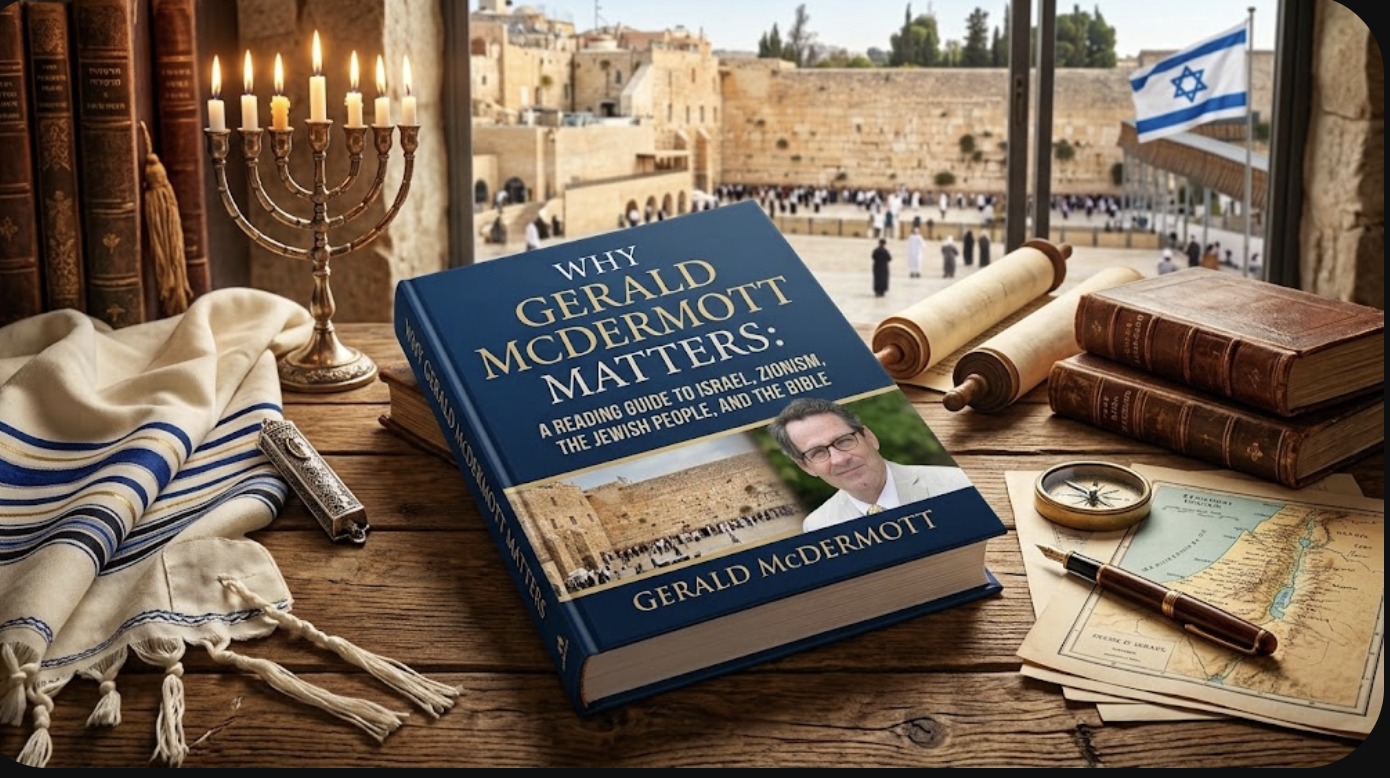
Image created from Google Gemini by Tim Orr
Gerald McDermott is a friend of mine, and I believe he is the best theologian alive today writing on the subject of Israel, Zionism, the Jewish people, and the Bible. He has done more than anyone I know of to address these issues through biblical theology, historical theology, systematic theology, and Jewish-Christian relations. He does this in such a way that does not simply reduce Israel to a current political issue or the latest controversy coming out of the Middle East. Instead, he starts with the Bible and asks how Christianity has addressed this subject throughout the ages.
At the center of the discussion is a basic theological question: Is God faithful to His covenant with Israel?
I’m sure you’re thinking, of course He is. But many Christians today would not know where to begin with that question, especially when it comes to the Jewish people and the land of Israel. We are often forced to make decisions about how we feel about Benjamin Netanyahu, Gaza, the settlements, the Palestinians, Zionism, or America’s role in Israel before we have seriously considered what Paul meant when he said that God’s gifts and calling are irrevocable. Politics becomes the starting point, and Scripture is brought in afterward.
McDermott does it the other way around.
He begins with Scripture and lets theology shape how we interpret political questions, rather than letting political events determine how we read Scripture.
There is a difference between biblical Israel, the Jewish people, the modern State of Israel, Zionism, and the policies of the current Israeli government. They are related, but not identical; some crossover exists, but they are not the same. Failing to make these distinctions creates enormous theological and political confusion. Just because you believe that God still has purposes for Israel does not mean that everything the government of Israel does is right, wise, or beyond criticism.
One thing I admire about McDermott is that he never makes that mistake. He believes there is a continuing biblical and theological significance to Israel today, but he does not place the current Israeli government above reproach. His argument does not depend upon whether a particular prime minister, political party, or military policy is right or wrong. It rests on God’s character, Scripture’s promises, and Israel’s continuing place in the biblical story.
The following is by no means everything I have read from McDermott. If you are trying to understand Israel theologically rather than merely politically, these are excellent places to begin.
Start Here: Does God Still Have Purposes for Israel?
“The Land Promise in Christian Scripture”
Almost every argument Christians have had about Israel comes down to this question: Has God’s promise of land to the children of Abraham been fulfilled, spiritualized, or expanded to include all of mankind with the coming of Christ? McDermott says no. The NT does not take away the OT land promise. If we remove the land from the picture when we enter the New Testament, we make a huge assumption.
“Gerald McDermott on Why the Land Promises Belong to Ethnic Israel”
This is where McDermott drives the point home. The idea that God would give a specific promise to Israel and just hand it off to the Gentile majority church. The point isn’t merely the land; it is what the land promise tells us about God’s character and faithfulness.
“Did Jesus Reject the Land Promise?”
This article is helpful because McDermott brings the conversation directly to Christ himself. He argues that Jesus didn’t believe the land promise was simply a thing of the past, particularly in Luke 21:24 and Matt. 5:5. Regardless of whether you buy into all of his hermeneutics, this article forces us to ask a more basic question: Did we ever have good biblical reasons to assume that Jesus denied God’s promise of the land to Israel?
“Paul Against the Jews?”
In this article, McDermott argues in depth that Paul did not think Gentiles were the new Israel. This can get deep, so be prepared to research some of what this article discusses. But we need to know what Paul thought of the Jews.
We need to remember that Christians are fighting each other on this topic, so it’s important that we know what both sides have to say. Which also leads into the fact that we should care what “Israel” means in Paul’s writing.
Christian Zionism Without Dispensationalism
“Christian Zionism Came Long Before Dispensationalism”
One of McDermott’s greatest contributions is showing that Christian Zionism is not the same as dispensationalism. For some reason, this is the default mechanism used when talking about Christian Zionism. If you allow that to happen, then all you have to do to attack Christian Zionism is to attack the dispensationalist view from the 1800s or 1900s. There is much more to it than that.
“No, You Don’t Have to be a Dispensationalist to Believe in Zionism”
Great article on why you don’t have to be a Dispensationalist to believe in the “New Christian Zionism.” McDermott uses Romans 9-11 to show us why we should care about Ethnic Israel. He believes that the Jews returning to their homeland and having Jewish statehood is theologically significant. He also believes this can be considered a fulfillment of Bible prophecy, not just a partial fulfillment that will come one day.
“Christian Zionism Came Long Before Dispensationalism”
Another great article on dispensationalism. It shows that there were many Christians who believed in the restoration of the Jews long before Dispensationalism became popular. This can help us when debating this topic, too. We can look back and see that this is not a dispensationalist view.
“Robert Stearns, Michael Knowles, and Christian Zionism”
McDermott dives into an issue being debated today and still gives us a deeply theological response to Christian Zionism. We do not have to know everything that will transpire with Israel at the end of the age, or believe that the Jews are simply there to check off items on someone’s prophetic list. He can make this argument without us knowing exactly what will happen in the end times. That is one reason I think his approach is so helpful for us Catholics and other non-dispensational Christians. We do not have to be dispensationalists to believe that God still has more in store for Israel and the Jewish people.
“Is Christian Zionism a Heresy?”
With the rise of Christian Zionism, we also have people claiming that it is heretical. This article focuses on Romans 11:28-29 and how Paul believes God still loves the Jews. Again, this can open up our minds to why Christians should believe in the promise to Israel.
“Jonathan Edwards and the Hebrew Spirit”
This article is about how Jonathan Edwards believed in the restoration of the Jews to their land. This also supports one of the previous articles on dispensationalism and Christian Zionism.
What Did Jesus Believe About Israel?
These next few articles aren’t directly about Christian Zionism, but they are important. Christians need to understand that Jesus was Jewish and lived his whole life in Jewish customs and culture.
For years, much of Christian theology has tended to separate Jesus from his Jewish context.
“Did Jesus Reject Jewish Law”
Just like Christians have tried to distance themselves from Israel. They have done the same with the Old Testament. Jesus told his disciples that he did not come to destroy the law. We should take him at his word.
“Jesus and the Jewish Sects”
Jesus spoke to the different groups that were in Israel during his time. One of them was the Pharisees. Many Christians read Jesus’ conflicts with the Pharisees as if he was against them and their traditions.
“Jesus and Leviticus”
As mentioned before, we try to separate the Old Testament from our faith. Leviticus can be hard for some to understand, and it’s hard to see why we still have it in our Bible. McDermott helps us understand why Leviticus is important.
“Jesus and the Jewish Commission”
However, we have the Great Commission to take the gospel to the nations. McDermott states that it doesn’t supersede the commission to the Jew. There is a reason that Israel should be on our mind when we think about missions
“Did Jesus Reject the Temple?”
As we know, Jesus had issues with the temple leaders. But did he reject the temple altogether? Many believe that because he criticized the temple, he rejected it. As this article shows, he was actually defending it.
“Jesus and Jerusalem”
Again, we see this in Jerusalem. Just like we saw with the temple and the land. We need to look at Jerusalem and why it played a role in Jesus’ ministry.
All of these articles open our minds to the fact that Jesus was the Messiah of the Jews. He used their scripture to teach and spoke about what God had done for Israel.
When Theology Becomes Antisemitism
“Tucker Carlson, American Conservatism, and Christian Heresy”
McDermott looks at Tucker Carlson and makes an important theological statement that we shouldn’t assume that Christianity replaced the Jews. He reminds us that we as Christians should not condemn the Jews.
“Attacking Antisemitism among the Reformed”
Just as we need to be aware of Christians who reject Israel. We need to be aware of those who attack the Jews. We worship the Jewish Messiah, so we should be the last ones attacking them.
“New Antisemitism Rising Among Christians is Heresy”
The article addresses the following two questions: Why should Christians care about Anti-Semitism? Why should we continue to care about the biblical significance of the Jews? As we learned above, Jesus was Jewish. Our Messiah was Jewish. And we need to know why that matters to us as Christians.
Since Christians have attacked the Jews in the past, we need to be aware of what we are believing about them.
Israel, Gaza, Hamas, and the Present Crisis
“Christians Have a Duty to Hate the Evil of Hamas”
As Christians, we need to hate what Hamas did to the innocent men, women, and children. We need to understand that some things are evil, and we should stand against them.
“Genocide in Gaza??”
There are many who believe Israel is committing genocide against Palestinians. This article dives into what really happened on October 7th and why we shouldn’t believe that Israel is committing genocide.
“The Israel Genocide Delusion of the Church of England”
Again, we look at what the church is saying about Israel, and how they are attacking them for their actions.
“Jesus, Purim, and the Iran War”
With the current events going on, we need to understand why the Jews fear what Iran can do to them.
Israel and the Nations
“Israel and the Nations”
This last article shows us why we should care about the Jews. Not only from a Christian standpoint but a Jewish standpoint as well.
Why Gerald McDermott’s Work Matters
It’s not that we should support Israel simply because Israel is right all of the time. That would be a silly political position to take and theologically lazy at that.
Did God choose Israel? Does choosing mean what we as Christians think it means? Are there promises that were given to Abraham and his offspring that still pertain to those original promises? If Paul says Israel is still loved despite not believing, what do we make of that? Are we taking Gentiles out of Israel’s olive tree and placing them in our own tree?
There are many varieties of supersessionism. Some may argue that Christians took over where the Jews left off and God no longer has a particular purpose for the Jewish people. Supersessionism has not always meant being antisemitic. McDermott points this out. But Christians should be asking why we believe God no longer cares about the Jews.
This book can be classified as many things. Biblical Theology because he goes back to Genesis, Prophets, Christ, Acts, and Romans. Historical Theology because it goes through what Christians have believed about Israel throughout history. Systematic Theology because when you start talking about Israel, you’re going to talk about Covenants and the nature of God. Moral Theology because how we think about Jews will shape how we speak about and treat them.
I don’t expect everyone to agree with Gerald on every scripture and issue that he may tackle. But at the very least, we should be discussing these issues and not just brushing them off as a “Zionist” author.
I know Gerald not only as a theologian who has written books I enjoy but also as a friend. As I delve into the topic of Israel, anti-Semitism, and Islam, I find myself coming back to many of his writings because I think he touches on important theological topics that Christians should understand.
We as Pastors should know these answers, and so should Professors. If you’re looking for information about Israel on social media, you’re not going to learn much about theology. Cable News will let you know what happened this afternoon, but it won’t teach you what Paul was talking about in Romans 11.
So before we jump into what we think about Zionism or Israel or Gaza. We should know what our Bibles say about Israel.
If that’s something you want to learn more about, then I think Gerald McDermott is a great starting point.
Related Topics
Related Posts