Why I Chose to Build My Future in Israel’s South
On the morning of October 7th, 2023, I woke up at an IDF base near the Gaza border expecting an ordinary day.
Within minutes, that illusion shattered.
I was serving in the 7th Armored Brigade, stationed between Kibbutz Nahal Oz and Kibbutz Kfar Aza. When the attack began, our base became one of the first targets. Within 20 minutes, we were no longer soldiers going about routine duties—we were fighting for our lives. Dozens, and then hundreds, of Hamas terrorists infiltrated the area. A group of us took shelter in a fortified room, where the battle quickly turned into close-quarters combat.
For hours, we were face-to-face with terrorists, sometimes just 10 or 12 feet away.
The fighting dragged on through the morning. Then a grenade exploded inside the shelter. Some of us were wounded. Those who could still move had to escape.
When I made it outside, I saw one of our tanks engulfed in flames. Not far from it lay my close friend and fellow commander, Yoni Golan. I tried to reach him. It was too late.
With my ammunition nearly gone and my weapon no longer functioning, I ran and hid in dense bushes at the edge of the base. I stayed there alone for nearly five hours while the battle raged on around me.
By the end of that day, 54 soldiers from my base had been killed. Ten were taken hostage. Those of us who survived were eventually rescued.
Surviving something like that changes you in ways that are hard to explain. But if I had to put it into words, it comes down to one thing: understanding how much life means.
I think often about the fact that I woke up on October 8th. That I was able to go to the hospital, to recover, to go to therapy, to work, to travel, to decide what I wanted to do next. That I had the privilege to keep living—when so many of my friends didn’t.
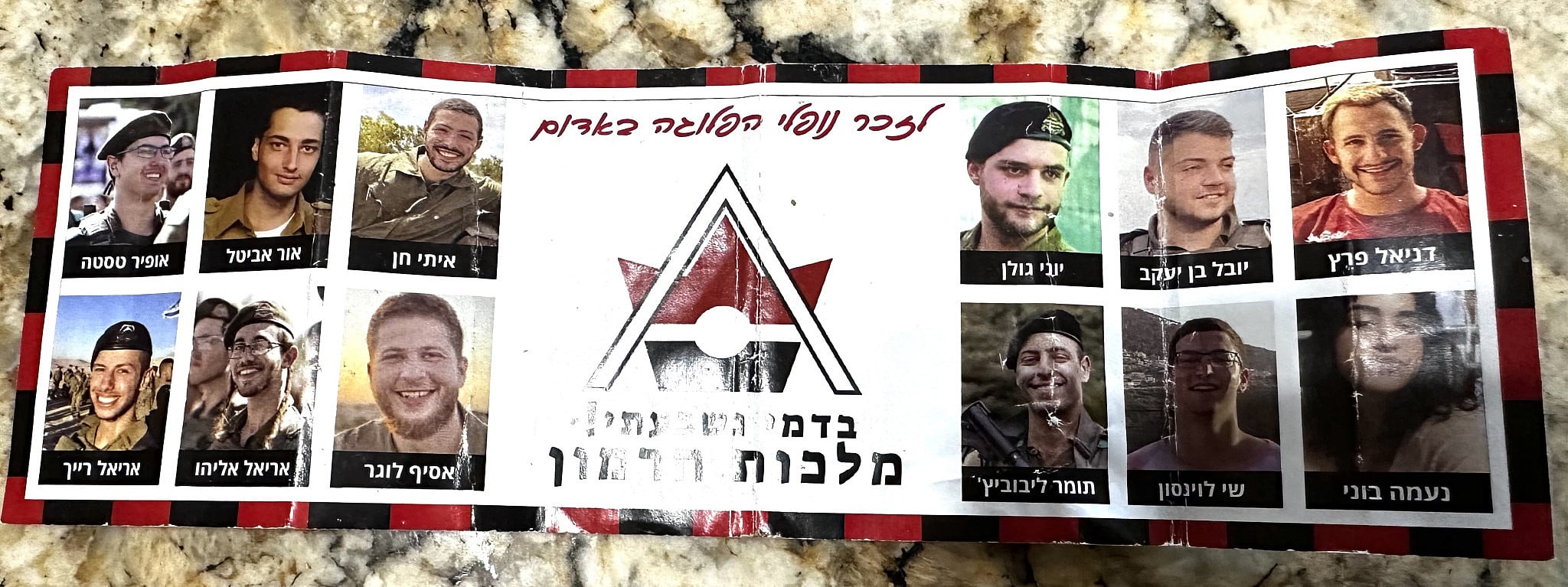
That realization brings with it a responsibility. One of the ways I carry that responsibility is by telling the story. Together with others from my platoon, I helped create a poster with the faces of the soldiers we lost. I speak about them whenever I can—in Israel and abroad—because memory is not something that maintains itself. It requires people who are willing to carry it forward.
Eventually, after nearly two years focused on healing, I knew I had to move forward with my life in a more concrete way. For me, that meant going to university.
I chose Ben-Gurion University of the Negev (BGU). Even before my military service, I had developed a connection to the South through a pre-army leadership program. I fell in love with the desert—the quiet, the openness, the sense that something important is still being built here.
BGU offered exactly what I was looking for: distance from the center, a strong academic environment, and the opportunity to study what genuinely interests me. Today, I’m studying political science alongside Middle Eastern and European studies, with the hope of one day working in diplomacy or foreign affairs.
But my decision was about more than academics. The Negev represents something essential about Israel’s future. Sixty percent of our land is here, yet only a small fraction of Israelis live in it. David Ben-Gurion believed that the future of Israel would be decided in this region—and standing here now, it’s hard not to feel the truth of that vision.
If we don’t build here, invest here, and believe in this part of the country, we’re limiting our own future. At BGU, you feel that sense of mission. The campus is full of people who are not just studying, but actively trying to shape society—through social initiatives, community work, and public engagement. I’ve gotten involved in student groups like Hillel and others focused on social responsibility and Jewish identity, and what struck me most is how many people are motivated to contribute, not just succeed individually.
My own identity has also shaped how I see all of this. I’m Israeli, but much of my extended family lives in Minnesota, and I spent many summers there growing up. Those experiences gave me a connection to the American Jewish community and a broader perspective on what it means to be Jewish today—something I continue to explore in my studies and on campus.
After everything I’ve been through, I think a lot about what it means to honor those we lost.
For me, it’s not only about remembering them—though that is essential. It’s also about building something that justifies the lives we were given and they were denied.
Every day that I walk across the BGU campus in Be’er Sheva, I carry those faces with me. They’re a constant reminder of why the future matters, and why it’s worth investing in.
We often talk about resilience in Israel. But resilience isn’t just about surviving. It’s about choosing, again and again, to build.
For me, that choice begins in the Negev.