
Rabbi of Tamid Palm Beach
Why I Spill Wine on Purpose
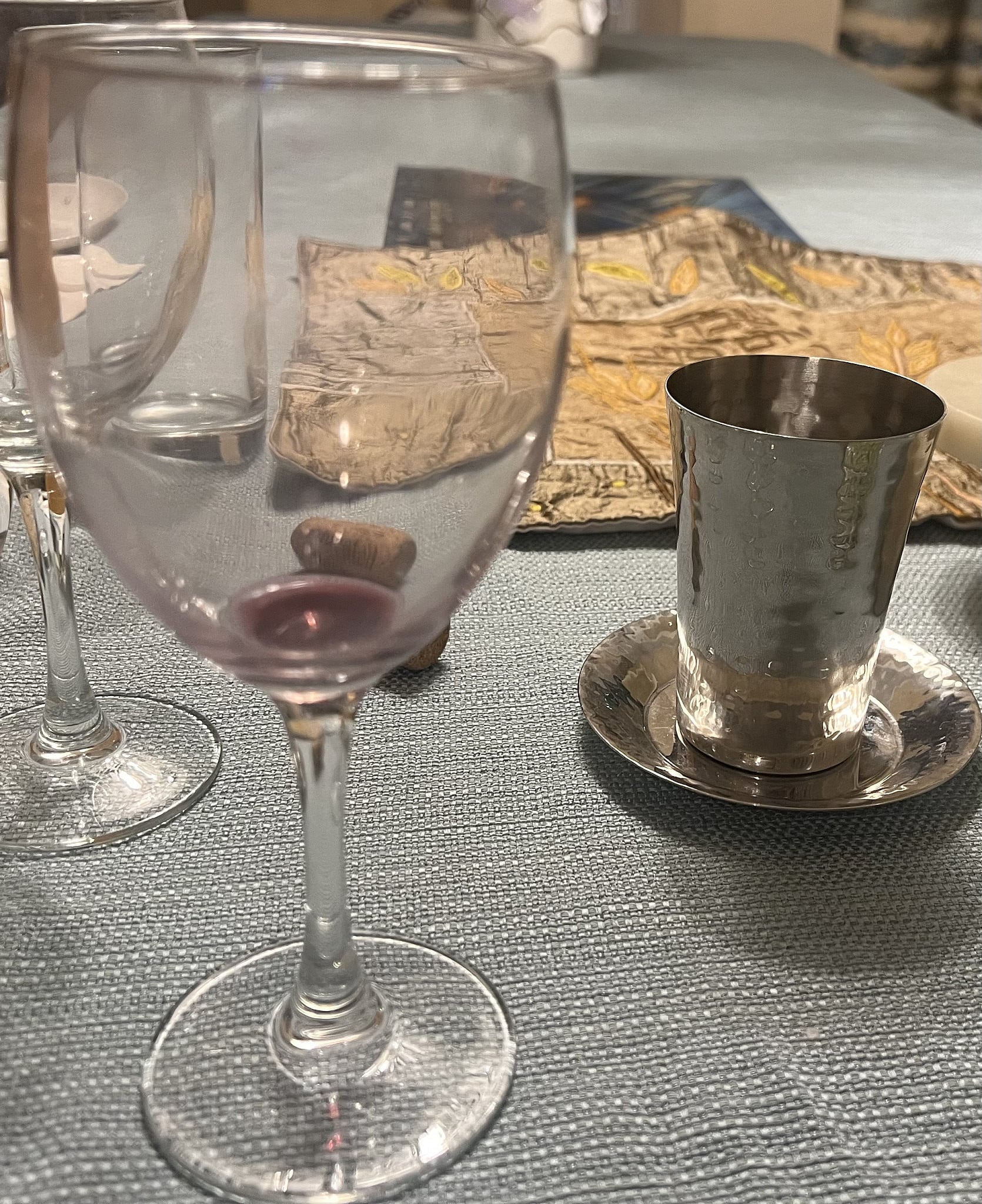
The dishes can wait. Tonight, they're proof that the table was full. Photo by Feivel Strauss
In our family, when someone spills wine at the Shabbat table, I spill some too.
I started doing it years ago, almost without thinking. A guest knocks over a glass. One of the kids has an accident. And before anyone can feel the heat of embarrassment rise in their cheeks, I tip a little wine from my own glass. On purpose.
Nobody failed. Nobody is in trouble. Pass the napkins. L’chaim.
Somewhere along the way, this small habit became something I actually think about. Because what I was really doing, what I wanted everyone to feel in that moment, is that this table is not a stage. You don’t have to perform here. You belong here.
I love a beautiful Shabbat table. I genuinely do. Fresh flowers, polished silver, the smell of something good coming from the kitchen, that particular hush before Kiddush when you feel like something real is about to happen. Judaism has always understood this, hiddur mitzvah, the idea that beauty itself is an act of devotion.
My complaint isn’t with beauty. My complaint is with fragility. With the kind of table that holds its breath all evening.
We live in an age of perfectly curated lives, and Shabbat has not been spared. Scroll through social media on a Friday afternoon and you’ll find immaculate tablecloths, glowing candles arranged just so, families who appear to have arrived at some level of domestic grace the rest of us are still working toward. I understand the pull. Life is messy and loud and exhausting. Of course we want somewhere that looks like everything is in its place.
But there’s a kind of danger in mistaking the photograph for the thing itself.
I once heard a story about a young husband who compared his wife’s cholent to his mother’s every single Shabbat. Every week she tried. Every week something was slightly off, too much pepper, not enough, not quite that taste. He couldn’t help himself. Then years went by. Kids arrived. Sleep became a distant memory. Life got complicated. One Shabbat the cholent came out a little burned. He took a bite and smiled. “Now it tastes like my mother’s.”
What he had been chasing all along wasn’t a recipe. It was the feeling of being in a home where someone was trying their best to love him. The burn was part of it.
The Talmud has a strange story about Rav Kahana, who hid under his teacher’s bed and was discovered there. His explanation: “Torah hi, v’lilmod ani tzarich”, “This is Torah, and I need to learn it.” The story sounds odd until you sit with it. Torah, it turns out, isn’t only what’s written down. It’s also how people actually live. What happens in a kitchen at six o’clock on a Friday. How a parent handles a spilled glass. Whether the people in a home feel free to make mistakes.
The Torah itself seems to understand this. It never gave us perfect heroes. Moses loses his temper. Jonah runs away. David stumbles, badly. The blemishes are left in. Maybe because that’s where character actually lives, not when everything goes according to plan, but when it doesn’t.
Years ago my tennis coach told me something I’ve never forgotten. In doubles, you don’t apologize for missing a shot or hitting the net. You apologize only for poor effort or poor attitude. A mistake is just a mistake. But showing up half-heartedly, or making your partner feel small, that’s worth saying sorry for.
I’ve come to believe the same is true of Jewish life.
Good effort. Good attitude. That’s a standard most of us can actually reach. Perfection is something else entirely, and it tends to make people feel worse, not better.
This matters to me because I have observed many Jews who feel they’re falling short. They don’t know enough Hebrew. They don’t daven enough. They’re not hosting enough, learning enough, observing enough. They carry a low hum of Jewish inadequacy. The last thing any of them need is a table that looks like another test they’re about to fail.
Judaism should lift us. Not add to our anxiety. A Shabbat table that can’t survive a spilled glass of wine is too fragile to carry the weight of what we’re actually trying to build.
The older I get, the less I care about perfect Jewish homes. What I want is homes where people can exhale. Where the cholent occasionally burns. Where guests feel like they arrived somewhere, not like they’re auditioning somewhere. Where children learn, in their bones, that a mistake is just a moment and not a verdict.
But I’ve come to believe this is about something larger than a dinner table.
Every generation inherits a Judaism and then makes a choice, usually without realizing it’s a choice. We decide, through a thousand small signals, what kind of tradition we’re going to be. Whether the shul is a place where you feel the gap between yourself and the ideal, or a place where the gap doesn’t matter quite so much because you showed up. Whether Jewish life is something you qualify for or something you’re born into. Whether religion catches people when they fall, or simply raises the bar until fewer and fewer people can clear it.
We are losing people. Not just to assimilation or distraction or the pull of a secular Saturday morning. We are losing people who wanted to belong and couldn’t find a way in. People who spill wine and are not welcome at the table.
Judaism has survived everything. Exile. Persecution. Modernity. I’m not worried about its survival.
I’m worried about what we’re surviving as.
A religion that holds people in their mess is worth fighting for. A religion that makes people feel like their mess disqualifies them, that’s a different thing entirely, and we should be honest about what it costs us.
Pass the napkins. Let’s make sure our table is one people actually want to come back to.
Related Topics
Related Posts