Editor-Publisher of The Progressive Investor
Why Israel Beat the US By 60 Years in Cannabis Research
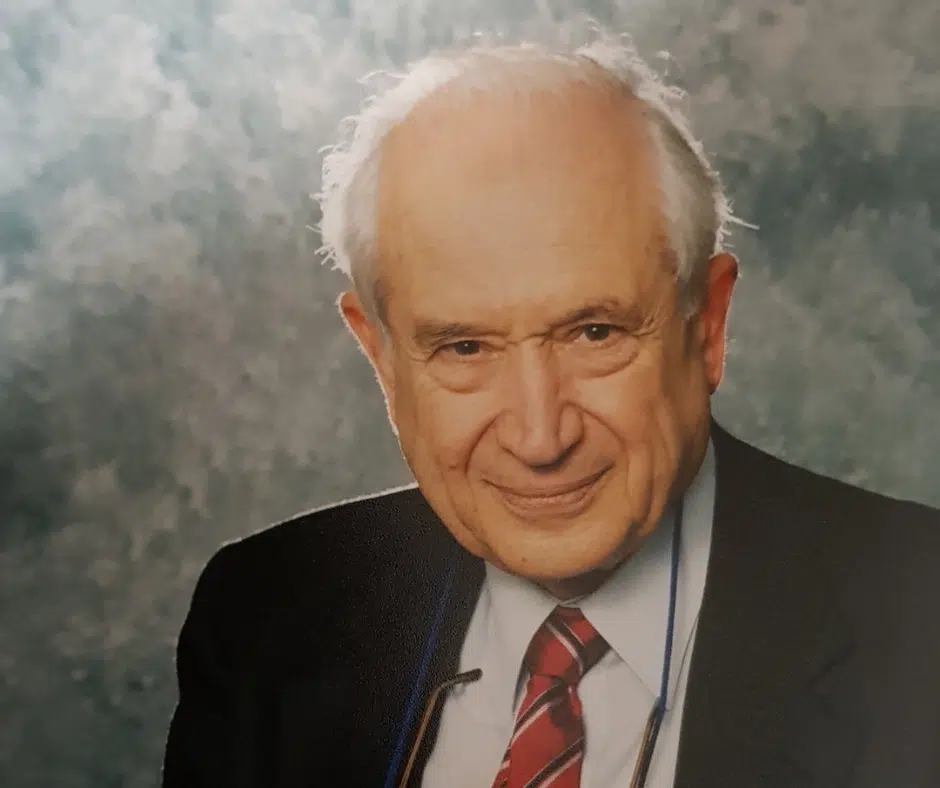
The father of cannabis research: Prof. Raphael Mechoulam, of the Department of Medicinal Chemistry and Natural Products, Hebrew University Medical Faculty
On Dec. 18, 2025, President Trump signed an executive order directing the U.S. Attorney General to expedite the process of reclassifying marijuana from a Schedule I to a Schedule III controlled substance under the Controlled Substances Act.
This order did not legalize marijuana; it only formally acknowledged that marijuana has accepted medical uses and a lower potential for misuse than more addictive substances. Aside from payment, banking, and tax benefits, the order makes it easier for U.S. scientists to “increase medical marijuana and CBD research,” according to the order.
While this was news in the U.S., it went largely unnoticed in Israel.
This is because Israel has been researching cannabis and all its chemical and pharmacological components for about the past 60 years.
Trump’s executive order showed the huge gap between Israel’s “start-up” mentality and the U.S.’s conflicted history of Draconian drug laws. These laws, culminating in the famous “War on Drugs” programs started in the 1960s by President Richard Nixon, have cost taxpayers an estimated $1 trillion since 1971, according to a December 2024 report by Harm Reduction International.
These drug laws were so prevalent and misused that by 2015, “more people every year were handcuffed and put in jail cells by police for marijuana offenses than for all ‘violent crime’ combined,” according to Alec Karakatsanis, author of “Copaganda.”
The US designed these anti-drug programs to suppress and incarcerate minority populations, prevent competition, and prevent legitimate scientific research into a non-descript plant. These “tough on crime” programs also generated large profits and job security for bail bond companies, prison guards and police, private equity firms, surveillance industry for profit prisons, and politicians.
This also explains why Israel has a 60-year head start against the US in cannabis and CBD research. Today, Israel is recognized as a world leader in applied cannabis pharmacology, production, and genetics.
Israel’s Head Start on Research
So, how did Israel get a 60-year head start in cannabis research over the US?
The answer stems from differences in cultural, legal, regulatory, and criminal policies between the two nations and in their approaches to the culture of innovation. Israel has an informal system of doing business and pro-innovation government policies that create a unique entrepreneurial ecosystem.
For the past 60 years, scientists worldwide have been researching the chemistry, pharmacology, and active ingredients of cannabinoids found in cannabis, specifically, tetrahydrocannabinol (THC;1), the psychoactive constituent of Cannabis, and cannabidiol (CBD), which scientists call a non-psychotropic plant constituent.
During this time, some of the most groundbreaking pharmacological research was conducted in Israel under the direction of Raphael Mechoulam at the Department of Medicinal Chemistry and Natural Products at the Hebrew University Medical Faculty, working with the Israel Ministry of Health.
Today, Mechoulam is considered the father of cannabis research. He was the first to reveal the structure of CBD and THC molecules, which are now used medicinally worldwide. He passed away on March 10, 2023, at the age of 92.
Mechoulam conducted his research in the 1960s with his colleague Yechiel Gaoni at the Weizmann Institute of Science. Later, Mechoulam deciphered the brain’s native cannabinoids. Ruth Gallily, a professor emerita of immunology at the Hebrew University of Jerusalem, studied CBD, considered a powerful anti-inflammatory and anti-anxiety agent.
The cannabis cultivation market in Israel is expected to reach a projected revenue of $2 billion (US) by 2030. A compound annual growth rate of 23% is expected of Israel’s cannabis cultivation market from 2023 to 2030, according to Grand View Horizon Research.
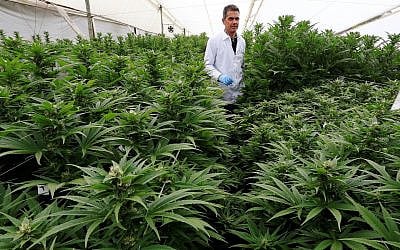
Additionally, some studies show that Israel has the highest cannabis use per capita in the world. This may be because Israelis live under stress, and many in their citizen-soldier army have developed PTSD. Israeli society also has a liberal outlook on cannabis, so cannabis use is not legal, but it is decriminalized.
Using research developed in Israel, a company called Tikun Olam (Hebrew for “repair the world”) became the world’s first firm licensed by a government to produce medical cannabis products. A privately held company, Tikun Olam, has been operating under a license from the Ministry of Health in Israel since 2006. It has also conducted clinical trials in Israel and maintains the world’s largest patient database of 15,000 patients for quality assurance.
Cannabis and CBD products now are being used to treat patients of all ages for muscle spasms in multiple sclerosis, Tourette syndrome, chronic pain, nausea and vomiting in HIV/AIDS and cancer chemotherapy, loss of appetite from cancer, hyperactivity of the bladder in patients with multiple sclerosis and spinal cord injury, and dyskinesia caused by levodopa in Parkinson’s disease epilepsy, cancer, and PTSD.
Advanced research and new applications are expected to increase in Israel as a result of AI. This is because Israel already has an established digital health infrastructure combined with computational biology talent to accelerate development time. “The next frontier in drug discovery isn’t simply about harnessing new computational tools but requires an environment where data quality, algorithmic sophistication, and clinical agility reinforce one another,” according to Mati Gill. Israel has all these tools in place today, and more.
Related Topics
Related Posts