
Curious soul shaping policy through law and learning.
Why Israel is no longer a regional power.
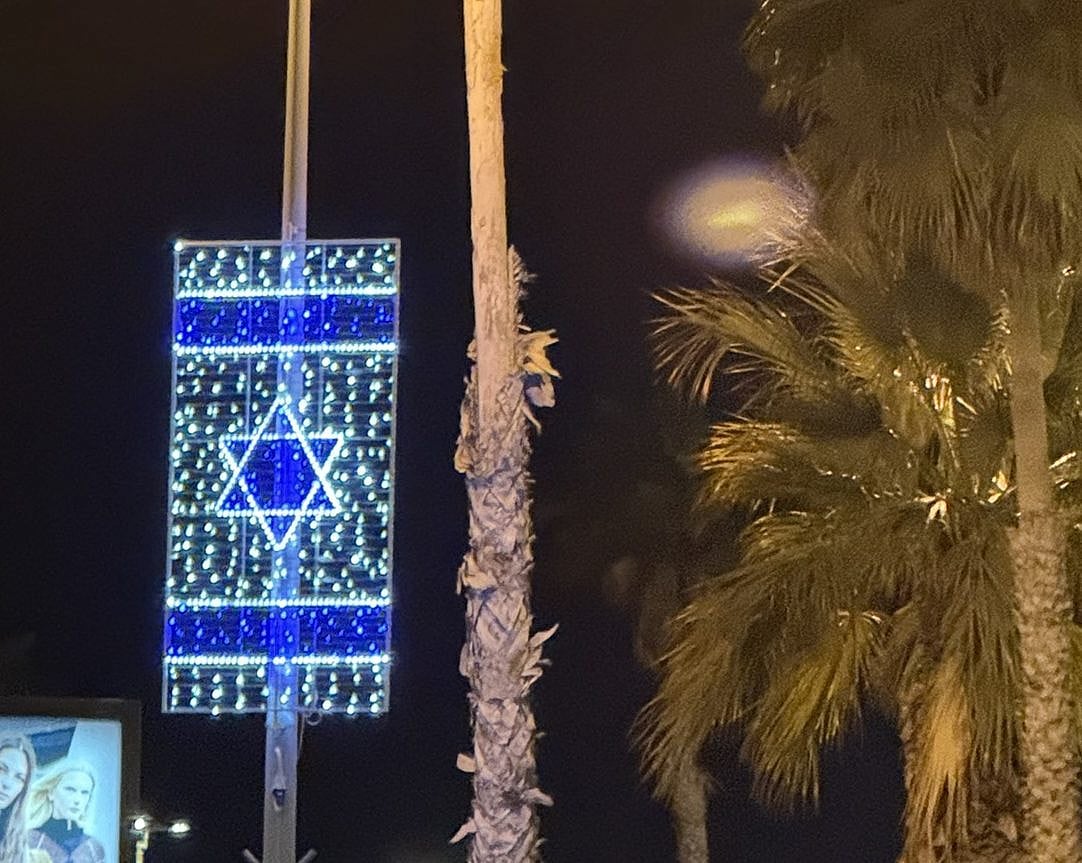
© Farid Shukurlu. All rights reserved. This photograph, taken by Farid Shukurlu, is the intellectual property of the author. No part of this image may be reproduced, distributed, or used in any form without prior written permission from the copyright holder.
Political scientists have spent decades categorising Israel as a regional power, but it is all about to change. From dominating the Middle East militarily, technologically, and diplomatically to expanding its influence beyond the region, the Jewish State’s influence is far beyond its neighbourhood. Through its economic dynamism, military reach, and diplomatic engagements, Israel has emerged as a global power—capable of shaping outcomes on multiple continents and in diverse arenas.
The term global power appeared in 19th-century European diplomacy, especially after the Congress of Vienna (1815), but it referred to states with significant influence in Europe—not globally. Israel’s rise shows how modern definitions of power go beyond 19th-century regional dominance to recognise 21st-century global reach. For a country to be considered a global power, it needs to have economic influence, military might, and diplomatic outreach. In this article, I will discuss how Israel not only possesses all these elements but also more to be a global power in our modern age.
An Innovative Economy: The Making of the Start-Up Nation.
Looking at the skyline of Tel-Aviv, people tend to forget that Israel was once a socialist country that struggled to feed its population in the late 1940s. However, Israel’s economic transformation has propelled it into the global arena, and much of its modern prosperity can be traced to structural reforms initiated in the early 2000s.
One of the main components of being a superpower lies within a country’s economy, and it is something former Finance Minister of Israel, Benjamin Netanyahu, understood. He implemented sweeping free-market reforms to revive an economy burdened by stagnation, debt, and the fallout from the Second Intifada. His vision of making Israel a global power capable of sustaining a strong and liberalised economy included tax cuts to attract foreign investors, a scheme to reduce welfare dependency, which was something all Israelis had for granted, privatisation of government-owned enterprises, and removal of currency controls that encouraged foreign capital inflows. These visionary reforms catalysed Israel’s transformation from a heavily regulated economy into one of the world’s most competitive and innovation-driven markets.
By 2024, Israel’s GDP had exceeded $500 billion, and—more importantly—its GDP per capita exceeded that of France and the United Kingdom. This was no statistical fluke; it reflected Israel’s rapid development in high-value industries and its success at integrating into the global knowledge economy.
Over time, Israel’s technology sector, which is mostly based on cybersecurity, artificial intelligence, and biotechnology became a primary engine of growth. Israeli companies and research institutions now partner with Fortune 500 firms, influencing global tech standards and security frameworks.
Statistically, the Jewish State ranks among the world’s most heavily invested countries in research and development (R&D), while also maintaining active memberships in key economic organisations such as the OECD. This combination of strong domestic investment and integration into international economies reinforces Israel’s position as a haven for start-ups and unicorns.
Peace initiatives such as the Abraham Accords brokered by President Donald J. Trump contribute to better business opportunities between Israel and Arab Nations who were formerly against doing any business with Israel. The last two financial successes of the Jewish State are energy deals with Egypt and Azerbaijan. It is confirmed that Jerusalem has agreed on an export deal that will sell 35 billion USD worth of gas to Cairo while selling 10 per cent of the Tamar Project to Azerbaijan’s SOCAR.
Military Reach: From Regional Defense to Global Security Actor.
Israel’s military achievments echo way beyond the sand dunes of Israel. In the 2020 Second Karabakh War, Israeli-supplied drones and loitering munitions, such as the Harop, gave Azerbaijan a decisive advantage, demonstrating Israel’s capacity to shape outcomes in distant conflicts.
The Jewish State proved their military capabilities in defeating Iranian-backed proxies from Lebanon, Iraq, and Syria to Yemen, dismantling Tehran’s regional network. The Twelve-Day War also reflected Israel’s military power as the IAF obtained total control of Iranian airspace with its F-35I and F-15I+ fighter jets.
These actions, alongside joint exercises and exports to the United States, European nations, and Asian partners, underline Israel’s evolution from a regional deterrent to a global security actor.
Diplomatic Expansion: From Isolation to Strategic Networks.
Even though Israel was historically isolated in multiple forums, it started to alter the reality of diplomacy with its diplomatic and military successes. The normalisation agreements with Egypt, the UAE, Bahrain, Morocco, and Sudan have reshaped Middle Eastern geopolitics, while partnerships with Jordan, Azerbaijan, and a renewed relationship with Türkiye in Syria strengthen regional stability.
Following the 2023 Türkiye–Syria earthquake, Israel sent the second-largest international aid delegation after Azerbaijan, underscoring its humanitarian role. In addition to that, Israel extended its strategic ties to faraway countries like India, Japan and South Korea while enjoying a steadfast US diplomatic backing in the UNSC and other international institutions. The Trump Administration is even more in favour of the Jewish State for security and regional cooperation.
Through disaster relief worldwide, active participation in UN agencies, cyber governance, and climate initiatives, Israel has transformed from a regional mediator into a global diplomatic power, cultivating strategic alliances at the neighbourhood, regional, and international levels.
Intelligence as the Silent Pillar of Global Power.
These three categories are enough to label Israel as a global power, but another equally important element lies in something less visible yet deeply influential—its intelligence work. In 1960, Mossad agents tracked down and captured Adolf Eichmann, the Nazi official responsible for orchestrating the Holocaust’s logistics, spiriting him from Argentina to Israel for trial. Decades later, Israeli operatives conducted targeted assassinations of nuclear scientists as well as senior IRGC and Hamas figures, particularly in Iran, in order to disrupt and delay dangerous weapons programmes.. In 1999, they played a key role in capturing PKK leader Abdullah Öcalan (Apo) in Nairobi and transferring him to Türkiye, navigating one of the region’s most sensitive political minefields. These missions are more than covert operations—they are moments where Israel’s reach, determination, and sense of purpose have shaped events far beyond its borders.
Related Topics