
Geopolitical & Defense Analyst
Why Israel Needs the Greek Navy in the Levant
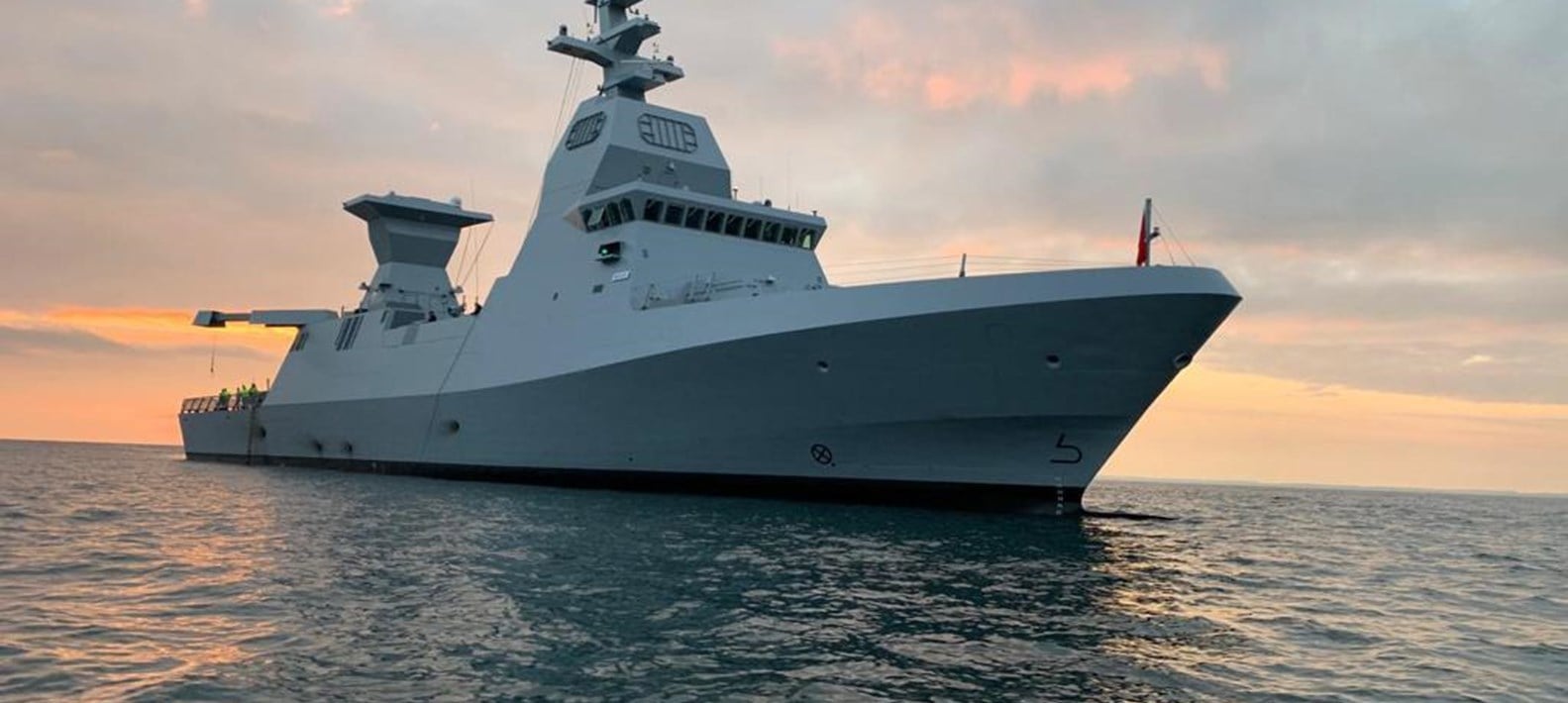
An Israeli Navy Sa'ar 6-class corvette during maritime operations. (Photo: IDF)
For decades, Israel’s strategic doctrine has rested on an unquestioned axiom: total air superiority guarantees national survival. From the preemptive strikes of 1967 to the surgical precision of modern fifth-generation operations over complex battlefields, the Israeli Air Force (IAF) has stood as an unrivaled shield.
Yet, wars are rarely lost where a nation is strongest. They are lost where its strategic blind spots lie.
Today, Israel faces a quiet, structural vulnerability that cannot be solved solely by air wings: the sea. While public and military attention remains locked on land borders and missile threats from regional proxies, the maritime domain of the Eastern Mediterranean is transforming into the Levant’s most dangerous fault line.
Over ninety percent of Israel’s international trade travels by sea. More critically, the nation’s economic and energetic lifeline—the offshore gas platforms of Tamar and Leviathan—sits exposed in open waters. In any protracted, high-intensity conflict involving northern adversaries or regional revisionists, the sea lines of communication (SLOCs) keeping Israel supplied and connected to the West will become prime targets.
Here lies the operational dilemma. The Israeli Navy is an elite, highly capable force. Its Sa’ar 6-class corvettes, equipped with advanced radar systems and Barak MX interceptors, provide formidable point defense around critical offshore assets. But the Israeli fleet is fundamentally a coastal and littoral defense force. It was neither built nor sized to project sustained power across hundreds of nautical miles or to enforce maritime control over the entire Levantine basin against a large-scale, conventional naval challenger.
Enter Turkey’s “Mavi Vatan” (Blue Homeland) doctrine.
Ankara is no longer merely posturing with diplomatic rhetoric. It has backed its maritime expansionism with an aggressive, domestic naval shipbuilding program. With amphibious assault ships like the TCG Anadolu, an expanding fleet of indigenous frigates, and a growing inventory of air-independent propulsion (AIP) submarines, Turkey is actively building a blue-water fleet designed to contest access to the Aegean and dominate the Eastern Mediterranean.
If Ankara succeeds in establishing a naval sphere of influence that reaches from Rhodes down toward the Syrian coast, Israel will find itself operating in a constrained, contested maritime corridor. The freedom of navigation that Israeli planners take for granted will be subjected to persistent foreign surveillance and potential interdiction.
Israel cannot counter this asymmetric reality alone without pulling vital resources away from its primary fronts. It does not need to, either. The natural counterweight already exists, anchors the western flank of the basin, and possesses centuries of naval DNA: the Hellenic Navy.
The strategic emergence of Greece as a blue-water naval power is the missing link in Eastern Mediterranean deterrence. With the operational introduction of the FDI HN (Belharra) frigates, Athens is deploying one of the most advanced naval surface combatants in the world. Equipped with Sea Fire four-panel active electronically scanned array (AESA) radars and Aster 30 long-range surface-to-air missiles, a single Belharra does not just defend itself; it projects a lethal, impenetrable anti-air and anti-surface bubble across a radius of over one hundred kilometers.
When Greek naval assets operate in the critical triangle between Crete, Karpathos, Rhodes, and Cyprus, they fundamentally alter the operational calculus of the Levant. Greece provides what Israel inherently lacks due to geography: strategic depth, natural island bastions, and the specialized surface and anti-submarine warfare (ASW) capabilities required to bottle up hostile fleets before they ever reach the waters off Haifa or Ashdod.
This dynamic lays the groundwork for a historic, operational trade-off between Jerusalem and Athens:
- From Israel to Greece: Proven cutting-edge technology, layered anti-drone and air defense systems (such as the architectures currently modernizing Greek ground and island defense), electronic warfare know-how, and elite air-combat tactical doctrine.
-
From Greece to Israel: Formidable naval escort, open-sea area denial, sub-surface maritime surveillance, and an absolute guarantee that the maritime lifeline connecting Israel to Europe remains open and uncontested.
For years, the partnership between Greece, Cyprus, and Israel has been celebrated through the lens of energy memorandums, trilateral diplomatic summits, and commercial joint ventures. That era of polite diplomatic signaling is no longer sufficient for the threats emerging in the region.
Deterrence in the Eastern Mediterranean cannot survive as an abstract diplomatic talking point. It must be forged into an integrated, operational doctrine.
By anchoring Israeli air and technological superiority to Greek naval mass and reach, the two democracies do not just protect their sovereign waters—they draw an uncrossable red line across the waves.